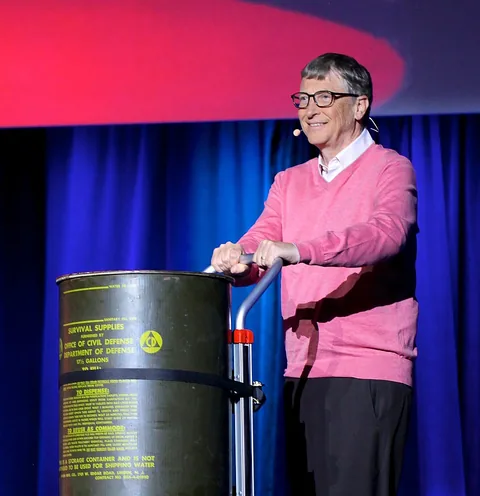

software developer, businessman, investor, philanthropist, author
Bill Gates
Also known as William Henry Gates III, Trey
Born in Seattle, Washington, United States
American software pioneer who co-founded Microsoft with Paul Allen in 1975 and led it for 25 years as CEO. Since 2000 he has focused on the Gates Foundation, global health, and clean energy.
Official and reference links
- Gates NotesOfficial
- WikipediaReference
- WikiquoteReference
- Gates Foundation: Bill GatesFoundation
- The Giving PledgeFoundation
- Harvard Commencement 2007 remarks (Harvard Gazette)Archive
- Think Week profile (Seattle Times archive)Archive
- Wikimedia Commons categoryArchive
Overview
Bill Gates is an American businessman and philanthropist who co-founded Microsoft in 1975 with his childhood friend Paul Allen. He was a pioneer of the microcomputer revolution, and he ran the company as CEO for its first 25 years.[1][2] Forbes counted him the richest person in the world for 18 of the 24 years between 1995 and 2017, and as of November 2026 it put his net worth at $121.2 billion.[3][4]
He left Harvard in 1975 to build a software company, and in 2008 he moved to full-time work on his foundation.[5][6] The Gates Foundation, which he chairs, works on saving the lives of mothers and babies, expanding economic opportunity, and ending infectious diseases, and in May 2025 he announced that it would cease operations on December 31, 2045.[7][8][9]
His story includes real failures and real controversy. A federal judge ruled that Microsoft had violated the Sherman Antitrust Act, he has called the mismanagement that let Android become the standard phone platform his greatest mistake, and in 2021 his divorce, and coverage that brought out his friendship with Jeffrey Epstein, shifted public opinion of him.[10][11][12] This profile tells those parts plainly and briefly, with sources, next to the work and the habits that built his career.
Life
1955–1968
A Seattle childhood
William Henry Gates III was born in Seattle on October 28, 1955.[13] His father, Bill Gates Sr., was a prominent lawyer, and his mother, Mary Maxwell Gates, served on the boards of First Interstate BancSystem and United Way of America.[14] Because his father carried the "II" suffix, the boy was known as "Trey."[15] The family lived in the Sand Point area of Seattle, in a house that a rare tornado damaged when Gates was 7.[16]
The family encouraged competition. One visitor said it did not matter whether the game was hearts, pickleball, or a swim to the dock: winning earned a reward and losing earned a penalty.[17] Gates was small for his age and was bullied.[18] His parents expected him to become a lawyer.[19]
1968–1973
Lakeside and the Teletype
At 13 Gates enrolled at the private Lakeside School.[20] The school's Mothers' Club spent proceeds from a rummage sale on a Teletype terminal and computer time on a General Electric machine, and Gates was excused from math class to work on it in BASIC. His first program was a tic-tac-toe game that let people play against the computer.[21]
Gates and his friends then went looking for more machine time. A company called Computer Center Corporation banned Gates, Paul Allen, Ric Weiland, and Gates's best friend and first business partner, Kent Evans, for a summer after catching them using bugs in its operating system to get free time. When the ban ended they offered to find bugs for the company in exchange for more time, and Gates went to its offices to study the source code of its programs.[22] In 1971 a teacher asked Gates and Evans to automate the school's class-scheduling system, paying them in computer time and royalties.[23] Late in their junior year Evans was killed in a mountain climbing accident, which Gates described as one of the saddest days of his life, and Gates turned to Allen to help finish the scheduling system.[24]
At 17 Gates and Allen started Traf-O-Data to make traffic counters around the Intel 8008 processor.[25] Gates served as a congressional page in 1972, was a National Merit scholar, scored 1590 out of 1600 on the SAT, and enrolled at Harvard in the fall of 1973.[26]
1973–1979
Harvard, the Altair, and a new company
At Harvard Gates did not stay long enough to pick a concentration. He took mathematics, including Math 55, and graduate-level computer science courses, and he met a fellow student named Steve Ballmer.[27] In a combinatorics class he worked out an algorithm for a pancake-sorting problem that held the record for the fastest known version for more than 30 years.[28]
In the summer of 1974 he joined Allen at Honeywell.[29] In January 1975 Gates read about the Altair 8800 in Popular Electronics and told its maker, MITS, that he and others were writing a BASIC interpreter for it.[30] They had no Altair and had written no code for it. They built an emulator and then the interpreter in a few weeks, and the demonstration in Albuquerque worked.[31] Gates took a leave from Harvard in November 1975 and never went back to finish.[5] He explained the decision this way: if things had not worked out, he could always go back to school, because he was officially on leave. His parents backed him once they saw how much he wanted to start a company.[32] Allen named the partnership "Micro-Soft," and the trade name "Microsoft" was registered in New Mexico on November 26, 1976.[33][34]
In February 1976 Gates wrote An Open Letter to Hobbyists, arguing that more than 90 percent of the people using Altair BASIC had not paid for it. The letter was unpopular with many hobbyists, but Gates held to the view that software writers should be paid.[35][36] The company moved to Bellevue, Washington, on January 1, 1979, and Gates has said he personally reviewed, and often rewrote, every line of code Microsoft produced in its first five years.[37][38]
1980–1994
IBM, MS-DOS, and Windows
IBM approached Microsoft in July 1980 about software for its coming personal computer.[39] When IBM's talks with Digital Research, maker of the widely used CP/M operating system, went badly, Gates and Allen proposed an operating system similar to it that Tim Paterson of Seattle Computer Products had written. Microsoft became its exclusive licensing agent and later its owner, and delivered it to IBM as PC DOS for a one-time fee of $50,000.[40] The contract paid Microsoft a relatively small fee; the real payoff was the prestige of IBM's adoption of its operating system, which turned Microsoft from a small business into a leading software company.[41] Gates did not offer to hand IBM the copyright, because he expected other makers to clone the IBM PC. They did, and the IBM-compatible PC running DOS became the standard.[42] On June 25, 1981, Microsoft was re-incorporated in Washington state, with Gates as president and chairman of the board.[43]
The partnership with Allen broke in 1983. Allen left after a Hodgkin lymphoma diagnosis, and the formal business relationship, already strained by a dispute over Microsoft equity, effectively ended.[44] Microsoft released the first retail version of Windows on November 20, 1985, to answer Apple's Macintosh, and went public in March 1986.[45][46] Gates kept 44.9 percent of the company, and in 1987, at 31, he was listed as a billionaire, the youngest self-made billionaire in the world at that time.[47][48]
That same year, at a trade fair in New York, he met Melinda French, who had joined Microsoft a few months earlier. They married on January 1, 1994, on the island of Lānaʻi.[49]
1995–2000
The Internet and the courtroom
In 1995 one of his Think Week retreats inspired a paper called "The Internet Tidal Wave," which, The Wall Street Journal later wrote, led Microsoft to develop its Internet browser and crush Netscape.[50] That November he published his first book, The Road Ahead, with Nathan Myhrvold and Peter Rinearson, about the future of the personal computing revolution and the coming information highway.[51] In 1999 his wealth briefly passed $100 billion, the first time anyone had reached that figure.[52]
The same decade brought the antitrust case against Microsoft. In 1998 the Justice Department, joined by 20 states and the District of Columbia, sued, and Gates gave a videotaped deposition that several journalists called evasive.[53][54] A federal judge issued findings of fact in November 1999 and ordered a breakup in June 2000; the appeals court later overturned the breakup order but let the findings stand.[55][56][57] The setbacks section tells that story in full. In 2000 Gates handed the CEO job to Steve Ballmer and became chief software architect, a role he held until 2008.[58]
2000–2014
From Microsoft to the foundation
Gates had studied the work of Andrew Carnegie and John D. Rockefeller, and in 1994 he gave some Microsoft stock to start the William H. Gates Foundation.[59] In 2000 he and Melinda combined three family foundations with $5 billion in stock to create the Bill & Melinda Gates Foundation.[60] The foundation says it grants aid to fight transmissible diseases such as AIDS, tuberculosis, and malaria, and funds vaccine programs to eradicate polio, and since 2005 Gates and the foundation have also taken on global sanitation, where its "Reinvent the Toilet Challenge" drew considerable media interest.[61][62] To raise awareness of sanitation, Gates drank water "produced from human feces" by a sewage sludge treatment process called the Omni Processor in 2014.[63]
In June 2006 he announced that he would transition out of his role at Microsoft to dedicate more time to philanthropy, and on June 27, 2008, he completed handing his duties to Ray Ozzie and Craig Mundie.[64][65] At Harvard's commencement in June 2007 he thanked the university for "this timely honor," joked that he had waited more than 30 years to tell his father he had come back to get his degree, and urged each graduate to take on an issue, "a complex problem, a deep inequity," and become a specialist on it.[66][67] On December 9, 2010, he, Melinda, and Warren Buffett signed the Giving Pledge, a commitment to give away at least half of their wealth.[68] In February 2014 he stepped down as Microsoft's chairman to become a technology adviser to the new CEO, Satya Nadella.[69]
2014–present
Pandemics, climate, and a new memoir
At TED in March 2015 Gates warned that the world was not prepared for the next pandemic, a situation that came to pass when COVID-19 began in late 2019.[70] That year he announced Breakthrough Energy, a group of investors backing high-risk clean-energy startups; having already invested $1 billion of his own money in energy startups, he committed a further $1 billion to it. He also co-founded and chairs TerraPower, a nuclear reactor design company.[71][72] In 2016 President Barack Obama gave Bill and Melinda Gates the Presidential Medal of Freedom.[73] In March 2020 Microsoft announced that he was leaving the boards of Microsoft and Berkshire Hathaway to focus on philanthropy, and his foundation set up the COVID-19 Therapeutics Accelerator that year to speed the development and evaluation of new and repurposed drugs.[74][75]
In May 2021 he and Melinda announced their divorce after more than 27 years of marriage.[76] His 2021 book, How to Avoid a Climate Disaster, laid out what he had learned about climate in a decade of study and investing, and in 2022 he followed it with How to Prevent the Next Pandemic.[77][78] In February 2025 he published Source Code: My Beginnings, the first of three planned memoirs, covering his early life through the late 1970s.[79] In May 2025 he said the foundation would close on December 31, 2045, and that he would give away virtually all of his wealth through it over the next 20 years.[9][80]
In October 2025 he issued a statement saying climate change does not pose an existential threat to civilization and that it was more important to give money to causes such as solving poverty and improving health care; climate scientists criticized it, and Gates told Axios he would actually increase his spending on climate and health.[81][82][83]
Habits and rituals
Think Week
1980s–2005
Twice a year Gates went to a waterfront cottage in the Pacific Northwest for his "Think Week," a seven-day stretch of seclusion to ponder the future of technology and then spread those thoughts across Microsoft.[84][85] Two months ahead, his technical assistant collected papers from every corner of the company, and during the week he barred all outside visitors, including family and Microsoft staff, except for a caretaker who brought two simple meals a day.[86][87] He read papers mostly by Microsoft engineers, executives, and product managers, writing notes on the covers; four days into his 2005 Think Week he had read 56 papers, and his record was 112.[88][89] The 1995 Internet memo came out of one such week.[50]
Reading everything and writing in the margins
1980s–1990s
Joel Spolsky, who wrote Microsoft's Excel Basic spec, recalled sending Gates the document, about 500 pages, the day before a review and finding that Gates had read the whole thing and written notes in the margins of every page.[90] The review took place in the early 1990s.[91] Gates is an avid reader, and on BBC Radio 4 in 2016 he talked about reading The Economist from cover to cover every week.[92][93]
Reading other people's code
late 1960s–early 1980s
In a 1986 interview Gates said the best way to prepare to be a programmer is to write programs and study great programs written by others, and he described fishing printouts of an operating system out of the garbage cans at a computer center.[94] He said you have to be willing to read other people's code, write your own, and have others review it.[95] He said he personally reviewed and often rewrote every line of code Microsoft produced in its first five years.[38]
Hard questions until the idea holds
Microsoft years
Managers described Gates as verbally combative in their meetings. He interrupted presentations with blunt put-downs, and the target then had to defend the proposal in detail until Gates was fully convinced.[96] After his own review, Spolsky was told how such meetings worked: Gates asked harder and harder questions until you admitted you did not know.[97] Gates has often been accused of bullying Microsoft employees, though a manager recalled that one of his crudest put-downs actually meant Gates was amazed.[98]
Studying a problem until it is solved
early career, undated in the source
An Atari executive recalled showing Gates a game and beating him 35 of 37 times, then meeting him again a month later: Gates had studied the game until he solved it and won or tied every match.[99]
A day planned by the minute
1990s–present
Gates's days are planned for him minute by minute, similar to a U.S. president's schedule.[100] Despite his wealth and heavy travel, he flew coach until 1997, when he bought a private jet.[101]
A four-step method for hard problems
2000s–present
In his 2007 Harvard speech Gates laid out four stages for cutting through complexity to a solution: determine a goal, find the highest-leverage approach, discover the ideal technology for that approach, and in the meantime make the smartest application of the technology you already have; pursuing the goal starts the cycle again.[102] The final step, he said, is to measure the impact of the work and share the successes and failures so others can learn.[103] He had studied Carnegie and Rockefeller, he has credited David Rockefeller's philanthropy as a major influence, and his charity work is partly modeled on the Rockefeller family's focus on global problems that governments and other organizations ignore.[59][104]
Setbacks and comebacks
The rift with Paul Allen 1983–1989
What happened
In early 1983 Paul Allen left Microsoft after being diagnosed with Hodgkin lymphoma. Months earlier a dispute over Microsoft equity had strained the partnership.[44] In his autobiography Allen later wrote that Gates had schemed to reduce his share while he was being treated for cancer; Gates says he remembers the episode differently.[105]
The antitrust case 1998–2002
What happened
The U.S. Justice Department, joined by 20 states and the District of Columbia, sued Microsoft in 1998.[53] Gates's videotaped deposition was described by several journalists as evasive, and Gates later said he had simply resisted attempts to mischaracterize his words and actions.[54][108] The judge found that Microsoft held a monopoly and had acted to crush threats to it, and ordered a breakup in June 2000.[55][56] The appeals court overturned the breakup order in June 2001 but did not overturn the findings of fact.[109]
The cause
As CEO, Gates approved many of the decisions that led to antitrust litigation over Microsoft's business practices.[110] The trial court ruled that Microsoft had committed monopolization, tying, and blocking of competition, each in violation of the Sherman Antitrust Act.[10]
The comeback
On September 6, 2001, the Justice Department said it was no longer seeking a breakup and would seek a lesser penalty, and Microsoft drafted a settlement proposal that allowed PC makers to adopt non-Microsoft software.[111][112] Gates had already handed the CEO job to Steve Ballmer in 2000, and in 2006 he announced that he would transition out of his role at Microsoft to dedicate more time to philanthropy.[58][64]
Missing the smartphone 2013–2019
What happened
In 2013 Gates said Microsoft's early mobile strategy was a mistake, and in 2019 he named losing the mobile operating-system race to Android his biggest mistake.[113][114]
The cause
In 2013 he said the company did not miss cellphones but went about them in a way that did not let it take the lead.[113] In 2019 he said Microsoft had the skills to be the dominant player, and he partly blamed the antitrust litigation of that period.[115]
The comeback
There was no comeback in phones. Microsoft agreed to buy Nokia's mobile unit in September 2013, and by the summer of 2015 it had written down $7.6 billion related to its mobile-phone business and cut 7,800 jobs from those operations.[116][117] On February 4, 2014, Satya Nadella, who had led the Cloud and Enterprise division, replaced Ballmer as CEO, and Gates stepped down as chairman while continuing as a technology adviser.[118] In 2019 he was still calling the mismanagement that let Android win his greatest mistake.[11]
Divorce, Epstein, and a damaged reputation 2019–2026
What happened
In March 2020 Gates left the boards of Microsoft and Berkshire Hathaway.[74] In May 2021 The Wall Street Journal reported that he had stepped down before a Microsoft board investigation into his alleged inappropriate sexual relationship with a Microsoft employee was finished; an external law firm had begun probing it in late 2019.[119] On May 3, 2021, he and Melinda French Gates announced their divorce.[76]
Separately, The New York Times reported in 2019 that Gates's relationship with Jeffrey Epstein began in 2011, a few years after Epstein was convicted of procuring a child for prostitution, and continued for some years.[120] On June 10, 2026, Gates sat for a voluntary closed-door interview with the House Oversight and Government Reform Committee, which released the transcript on June 23.[121]
The cause
Gates said in August 2021 that he had the meetings with Epstein because he hoped Epstein could provide money for philanthropic work, though nothing came of the idea.[122] In his 2026 testimony he described meetings in 2011 and 2012 and discussions in 2013 and 2014 about potential giving structures, and said the contacts ended in December 2014 with no fund established.[123] He called meeting Epstein "a grave error in judgment" and said he never witnessed or had any indication of ongoing criminal conduct and had never victimized anyone; he said he had never knowingly spent time with victims but acknowledged he "may have been in the presence of victims."[124][125][126]
The comeback
He said in 2021 that it was a huge mistake to spend time with Epstein and give him credibility, and a spokesperson said that in the 2026 House interview he answered every question over nearly six hours.[127][128] Consequences followed. In February 2026 he canceled a scheduled keynote at the India AI Impact Summit hours before it was due; news reports tied the withdrawal to renewed scrutiny of his Epstein ties, while the Gates Foundation said it was meant to keep the summit focused on its core priorities.[129] In July 2026 Warren Buffett, who had given the foundation $48 billion from 2006 to 2025, had not donated to it in 2026, waiting for the conclusion of a review of the ties between Gates and Epstein.[130] No conclusion to that review appears in the sources read for this profile, so this is a setback without a completed comeback.[130]
In their own words
We always overestimate the change that will occur in the next two years and underestimate the change that will occur in the next ten. Don't let yourself be lulled into inaction.[131]
Business @ the Speed of Thought (1999), ch. 4, p. 69 · Source Success is a lousy teacher. It seduces smart people into thinking they can't lose.[132]
The Road Ahead (1995) · Source Your most unhappy customers are your greatest source of learning.[133]
Business @ the Speed of Thought (1999) · Source As the majority of hobbyists must be aware, most of you steal your software. Hardware must be paid for, but software is something to share.[134]
An Open Letter to Hobbyists (February 1976) · Source Now I assign the Internet the highest level of importance.[135]
The Internet Tidal Wave memo (1995) · Source The best way to prepare [to be a programmer] is to write programs, and to study great programs that other people have written.[136]
Programmers at Work (1986), interview · Source In my case, I went to the garbage cans at the Computer Science Center and fished out listings of their operating system.[137]
Programmers at Work (1986), interview · Source I've said some stupid things and some wrong things, but not that.[138]
Career Opportunities in Computing—and More, Bloomberg Business News, January 19, 1996 · Source I've been waiting more than 30 years to say this: "Dad, I always told you I'd come back and get my degree."[139]
Harvard Commencement remarks, June 7, 2007 · Source The barrier to change is not too little caring; it is too much complexity.[140]
Harvard Commencement remarks, June 7, 2007 · Source But humanity's greatest advances are not in its discoveries – but in how those discoveries are applied to reduce inequity.[141]
Harvard Commencement remarks, June 7, 2007 · Source Microsoft's early mobile strategy was clearly a mistake.[142]
Remarks on Windows Phone, February 2013 · Source The greatest mistake ever is the whatever mismanagement I engaged in that caused Microsoft not to be what Android is, meaning Android is the standard non-Apple phone form platform.[143]
Remarks on Android, 2019 · Source If anything kills over 10 million people in the next few decades, it's most likely to be a highly infectious virus rather than a war. Not missiles, but microbes.[144]
TED talk, The next outbreak? We're not ready (2015) · Source There are two numbers you need to know about climate change. The first is 51 billion. The other is zero.[145]
How to Avoid a Climate Disaster (2021), Introduction: 51 Billion to Zero, p. 3 · Source Techno-fixes are not sufficient, but they are necessary.[146]
How to Avoid a Climate Disaster (2021), Introduction: 51 Billion to Zero, p. 14 · Source People will say a lot of things about me when I die, but I am determined that "he died rich" will not be one of them.[147]
Gates Notes, May 8, 2025 · Source I should never have met with Epstein in the first place.[148]
Opening statement, House Oversight Committee transcribed interview, June 10, 2026 · Source
Pictures
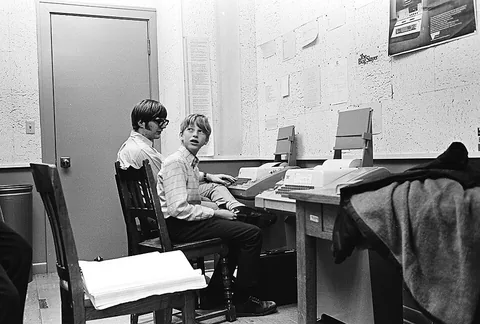
Gates (right) with Paul Allen seated at Teletype terminals at Lakeside School in Seattle, 1970.1970Photo: · Public domain · Wikimedia Commons 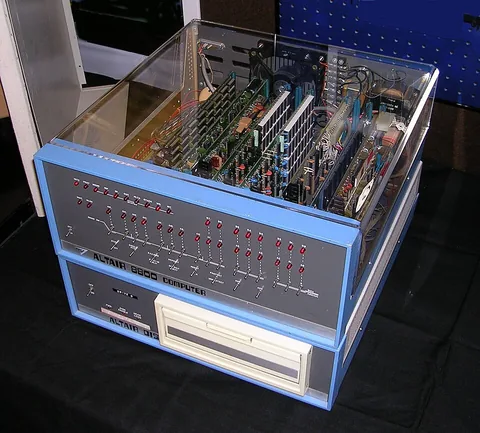
A MITS Altair 8800 with an 8-inch floppy disk system, the computer for which Gates and Allen wrote Altair BASIC.2004-11-07Photo: · Public domain · Wikimedia Commons 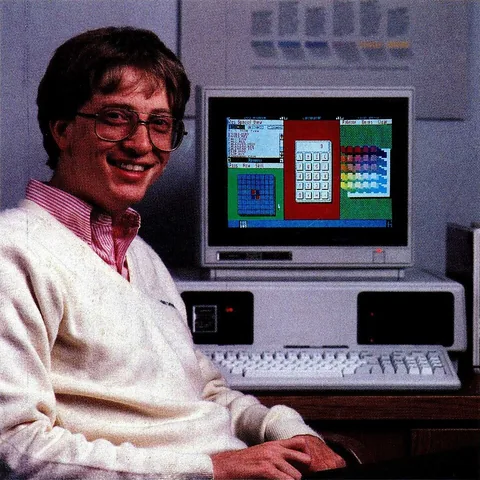
Gates beside a Tandy 2000 running a development version of Windows 1.0, in a November 1984 advertisement.1984-11Photo: · Public domain · Wikimedia Commons 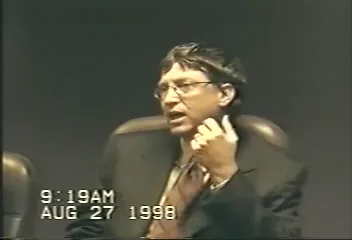
Gates giving his videotaped deposition in United States v. Microsoft Corp., August 27, 1998.1998-08-27Photo: · Public domain · Wikimedia Commons 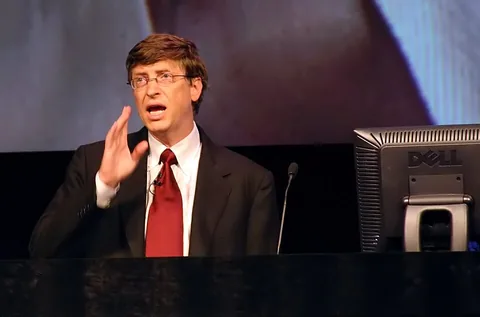
Gates delivering the keynote at IT Forum 2004 in Copenhagen.2004-11-16Photo: · CC BY-SA 2.0 · Wikimedia Commons 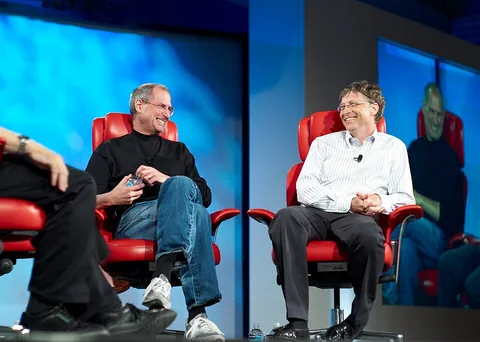
Gates with Steve Jobs at the D5: All Things Digital conference in Carlsbad, California, May 2007.2007-05-31Photo: · CC BY 2.0 · Wikimedia Commons 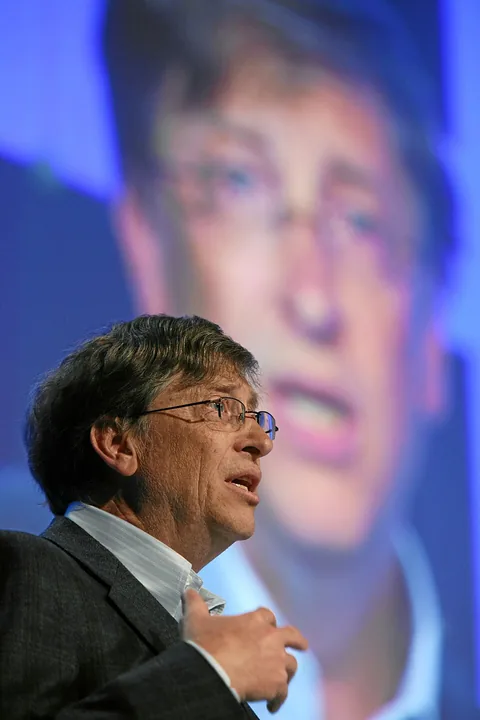
Gates at the World Economic Forum annual meeting in Davos, January 2008.2008-01-24Photo: · CC BY-SA 2.0 · Wikimedia Commons 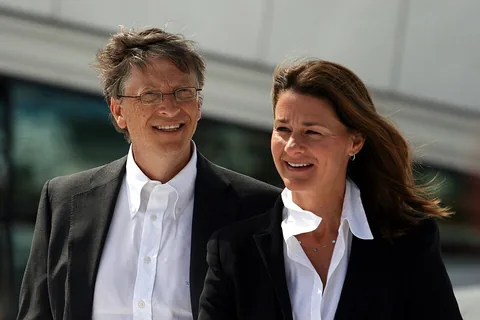
Bill and Melinda Gates visiting the Oslo Opera House in June 2009.2009-06-03Photo: · CC BY-SA 3.0 · Wikimedia Commons 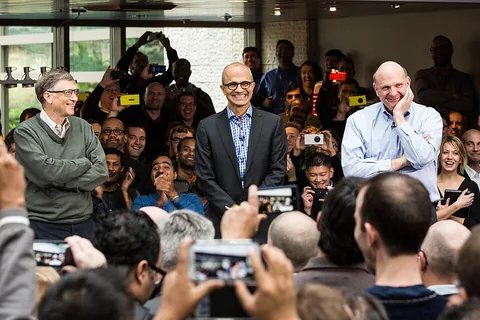
Gates, Satya Nadella, and Steve Ballmer on Nadella's first day as Microsoft CEO, February 4, 2014.2014-02-04Photo: · CC BY-SA 4.0 · Wikimedia Commons Gates at TED 2015, where he gave the talk about being unprepared for the next epidemic.2015-03-18Photo: · CC BY 2.0 · Wikimedia Commons 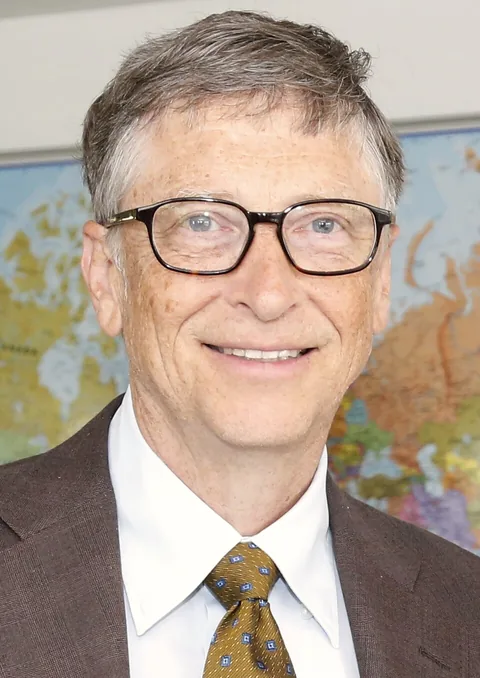
Gates meeting UK International Development Secretary Justine Greening in London, June 2015.2015-06-24Photo: · CC BY 2.0 · Wikimedia Commons 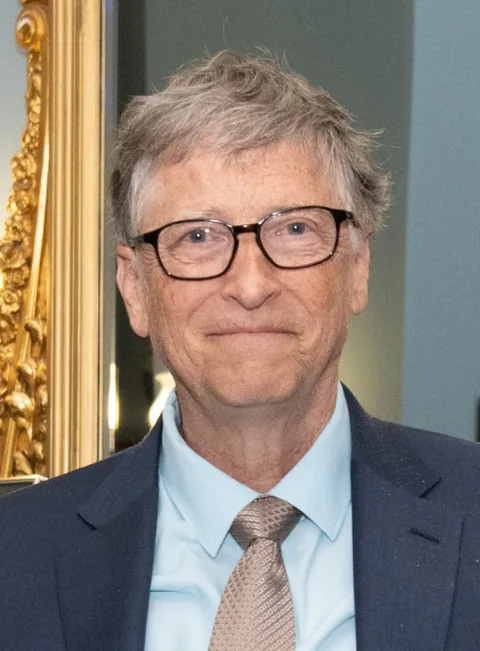
Gates meeting Senator Chris Coons at the Russell Senate Office Building, November 8, 2019.2019-11-08Photo: · Public domain · Wikimedia Commons 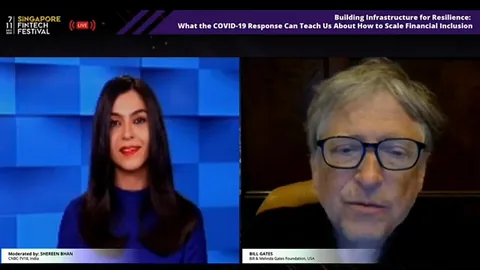
Gates in a virtual fireside chat at the Singapore FinTech Festival, December 8, 2020.2020-12-08Photo: · CC BY-SA 4.0 · Wikimedia Commons 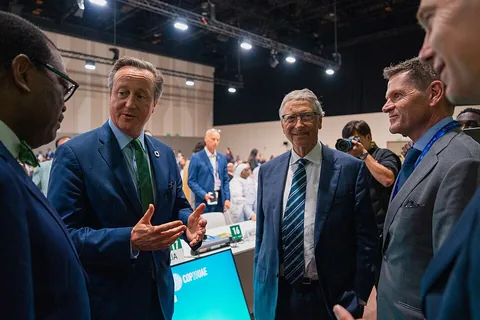
Gates with UK Foreign Secretary David Cameron at COP28 in Dubai, December 1, 2023.2023-12-01Photo: · CC BY 2.0 · Wikimedia Commons 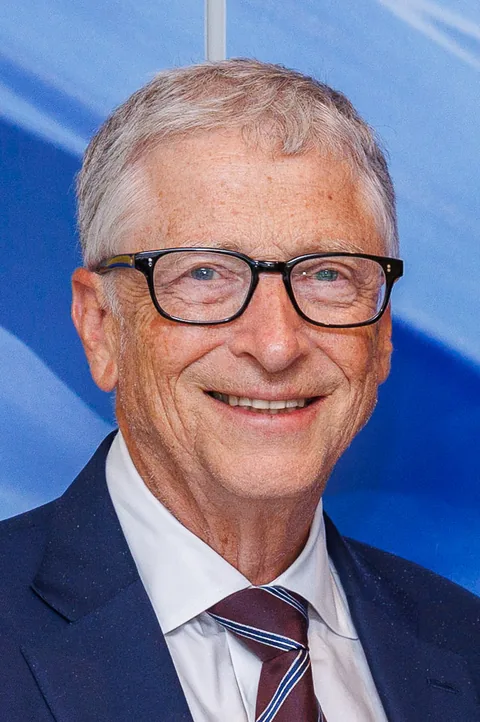
Gates at the European Commission on June 25, 2025, where Ursula von der Leyen received him.2025-06-25Photo: · CC BY 4.0 · Wikimedia Commons


Watch and listen
Read
Notes
- "Bill Gates," Wikipedia, accessed November 27, 2026. https://en.wikipedia.org/wiki/Bill_Gates↩
- "Bill Gates," Wikipedia, accessed November 27, 2026. https://en.wikipedia.org/wiki/Bill_Gates↩
- "Bill Gates," Wikipedia, accessed November 27, 2026. https://en.wikipedia.org/wiki/Bill_Gates↩
- "Bill Gates," Wikipedia, accessed November 27, 2026. https://en.wikipedia.org/wiki/Bill_Gates↩
- "Bill Gates," Wikipedia, accessed November 27, 2026. https://en.wikipedia.org/wiki/Bill_Gates↩1↩2
- "Bill Gates," Gates Foundation, People & Offices, Leadership, accessed November 27, 2026. https://www.gatesfoundation.org/about/leadership/bill-gates↩
- "Bill Gates," Gates Foundation, People & Offices, Leadership, accessed November 27, 2026. https://www.gatesfoundation.org/about/leadership/bill-gates↩
- "Bill Gates," Gates Foundation, People & Offices, Leadership, accessed November 27, 2026. https://www.gatesfoundation.org/about/leadership/bill-gates↩
- "Gates Foundation," Wikipedia, accessed November 27, 2026. https://en.wikipedia.org/wiki/Gates_Foundation↩1↩2
- "Bill Gates," Wikipedia, accessed November 27, 2026. https://en.wikipedia.org/wiki/Bill_Gates↩1↩2
- "Bill Gates," Wikiquote, accessed November 27, 2026. https://en.wikiquote.org/wiki/Bill_Gates↩1↩2
- "Bill Gates," Wikipedia, accessed November 27, 2026. https://en.wikipedia.org/wiki/Bill_Gates↩
- "Bill Gates," Wikipedia, accessed November 27, 2026. https://en.wikipedia.org/wiki/Bill_Gates↩
- "Bill Gates," Wikipedia, accessed November 27, 2026. https://en.wikipedia.org/wiki/Bill_Gates↩
- "Bill Gates," Wikipedia, accessed November 27, 2026. https://en.wikipedia.org/wiki/Bill_Gates↩
- "Bill Gates," Wikipedia, accessed November 27, 2026. https://en.wikipedia.org/wiki/Bill_Gates↩
- "Bill Gates," Wikipedia, accessed November 27, 2026. https://en.wikipedia.org/wiki/Bill_Gates↩
- "Bill Gates," Wikipedia, accessed November 27, 2026. https://en.wikipedia.org/wiki/Bill_Gates↩
- "Bill Gates," Wikipedia, accessed November 27, 2026. https://en.wikipedia.org/wiki/Bill_Gates↩
- "Bill Gates," Wikipedia, accessed November 27, 2026. https://en.wikipedia.org/wiki/Bill_Gates↩
- "Bill Gates," Wikipedia, accessed November 27, 2026. https://en.wikipedia.org/wiki/Bill_Gates↩
- "Bill Gates," Wikipedia, accessed November 27, 2026. https://en.wikipedia.org/wiki/Bill_Gates↩
- "Bill Gates," Wikipedia, accessed November 27, 2026. https://en.wikipedia.org/wiki/Bill_Gates↩
- "Bill Gates," Wikipedia, accessed November 27, 2026. https://en.wikipedia.org/wiki/Bill_Gates↩
- "Bill Gates," Wikipedia, accessed November 27, 2026. https://en.wikipedia.org/wiki/Bill_Gates↩
- "Bill Gates," Wikipedia, accessed November 27, 2026. https://en.wikipedia.org/wiki/Bill_Gates↩
- "Bill Gates," Wikipedia, accessed November 27, 2026. https://en.wikipedia.org/wiki/Bill_Gates↩
- "Bill Gates," Wikipedia, accessed November 27, 2026. https://en.wikipedia.org/wiki/Bill_Gates↩
- "Bill Gates," Wikipedia, accessed November 27, 2026. https://en.wikipedia.org/wiki/Bill_Gates↩
- "Bill Gates," Wikipedia, accessed November 27, 2026. https://en.wikipedia.org/wiki/Bill_Gates↩
- "Bill Gates," Wikipedia, accessed November 27, 2026. https://en.wikipedia.org/wiki/Bill_Gates↩
- "Bill Gates," Wikipedia, accessed November 27, 2026. https://en.wikipedia.org/wiki/Bill_Gates↩
- "Bill Gates," Wikipedia, accessed November 27, 2026. https://en.wikipedia.org/wiki/Bill_Gates↩
- "Bill Gates," Wikipedia, accessed November 27, 2026. https://en.wikipedia.org/wiki/Bill_Gates↩
- "Bill Gates," Wikipedia, accessed November 27, 2026. https://en.wikipedia.org/wiki/Bill_Gates↩
- "Bill Gates," Wikipedia, accessed November 27, 2026. https://en.wikipedia.org/wiki/Bill_Gates↩
- "Bill Gates," Wikipedia, accessed November 27, 2026. https://en.wikipedia.org/wiki/Bill_Gates↩
- "Bill Gates," Wikipedia, accessed November 27, 2026. https://en.wikipedia.org/wiki/Bill_Gates↩1↩2
- "Bill Gates," Wikipedia, accessed November 27, 2026. https://en.wikipedia.org/wiki/Bill_Gates↩
- "Bill Gates," Wikipedia, accessed November 27, 2026. https://en.wikipedia.org/wiki/Bill_Gates↩
- "Bill Gates," Wikipedia, accessed November 27, 2026. https://en.wikipedia.org/wiki/Bill_Gates↩
- "Bill Gates," Wikipedia, accessed November 27, 2026. https://en.wikipedia.org/wiki/Bill_Gates↩
- "Bill Gates," Wikipedia, accessed November 27, 2026. https://en.wikipedia.org/wiki/Bill_Gates↩
- "Bill Gates," Wikipedia, accessed November 27, 2026. https://en.wikipedia.org/wiki/Bill_Gates↩1↩2↩3
- "Bill Gates," Wikipedia, accessed November 27, 2026. https://en.wikipedia.org/wiki/Bill_Gates↩
- "History of Microsoft," Wikipedia, accessed November 27, 2026. https://en.wikipedia.org/wiki/History_of_Microsoft↩
- "Bill Gates," Wikipedia, accessed November 27, 2026. https://en.wikipedia.org/wiki/Bill_Gates↩
- "Bill Gates," Wikipedia, accessed November 27, 2026. https://en.wikipedia.org/wiki/Bill_Gates↩
- "Bill Gates," Wikipedia, accessed November 27, 2026. https://en.wikipedia.org/wiki/Bill_Gates↩
- Robert A. Guth, "Microsoft's 'Thoreau' Takes to Woods to Ponder Future," Wall Street Journal, reprinted in The Seattle Times, March 29, 2005. https://archive.seattletimes.com/archive/20050329/gatesthink29/microsofts-thoreau-takes-to-woods-to-ponder-future↩1↩2
- "Bill Gates," Wikipedia, accessed November 27, 2026. https://en.wikipedia.org/wiki/Bill_Gates↩
- "Bill Gates," Wikipedia, accessed November 27, 2026. https://en.wikipedia.org/wiki/Bill_Gates↩
- "United States v. Microsoft Corp.," Wikipedia, accessed November 27, 2026. https://en.wikipedia.org/wiki/United_States_v._Microsoft_Corp.↩1↩2
- "Bill Gates," Wikipedia, accessed November 27, 2026. https://en.wikipedia.org/wiki/Bill_Gates↩1↩2
- "United States v. Microsoft Corp.," Wikipedia, accessed November 27, 2026. https://en.wikipedia.org/wiki/United_States_v._Microsoft_Corp.↩1↩2
- "United States v. Microsoft Corp.," Wikipedia, accessed November 27, 2026. https://en.wikipedia.org/wiki/United_States_v._Microsoft_Corp.↩1↩2
- "United States v. Microsoft Corp.," Wikipedia, accessed November 27, 2026. https://en.wikipedia.org/wiki/United_States_v._Microsoft_Corp.↩
- "Bill Gates," Wikipedia, accessed November 27, 2026. https://en.wikipedia.org/wiki/Bill_Gates↩1↩2
- "Bill Gates," Wikipedia, accessed November 27, 2026. https://en.wikipedia.org/wiki/Bill_Gates↩1↩2
- "Bill Gates," Wikipedia, accessed November 27, 2026. https://en.wikipedia.org/wiki/Bill_Gates↩
- "Bill Gates," Wikipedia, accessed November 27, 2026. https://en.wikipedia.org/wiki/Bill_Gates↩
- "Bill Gates," Wikipedia, accessed November 27, 2026. https://en.wikipedia.org/wiki/Bill_Gates↩
- "Bill Gates," Wikipedia, accessed November 27, 2026. https://en.wikipedia.org/wiki/Bill_Gates↩
- "Bill Gates," Wikipedia, accessed November 27, 2026. https://en.wikipedia.org/wiki/Bill_Gates↩1↩2
- "Bill Gates," Wikipedia, accessed November 27, 2026. https://en.wikipedia.org/wiki/Bill_Gates↩
- "Remarks of Bill Gates, Harvard Commencement 2007," Harvard Gazette, June 7, 2007 (text as prepared for delivery). https://news.harvard.edu/gazette/story/2007/06/remarks-of-bill-gates-harvard-commencement-2007/↩
- "Remarks of Bill Gates, Harvard Commencement 2007," Harvard Gazette, June 7, 2007 (text as prepared for delivery). https://news.harvard.edu/gazette/story/2007/06/remarks-of-bill-gates-harvard-commencement-2007/↩
- "Bill Gates," Wikipedia, accessed November 27, 2026. https://en.wikipedia.org/wiki/Bill_Gates↩
- "Bill Gates," Wikipedia, accessed November 27, 2026. https://en.wikipedia.org/wiki/Bill_Gates↩
- "Bill Gates," Wikipedia, accessed November 27, 2026. https://en.wikipedia.org/wiki/Bill_Gates↩
- "Bill Gates," Wikipedia, accessed November 27, 2026. https://en.wikipedia.org/wiki/Bill_Gates↩
- "Bill Gates," Wikipedia, accessed November 27, 2026. https://en.wikipedia.org/wiki/Bill_Gates↩
- "Bill Gates," Wikipedia, accessed November 27, 2026. https://en.wikipedia.org/wiki/Bill_Gates↩
- "Bill Gates," Wikipedia, accessed November 27, 2026. https://en.wikipedia.org/wiki/Bill_Gates↩1↩2
- "Bill Gates," Wikipedia, accessed November 27, 2026. https://en.wikipedia.org/wiki/Bill_Gates↩
- "Bill Gates," Wikipedia, accessed November 27, 2026. https://en.wikipedia.org/wiki/Bill_Gates↩1↩2
- "Bill Gates," Wikipedia, accessed November 27, 2026. https://en.wikipedia.org/wiki/Bill_Gates↩
- "Bill Gates," Wikipedia, accessed November 27, 2026. https://en.wikipedia.org/wiki/Bill_Gates↩
- "Source Code (memoir)," Wikipedia, accessed November 27, 2026. https://en.wikipedia.org/wiki/Source_Code_(memoir)↩
- "Bill Gates," Wikiquote, accessed November 27, 2026. https://en.wikiquote.org/wiki/Bill_Gates↩
- "Bill Gates," Wikipedia, accessed November 27, 2026. https://en.wikipedia.org/wiki/Bill_Gates↩
- "Bill Gates," Wikipedia, accessed November 27, 2026. https://en.wikipedia.org/wiki/Bill_Gates↩
- "Bill Gates," Wikipedia, accessed November 27, 2026. https://en.wikipedia.org/wiki/Bill_Gates↩
- Robert A. Guth, "Microsoft's 'Thoreau' Takes to Woods to Ponder Future," Wall Street Journal, reprinted in The Seattle Times, March 29, 2005. https://archive.seattletimes.com/archive/20050329/gatesthink29/microsofts-thoreau-takes-to-woods-to-ponder-future↩
- Robert A. Guth, "Microsoft's 'Thoreau' Takes to Woods to Ponder Future," Wall Street Journal, reprinted in The Seattle Times, March 29, 2005. https://archive.seattletimes.com/archive/20050329/gatesthink29/microsofts-thoreau-takes-to-woods-to-ponder-future↩
- Robert A. Guth, "Microsoft's 'Thoreau' Takes to Woods to Ponder Future," Wall Street Journal, reprinted in The Seattle Times, March 29, 2005. https://archive.seattletimes.com/archive/20050329/gatesthink29/microsofts-thoreau-takes-to-woods-to-ponder-future↩
- Robert A. Guth, "Microsoft's 'Thoreau' Takes to Woods to Ponder Future," Wall Street Journal, reprinted in The Seattle Times, March 29, 2005. https://archive.seattletimes.com/archive/20050329/gatesthink29/microsofts-thoreau-takes-to-woods-to-ponder-future↩
- Robert A. Guth, "Microsoft's 'Thoreau' Takes to Woods to Ponder Future," Wall Street Journal, reprinted in The Seattle Times, March 29, 2005. https://archive.seattletimes.com/archive/20050329/gatesthink29/microsofts-thoreau-takes-to-woods-to-ponder-future↩
- Robert A. Guth, "Microsoft's 'Thoreau' Takes to Woods to Ponder Future," Wall Street Journal, reprinted in The Seattle Times, March 29, 2005. https://archive.seattletimes.com/archive/20050329/gatesthink29/microsofts-thoreau-takes-to-woods-to-ponder-future↩
- Joel Spolsky, "My First BillG Review," Joel on Software, June 16, 2006. https://www.joelonsoftware.com/2006/06/16/my-first-billg-review/↩
- "Bill Gates," Wikipedia, accessed November 27, 2026. https://en.wikipedia.org/wiki/Bill_Gates↩
- "Bill Gates," Wikipedia, accessed November 27, 2026. https://en.wikipedia.org/wiki/Bill_Gates↩
- "Bill Gates," Wikipedia, accessed November 27, 2026. https://en.wikipedia.org/wiki/Bill_Gates↩
- "Bill Gates," Wikiquote, accessed November 27, 2026. https://en.wikiquote.org/wiki/Bill_Gates↩
- "Bill Gates," Wikiquote, accessed November 27, 2026. https://en.wikiquote.org/wiki/Bill_Gates↩
- "Bill Gates," Wikipedia, accessed November 27, 2026. https://en.wikipedia.org/wiki/Bill_Gates↩
- "Bill Gates," Wikipedia, accessed November 27, 2026. https://en.wikipedia.org/wiki/Bill_Gates↩
- "Bill Gates," Wikipedia, accessed November 27, 2026. https://en.wikipedia.org/wiki/Bill_Gates↩
- "Bill Gates," Wikipedia, accessed November 27, 2026. https://en.wikipedia.org/wiki/Bill_Gates↩
- "Bill Gates," Wikipedia, accessed November 27, 2026. https://en.wikipedia.org/wiki/Bill_Gates↩
- "Bill Gates," Wikipedia, accessed November 27, 2026. https://en.wikipedia.org/wiki/Bill_Gates↩
- "Remarks of Bill Gates, Harvard Commencement 2007," Harvard Gazette, June 7, 2007 (text as prepared for delivery). https://news.harvard.edu/gazette/story/2007/06/remarks-of-bill-gates-harvard-commencement-2007/↩
- "Remarks of Bill Gates, Harvard Commencement 2007," Harvard Gazette, June 7, 2007 (text as prepared for delivery). https://news.harvard.edu/gazette/story/2007/06/remarks-of-bill-gates-harvard-commencement-2007/↩
- "Bill Gates," Wikipedia, accessed November 27, 2026. https://en.wikipedia.org/wiki/Bill_Gates↩
- "Bill Gates," Wikipedia, accessed November 27, 2026. https://en.wikipedia.org/wiki/Bill_Gates↩1↩2
- "Bill Gates," Wikipedia, accessed November 27, 2026. https://en.wikipedia.org/wiki/Bill_Gates↩
- "Bill Gates," Wikipedia, accessed November 27, 2026. https://en.wikipedia.org/wiki/Bill_Gates↩
- "Bill Gates," Wikipedia, accessed November 27, 2026. https://en.wikipedia.org/wiki/Bill_Gates↩
- "United States v. Microsoft Corp.," Wikipedia, accessed November 27, 2026. https://en.wikipedia.org/wiki/United_States_v._Microsoft_Corp.↩
- "Bill Gates," Wikipedia, accessed November 27, 2026. https://en.wikipedia.org/wiki/Bill_Gates↩
- "United States v. Microsoft Corp.," Wikipedia, accessed November 27, 2026. https://en.wikipedia.org/wiki/United_States_v._Microsoft_Corp.↩
- "United States v. Microsoft Corp.," Wikipedia, accessed November 27, 2026. https://en.wikipedia.org/wiki/United_States_v._Microsoft_Corp.↩
- "Bill Gates," Wikiquote, accessed November 27, 2026. https://en.wikiquote.org/wiki/Bill_Gates↩1↩2
- "Bill Gates," Wikipedia, accessed November 27, 2026. https://en.wikipedia.org/wiki/Bill_Gates↩
- "Bill Gates," Wikipedia, accessed November 27, 2026. https://en.wikipedia.org/wiki/Bill_Gates↩
- "History of Microsoft," Wikipedia, accessed November 27, 2026. https://en.wikipedia.org/wiki/History_of_Microsoft↩
- "History of Microsoft," Wikipedia, accessed November 27, 2026. https://en.wikipedia.org/wiki/History_of_Microsoft↩
- "History of Microsoft," Wikipedia, accessed November 27, 2026. https://en.wikipedia.org/wiki/History_of_Microsoft↩
- "Bill Gates," Wikipedia, accessed November 27, 2026. https://en.wikipedia.org/wiki/Bill_Gates↩
- "Bill Gates," Wikipedia, accessed November 27, 2026. https://en.wikipedia.org/wiki/Bill_Gates↩
- "Bill Gates," Wikipedia, accessed November 27, 2026. https://en.wikipedia.org/wiki/Bill_Gates↩
- "Bill Gates," Wikipedia, accessed November 27, 2026. https://en.wikipedia.org/wiki/Bill_Gates↩
- "Bill Gates," Wikipedia, accessed November 27, 2026. https://en.wikipedia.org/wiki/Bill_Gates↩
- "Bill Gates," Wikipedia, accessed November 27, 2026. https://en.wikipedia.org/wiki/Bill_Gates↩
- "Bill Gates," Wikipedia, accessed November 27, 2026. https://en.wikipedia.org/wiki/Bill_Gates↩
- "Bill Gates," Wikipedia, accessed November 27, 2026. https://en.wikipedia.org/wiki/Bill_Gates↩
- "Bill Gates," Wikipedia, accessed November 27, 2026. https://en.wikipedia.org/wiki/Bill_Gates↩
- "Bill Gates," Wikipedia, accessed November 27, 2026. https://en.wikipedia.org/wiki/Bill_Gates↩
- "Bill Gates," Wikipedia, accessed November 27, 2026. https://en.wikipedia.org/wiki/Bill_Gates↩
- "Bill Gates," Wikipedia, accessed November 27, 2026. https://en.wikipedia.org/wiki/Bill_Gates↩1↩2
- Bill Gates with Collins Hemingway, Business @ the Speed of Thought: Using a Digital Nervous System (New York: Warner Books, 1999), chap. 4, 69, as verified with scans by Quote Investigator, "Quote Origin: People Tend To Overestimate What Can Be Done In One Year And To Underestimate What Can Be Done In Five Or Ten Years," January 3, 2019 (updated September 21, 2024). https://quoteinvestigator.com/2019/01/03/estimate/↩
- Bill Gates, with Nathan Myhrvold and Peter Rinearson, The Road Ahead (1995), as quoted in "Bill Gates," Wikiquote, accessed November 27, 2026. https://en.wikiquote.org/wiki/Bill_Gates↩
- Bill Gates with Collins Hemingway, Business @ the Speed of Thought (1999), as quoted in "Bill Gates," Wikiquote, accessed November 27, 2026. https://en.wikiquote.org/wiki/Bill_Gates↩
- Bill Gates, "An Open Letter to Hobbyists," Computer Notes 1, no. 9 (February 1976): 3, as quoted in "An Open Letter to Hobbyists," Wikipedia, accessed November 27, 2026. https://en.wikipedia.org/wiki/An_Open_Letter_to_Hobbyists↩
- Bill Gates, "The Internet Tidal Wave" (memo, 1995), as quoted in "Bill Gates," Wikiquote, accessed November 27, 2026. https://en.wikiquote.org/wiki/Bill_Gates↩
- Bill Gates, interview in Suzanne Lammers, Programmers at Work (Harper & Row, 1986), as quoted in "Bill Gates," Wikiquote, accessed November 27, 2026. https://en.wikiquote.org/wiki/Bill_Gates↩
- Bill Gates, interview in Suzanne Lammers, Programmers at Work (Harper & Row, 1986), as quoted in "Bill Gates," Wikiquote, accessed November 27, 2026. https://en.wikiquote.org/wiki/Bill_Gates↩
- Bill Gates, "Career Opportunities in Computing—and More," Bloomberg Business News, January 19, 1996, as quoted in "Bill Gates," Wikiquote, accessed November 27, 2026. https://en.wikiquote.org/wiki/Bill_Gates↩
- Bill Gates, remarks at Harvard Commencement, June 7, 2007, in "Remarks of Bill Gates, Harvard Commencement 2007," Harvard Gazette, June 7, 2007 (text as prepared for delivery). https://news.harvard.edu/gazette/story/2007/06/remarks-of-bill-gates-harvard-commencement-2007/↩
- Bill Gates, remarks at Harvard Commencement, June 7, 2007, in "Remarks of Bill Gates, Harvard Commencement 2007," Harvard Gazette, June 7, 2007 (text as prepared for delivery). https://news.harvard.edu/gazette/story/2007/06/remarks-of-bill-gates-harvard-commencement-2007/↩
- Bill Gates, remarks at Harvard Commencement, June 7, 2007, in "Remarks of Bill Gates, Harvard Commencement 2007," Harvard Gazette, June 7, 2007 (text as prepared for delivery). https://news.harvard.edu/gazette/story/2007/06/remarks-of-bill-gates-harvard-commencement-2007/↩
- Bill Gates, remarks on Windows Phone (February 2013), as quoted in "Bill Gates," Wikiquote, accessed November 27, 2026. https://en.wikiquote.org/wiki/Bill_Gates↩
- Bill Gates, remarks on Android (2019), as quoted in "Bill Gates," Wikiquote, accessed November 27, 2026. https://en.wikiquote.org/wiki/Bill_Gates↩
- Bill Gates, "The next outbreak? We're not ready," TED talk, 2015, as quoted in "Bill Gates," Wikiquote, accessed November 27, 2026. https://en.wikiquote.org/wiki/Bill_Gates↩
- Bill Gates, How to Avoid a Climate Disaster (New York: Alfred A. Knopf, 2021), 3, as quoted in "Bill Gates," Wikiquote, accessed November 27, 2026. https://en.wikiquote.org/wiki/Bill_Gates↩
- Bill Gates, How to Avoid a Climate Disaster (New York: Alfred A. Knopf, 2021), 14, as quoted in "Bill Gates," Wikiquote, accessed November 27, 2026. https://en.wikiquote.org/wiki/Bill_Gates↩
- Bill Gates, Gates Notes, May 8, 2025, as quoted in "Bill Gates," Wikiquote, accessed November 27, 2026. https://en.wikiquote.org/wiki/Bill_Gates↩
- Bill Gates, opening statement, House Oversight and Government Reform Committee transcribed interview, June 10, 2026 (transcript released June 23, 2026), as reported in "Bill Gates," Wikipedia, accessed November 27, 2026. https://en.wikipedia.org/wiki/Bill_Gates↩