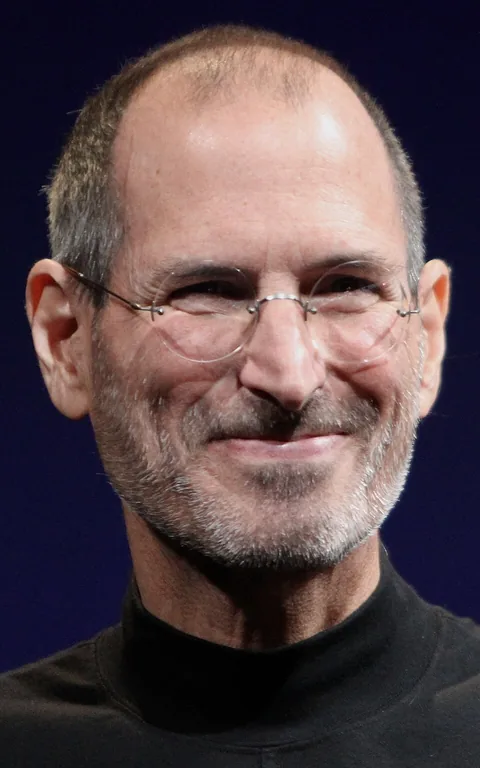

entrepreneur, industrial designer, business executive, film producer
Steve Jobs
Also known as Steven Paul Jobs
Born in San Francisco, California, United StatesDied in Palo Alto, California, United States
American entrepreneur who co-founded Apple, led Pixar, and returned to Apple in 1997 to lead the company through the iMac, iPod, iPhone, and iPad. He died in 2011 of complications from pancreatic cancer.
Official and reference links
Overview
Steven Paul Jobs was born in San Francisco on February 24, 1955, and adopted shortly afterward by Paul and Clara Jobs.[1] In April 1976 he and Steve Wozniak founded Apple Computer to sell the Apple I, which Wozniak had designed.[2] He and a tight-knit team introduced the Macintosh in 1984; he lost a power struggle with Apple's chief executive in 1985 and spent nearly a decade of difficulty at NeXT and Pixar before Apple bought NeXT at the end of 1996 and he returned.[2]
Back at Apple he slashed the product offerings from seventeen to four, and a stream of breakthroughs followed, including the iMac, the iPod, the iPhone, and the iPad, while Pixar, which he also led as chief executive, made Toy Story, the world's first computer-animated feature film, and then a string of blockbuster and award-winning films.[2][3] The Steve Jobs Archive, whose launch Laurene Powell Jobs announced in 2022, says he believed that if you give great tools to talented people, they will use them to make wonderful things.[4]
His record is not all triumph. He was fired from Apple, his NeXT computer hardware flopped, and his biographer Walter Isaacson wrote that Jobs was at times very demanding, "indeed a jerk," while arguing that his petulance was linked to his artistic sensibility and drive for design perfection.[5][6][7]
Jobs died at his home in Palo Alto on October 5, 2011, from complications of a relapse of a pancreatic neuroendocrine tumor, six weeks after resigning as Apple's chief executive.[1][2] In 2022 he was posthumously awarded the Presidential Medal of Freedom.[1]
Life
1955–1972
Boyhood in the Valley
Jobs was born to Joanne Schieble and Abdulfattah Jandali and adopted by Paul and Clara Jobs.[1] He later said his biological mother wanted him adopted by college graduates and relented on the adoption only after his parents promised that he would go to college.[5] Paul Jobs was a machinist who, Jobs recalled, sectioned off a little piece of his garage workbench for him when he was about five or six and taught him how to build things and take them apart.[3]
The family moved from San Francisco to Mountain View when he was five, right in the heart of Silicon Valley. A neighbor named Larry Lang, a Hewlett-Packard engineer, taught the young Jobs a lot of electronics, and building Heathkits gave him the sense that he could build the things he saw around him.[2] School went less well. Jobs said he wanted only to read and chase butterflies, that school came close to beating the curiosity out of him, and that a fourth-grade teacher named Mrs. Hill bribed him back into learning with a math workbook, five dollars, and a giant sucker.[2] He skipped fifth grade, and in 1967 his parents spent all their savings on a house in Los Altos so he could change schools.[1]
At thirteen, in 1968, he cold-called Bill Hewlett to ask for parts for an electronics project and was given a summer job.[1] At Homestead High School he met Bill Fernandez, who introduced him to Steve Wozniak. Wozniak later designed "blue boxes" that could place free long-distance calls, and Jobs decided to sell them, which, Wikipedia says, perhaps planted the seed that electronics could be both fun and profitable.[1]
1972–1976
Reed College, Atari, and India
Jobs enrolled at Reed College in Portland, Oregon, in September 1972.[1] After six months he could not see the value in spending his working-class parents' savings on tuition and dropped out, then kept dropping in on classes that interested him for another year and a half or so.[5] He slept on the floor in friends' rooms, returned Coke bottles for the deposits, and walked seven miles across town every Sunday night for one good meal a week at the Hare Krishna temple.[5] One class he dropped in on was in calligraphy, where he learned about serif and sans-serif typefaces and about what makes great typography great.[5]
Back in California he answered an Atari ad and was hired by its vice president of engineering, Al Alcorn.[2] When Atari needed someone to go to Europe to fix games with engineering defects, Jobs went, arranged to take a leave of absence while he was there, and flew from Zurich to New Delhi.[2] Wikipedia dates the trip to mid-1974, with his Reed friend Daniel Kottke, and says he came home with a shaved head and traditional Indian clothing and became a practitioner of Zen Buddhism under Kōbun Chino Otogawa.[1] Jobs recalled that for about three months after he returned he just read and sat, paying attention to America as a stranger would.[2]
1976–1985
Apple and the Macintosh
Apple Computer was founded in April 1976 by Jobs, Wozniak, and Ron Wayne, who dropped out ten days later.[2] Jobs was twenty-one and, the book's editor notes, inexperienced and unpolished; at Apple's first board meeting he put his bare feet on a conference room table.[2] The Apple II, a machine that could run right out of the box, debuted at the West Coast Computer Faire in April 1977, and Apple went public in December 1980.[2]
In December 1979 Jobs visited Xerox's Palo Alto Research Center and saw a networked computer with a mouse, windows, icons, menus, and multiple typefaces, and he brought the technology and several PARC researchers to Apple.[2] In September 1980 he took over the Lisa project, and nine months later he was removed after the team rebelled against his management style; the $10,000 Lisa failed in the market when it was introduced in 1983.[2] In 1981 he took over the Macintosh project, which Jef Raskin had begun in 1979.[2]
On the Macintosh he insisted that the machine look friendly. Designers Jerry Manock and Terry Oyama brought a new plaster model every month or so, based on his previous criticisms, and Jobs critiqued details such as the chamfer and the bevel.[7] He hired Susan Kare to design the fonts, and when he found them named after Philadelphia commuter-train stops he complained that they ought to be named after world-class cities.[7] In April 1983 he recruited the Pepsi executive John Sculley to run Apple with the line, "Do you want to sell sugar water for the rest of your life, or do you want to come with me and change the world?" The Macintosh debuted in January 1984.[2] Its sales fell far short of projections, and in June 1985 Apple laid off 20 percent of its employees and announced the first quarterly loss in its history.[2]
1985–1996
NeXT and Pixar
Jobs left Apple in September 1985 with five members of the Macintosh team and started NeXT, and in January 1986 he became the majority shareholder in Pixar, a small computer graphics company newly spun off from George Lucas's empire.[2] He later said NeXT made the mistake of following the formula Apple had used, making the whole widget, just as the market and the industry were changing.[3] The NeXT computer, unveiled in October 1988, was visually striking and had its fans, and Tim Berners-Lee wrote the code for the World Wide Web on one, but it sold poorly.[2]
Pixar eked out an existence selling computers and software and, later, animating commercials, while its short films kept Jobs writing checks; he ultimately invested some $60 million.[2] In March 1989 its short Tin Toy won an Oscar, and in July 1991, facing heavy financial pressure, Pixar signed a deal with Disney that was far more favorable to the larger company.[2] During these years Jobs also married Laurene Powell, in March 1991 at Yosemite, and their son Reed was born that September.[2]
Both companies were honed to their essentials. In February 1993 NeXT stopped making computers to focus entirely on software, and Pixar stripped away its advertising and hardware businesses to pursue fully computer-animated feature films.[2] Toy Story opened in November 1995, and a week later Pixar held a successful initial public offering.[2] In December 1996 Apple bought NeXT for $427 million, and Jobs rejoined Apple as a special adviser to the chief executive, Gil Amelio.[2]
1996–2000
Saving Apple
The Apple Jobs came back to had lost $800 million that year, and he had so little trust in its board that he insisted all but two directors resign.[2] In June 1997, in a public show of no confidence in Amelio, he sold a huge block of the Apple shares he had received for NeXT; three months later he was named interim chief executive.[2]
He reviewed the company product by product. In Alan Deutschman's account, in the second review meeting with each team he asked difficult and provocative questions such as, "If you had to cut half your products, what would you do?"[8] He cut the number of research and development projects from 50 to about 10, and the book's editor writes that he slashed the product offerings from seventeen to four, a move that upset some fans and led to thousands of job losses.[8][2] In August 1997 he stood in front of a Macworld audience that was heckling a video appearance by Bill Gates and told them they had to let go of the notion that for Apple to win, Microsoft had to lose.[2] The "Think Different" campaign launched that September and won an Emmy Award for Outstanding Commercial a year later.[2]
He hired Tim Cook as Apple's chief of operations in March 1998, and in August Apple debuted the Bondi Blue iMac, priced at $1,299; Apple announced its first profitable year since 1995 that October.[2][9] In January 2000 Jobs surprised a Macworld audience by dropping "interim" from his title.[2]
2001–2007
iPod, iPhone, and Pixar's rise
Apple released OS X, built on NeXT's software, in March 2001, opened its first stores that May, and introduced the iPod that October as a pocket-sized way to carry a whole music collection.[2][10] The iTunes Music Store opened in April 2003; Jobs said consumers did not want to be treated like criminals and artists did not want their work stolen.[11] Six months later, at the urging of his executive team, he agreed to make the store compatible with non-Apple computers.[2] Isaacson wrote that Jobs immersed himself daily in the iPod's design and applied a rigid test to each screen: he should be able to get to a song or a function in three clicks.[7]
Pixar's Finding Nemo won the Oscar for Best Animated Feature in March 2004.[2] In January 2006 Jobs and Disney's chief executive, Bob Iger, announced that Disney would buy Pixar in an all-stock deal worth $7.4 billion; Disney completed the purchase on May 5, 2006, and Jobs joined its board and became its largest single shareholder.[1][2][12] On June 12, 2005, Jobs gave the Stanford commencement address, built on three stories about connecting the dots, love and loss, and death.[5]
In January 2007 Apple unveiled the iPhone, which Jobs called "literally five years ahead of any other mobile phone," built around what he described as the ultimate pointing device: our fingers.[13]
2008–2011
The last years
Jobs introduced the iPad in January 2010, calling it "a magical and revolutionary device."[14] Toy Story 3 became the highest-grossing animated film of all time that August.[2] His health was failing; he took medical leave in 2009 and again in January 2011.[1]
On August 24, 2011, he wrote to Apple's board that the day had come when he could no longer meet his duties as chief executive, recommended Tim Cook as his successor, and offered to serve as chairman.[15] He died on October 5, 2011, with his wife, children, and sisters at his side, and was buried in an unmarked grave at Alta Mesa Memorial Park in Palo Alto.[1] When he resigned, Apple was the most valuable company in the world.[2]
Habits and rituals
Asking the last-day question
c. 1972 to 2011
At seventeen Jobs read a line that went something like, "If you live each day as if it was your last, someday you'll most certainly be right." He said that for the thirty-three years since, he had looked in the mirror every morning and asked whether he would want to do what he was about to do that day, and that when the answer was no too many days in a row he knew he needed to change something.[5] He called remembering that he would be dead soon the most important tool he had ever encountered to help him make the big choices in life.[5]
Judging design by eye, again and again
1981 to 2011
Jobs reviewed design in person and iteratively. On the Macintosh case, the designers returned every month or so with a new plaster model, lined up beside the earlier versions, which, Isaacson wrote, kept Jobs from insisting that one of his criticisms had been ignored.[7] After a weekend studying appliances, especially the Cuisinart, at the Macy's in Palo Alto, he asked the design team to go buy one and made a raft of new suggestions based on its lines, curves, and bevels.[7] For the iPod he went over each screen, and if getting somewhere took more than three clicks, he would be brutal.[7] He told Wired that to design something really well "you have to get it," and that the Mac's design was primarily how it worked, not what it looked like.[16]
Focus and simplicity by saying no
1997 to 2011
In a 1998 BusinessWeek interview, Jobs said "focus and simplicity" had been one of his mantras, and that simple can be harder than complex because you have to work hard to get your thinking clean.[9] The book's editor writes that his second tenure at Apple "was a study in focus," starting with the cut from seventeen product offerings to four.[2] Alan Deutschman's account of the 1997 product reviews shows the method: each team had to show all of its existing products and future plans, and Jobs said he would keep only the great products and the profitable ones, while managers of strategic but unprofitable products had to argue for them.[8]
Collecting experiences to connect
1972 to 2011
Jobs credited breadth for his work. He followed his curiosity into a calligraphy class that later shaped the Macintosh's typography, and, as he told Wired, he believed creativity comes from connecting experiences, which means having enough experiences to connect.[5][16] He also asked experts for help on questions that interested him: in 1985 he told Newsweek that the insight behind NeXT came after he called Paul Berg, the inventor of some of the recombinant DNA techniques, admitted he was ignorant about the subject, and asked him to lunch, where Berg showed him how gene repair was done.[2]
Zen practice and long walks
1974 to 2011
Jobs practiced Zen Buddhism; Wikipedia says he engaged in lengthy meditation retreats at the Tassajara Zen Mountain Center and maintained a lifelong appreciation for Zen.[1] His college friend Daniel Kottke said Zen's influence showed in Jobs's "stark, minimalist aesthetics, intense focus," and Jobs told Isaacson that the most sublime thing he had ever seen was the gardens around Kyoto.[7] Describing the summer of 1985, when Sculley said publicly that there was no role for him at Apple, he told Newsweek that the thing he had to do was try to relax, and that he went for a lot of long walks in the woods.[2]
Recruiting, then going straight to the people
1976 to 2011
Jobs saw his job as chief executive of Apple and Pixar as "number one, recruit; number two, set an overall direction; and number three, inspire and cajole and persuade," and said that if you are smart you are hiring twenty-five-year-olds who are smarter than you.[2] After his 1997 return, Deutschman wrote, he disregarded the chain of command, remembering what several hundred people did and calling on whomever he needed, always bypassing their managers.[8] In 1985 he said that what he was best at was finding a group of talented people and making things with them.[2]
A uniform and bare feet
c. 1980s to 2011
Jobs usually went to work in a black long-sleeved mock turtleneck made by Issey Miyake, Levi's 501 blue jeans, and New Balance 991 sneakers. Wikipedia, quoting his biographer Walter Isaacson, says he came to like the idea of having a uniform both for its daily convenience and for its ability to convey a signature style.[1] He was known to appear barefoot in public, a habit that Wikipedia traces to his countercultural background.[1]
Drafting, practicing, and redrafting
1976 to 2011
The Steve Jobs Archive says that in everything he did, Jobs "revised and drafted and redrafted and practiced and asked for advice and sweated the details," and insisted his teams do the same.[4] For the 2005 Stanford speech, he spent the six months before commencement sending himself notes, outlines, and drafts of ideas, did not use the suggestions Apple's PR team offered, and in the final weeks, working closely with his wife Laurene, wrote the speech himself, which he then read verbatim.[17]
Setbacks and comebacks
Forced out of Apple 1985–1986
What happened
When Macintosh sales fell far short of projections in 1985, Apple laid off 20 percent of its employees and announced its first quarterly loss.[2] After losing a power struggle with John Sculley, Jobs left in September 1985 with five Mac team members, and within days Apple sued him for breach of fiduciary responsibility.[2] The departure was officially a resignation, but he considered it a betrayal, and he told Newsweek that hearing Sculley say there was no role for him felt like being punched in the stomach.[2] Later he said he had been "a very public failure," had met with David Packard and Bob Noyce to try to apologize for screwing up so badly, and had even thought about running away from the Valley.[5]
The cause
Jobs said that the visions of the future held by him and by the executive he had hired to run Apple with him began to diverge, and that when they had a falling out the board sided with the other man.[5] The book's editor writes that he had begun clashing with his handpicked chief executive, John Sculley, and that his management style was divisive.[2] Wikipedia describes a clash over strategy: Sculley favored open-architecture computers like the Apple II, while Jobs wanted to focus on the closed-architecture Macintosh.[1] Isaacson wrote that the excess costs and delays Jobs incurred by indulging his artistic sensibilities contributed to his ouster.[7] Jobs himself told Newsweek weeks later that he could be very intense in his convictions and that he was sure he would one day see things about 1985 that he could have handled much better.[2]
The comeback
Weeks after leaving, he told Newsweek that he wanted to build things and, if there was no place for him to make things at Apple, he would make his own place.[2] He founded NeXT and, in January 1986, became the majority shareholder of Pixar.[2] Years later he called the firing "awful-tasting medicine" that he guessed the patient needed, saying that the heaviness of being successful was replaced by the lightness of being a beginner again.[5] In December 1996 Apple bought NeXT for $427 million, and Jobs rejoined the company he had co-founded.[2]
The NeXT computer that did not sell 1988–1996
What happened
The NeXT computer, unveiled in October 1988, was powerful and visually striking but late to market and expensive, and it sold poorly; within six years of NeXT's launch, the entire founding team other than Jobs had resigned.[2] Fortune reported in 1997 that in over four years NeXT shipped just 50,000 units, and the book's editor writes that the shift to software meant closing a factory and laying off more than two hundred of NeXT's five hundred and thirty employees.[6][2] Pixar was struggling at the same time, eking out an existence selling computers and software and animating commercials, and Jobs ultimately invested some $60 million in it.[2]
The cause
Jobs said NeXT made the mistake of following the same formula as Apple, making the whole widget, while the market, the industry, and the scale were changing, and that NeXT should have just gone on to be a software company right off the bat.[3] The book's editor describes the machine as powerful and packed with humanistic touches but late to market and expensive.[2]
The comeback
In February 1993 Jobs ended NeXT's production of computers to focus entirely on software, and Pixar stripped away its advertising and hardware businesses and entered into an agreement with Disney to pursue fully computer-animated feature films.[2] Toy Story opened in November 1995 with a $29 million weekend and Pixar's initial public offering followed a week later.[2] Fortune wrote in 1997 that in both cases perseverance had paid, with Jobs's Pixar stake then worth $450 million.[6] After Apple bought NeXT, its NeXTStep software became the basis of Apple's OS X.[2]
Cancer and a failing body 2003–2011
What happened
In October 2003 Jobs was diagnosed with cancer, and in July 2004 he had surgery to remove a pancreatic neuroendocrine tumor.[1][2] His biographer Walter Isaacson reported that for nine months he refused surgery, a decision he later regretted as his health declined.[1] The disease returned; he took medical leave in 2009, received a liver transplant that year, took another leave in January 2011, and resigned as chief executive that August.[1][2][15]
The cause
The cause was a rare, less aggressive type of pancreatic cancer, an islet-cell neuroendocrine tumor, which Jobs said in 2005 was curable with surgery.[5][1] During the nine months before he agreed to surgery he tried a vegan diet, acupuncture, herbal remedies, and other treatments, per Isaacson, and the cancer researcher David Gorski wrote that it is impossible to know whether and by how much the delay decreased his chances of survival.[1]
The comeback
In the 2005 Stanford speech he called the diagnosis the closest he had been to facing death and said that, having lived through it, he could speak about death with a bit more certainty than when it had been "a useful but purely intellectual concept," and he called remembering that he would be dead soon his most important tool for making the big choices in life.[5] After the 2009 liver transplant he returned to work and introduced the iPad in January 2010.[1][14] The tumor relapsed, and Wikipedia reports that complications from the relapse resulted in respiratory arrest in 2011, but he continued to work for Apple until the day before he died, having become chairman when he handed the chief executive role to Tim Cook.[1][15]
In their own words
Your time is limited, so don't waste it living someone else's life.[5]
Commencement address, Stanford University (June 12, 2005) · Source You can't connect the dots looking forward. You can only connect them looking backwards, so you have to trust that the dots will somehow connect in your future.[5]
Commencement address, Stanford University (June 12, 2005) · Source The heaviness of being successful was replaced by the lightness of being a beginner again, less sure about everything.[5]
Commencement address, Stanford University (June 12, 2005) · Source Sometimes life's gonna hit you in the head with a brick. Don't lose faith.[5]
Commencement address, Stanford University (June 12, 2005) · Source If today were the last day of my life, would I wanna do what I am about to do today?[5]
Commencement address, Stanford University (June 12, 2005) · Source The only way to do great work is to love what you do.[5]
Commencement address, Stanford University (June 12, 2005) · Source Stay hungry. Stay foolish.[5]
Commencement address, Stanford University (June 12, 2005) · Source Creativity is just connecting things. When you ask creative people how they did something, they feel a little guilty because they didn't really do it, they just saw something.[16]
Interview with Gary Wolf, Wired (February 1996) · Source Design is a funny word. Some people think design means how it looks. But of course, if you dig deeper, it's really how it works.[16]
Interview with Gary Wolf, Wired (February 1996) · Source A lot of times, people don't know what they want until you show it to them.[9]
Interview, BusinessWeek (May 25, 1998) · Source Simple can be harder than complex: You have to work hard to get your thinking clean to make it simple. But it's worth it in the end because once you get there, you can move mountains.[9]
Interview, BusinessWeek (May 25, 1998) · Source I'm convinced that about half of what separates the successful entrepreneurs from the non-successful ones is pure perseverance.[3]
Computerworld Smithsonian Awards oral history interview (April 20, 1995) · Source I personally, man, I want to build things. I'm thirty. I'm not ready to be an industry pundit.[2]
Interview with Newsweek (1985), in Make Something Wonderful · Source The main thing in our design is that we have to make things intuitively obvious.[7]
Talk at the International Design Conference in Aspen (1983), as quoted in Smithsonian magazine (2012) · Source We are all born with the ultimate pointing device—our fingers—and iPhone uses them to create the most revolutionary user interface since the mouse.[13]
Apple press release on the iPhone (January 9, 2007) · Source One of the ways that I believe people express their appreciation to the rest of humanity is to make something wonderful and put it out there.[2]
Speech at Apple Town Hall (2007), in Make Something Wonderful · Source I have always said if there ever came a day when I could no longer meet my duties and expectations as Apple's CEO, I would be the first to let you know. Unfortunately, that day has come.[15]
Letter to the Apple Board of Directors and the Apple Community (August 24, 2011) · Source
Pictures
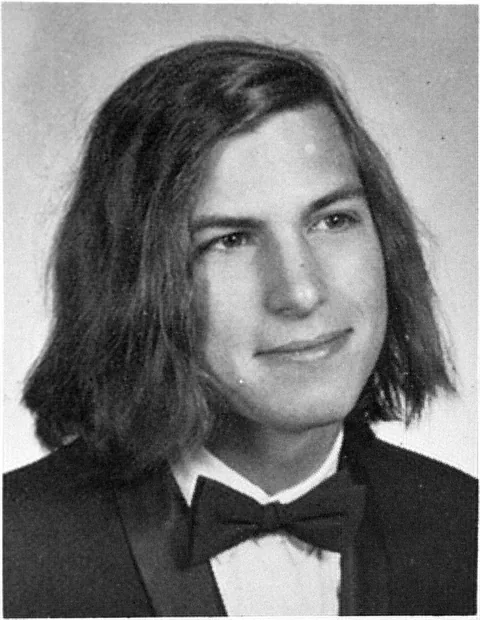
Jobs in the 1972 yearbook of Homestead High School in Cupertino, California.1972Photo: · Public domain · Wikimedia Commons 
The garage of the Jobs family home on Crist Drive in Los Altos, California, where Apple began.2007-05-25Photo: · CC BY-SA 2.0 · Wikimedia Commons 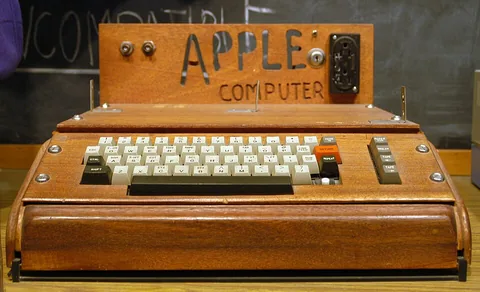
An Apple I, the circuit board that Steve Wozniak designed and Jobs proposed selling.2003-03-28Photo: · CC BY-SA 2.0 · Wikimedia Commons 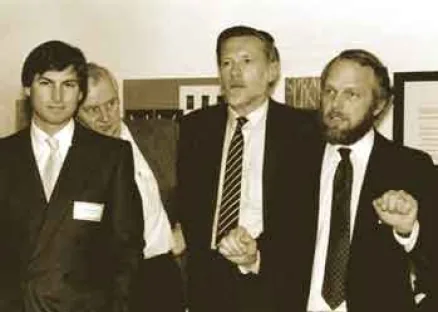
Jobs with John Warnock and Charles Geschke of Adobe in the early stages of PostScript and the LaserWriter, as Commons describes the picture.1980sPhoto: · CC BY-SA 3.0 · Wikimedia Commons 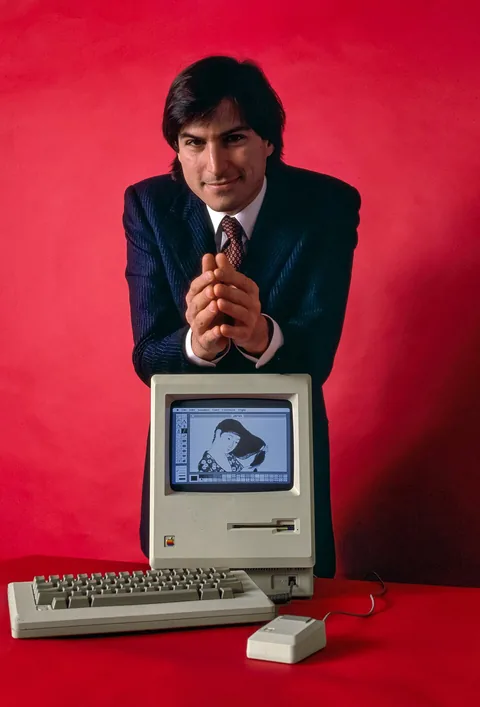
Jobs with a Macintosh in January 1984, the month it was introduced.1984-01Photo: · Public domain · Wikimedia Commons 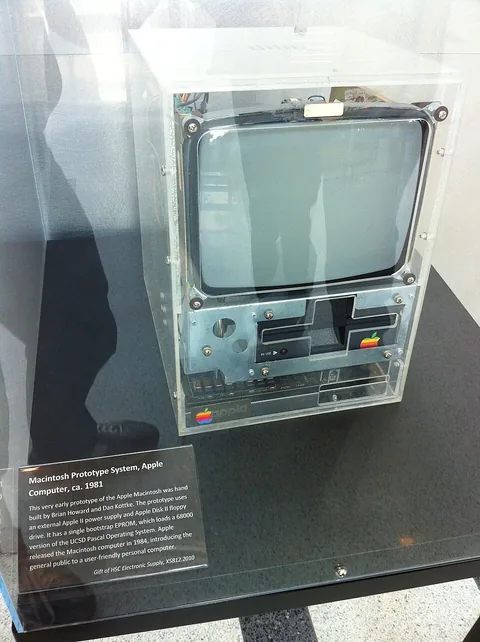
An early Macintosh prototype on display at the Computer History Museum in Mountain View, California.2013-04-11Photo: · CC BY-SA 3.0 · Wikimedia Commons 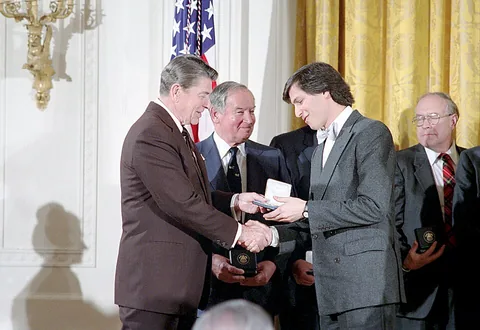
President Ronald Reagan presenting the 1985 National Technology Awards to Jobs in the East Room of the White House.1985-02-19Photo: · Public domain · Wikimedia Commons 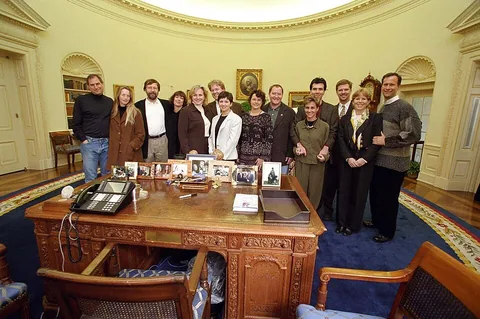
Jobs in the Oval Office with the crew of A Bug's Life, November 1998.1998-11-09Photo: · Public domain · Wikimedia Commons 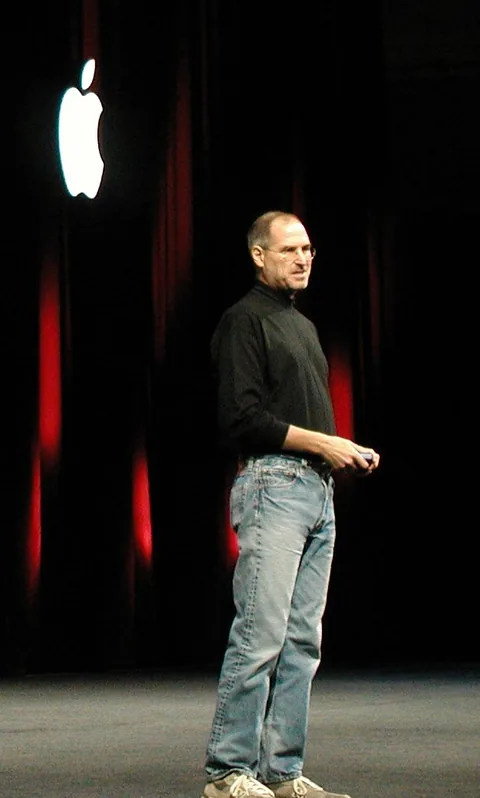
Jobs onstage at the Macworld Conference & Expo in San Francisco, January 2005.2005-01-11Photo: · CC BY 2.0 · Wikimedia Commons 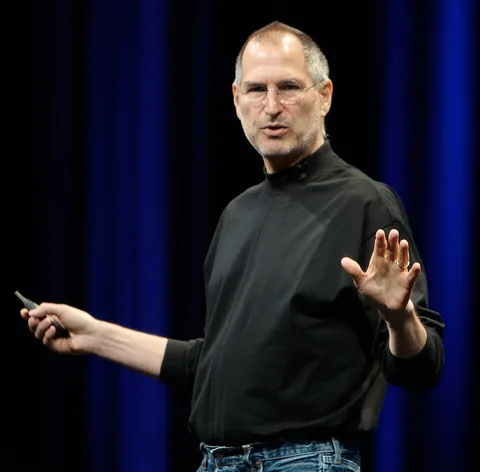
Jobs at Apple's Worldwide Developers Conference in 2007.2007-06Photo: · CC BY-SA 2.0 · Wikimedia Commons 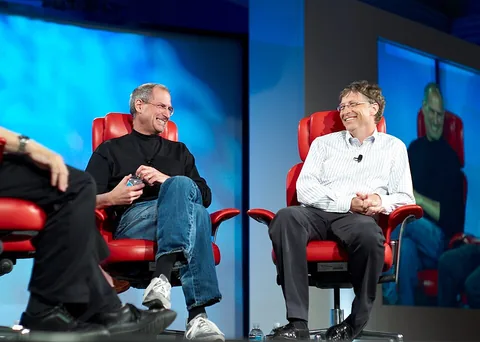
Jobs and Bill Gates being interviewed by Walt Mossberg and Kara Swisher at the D5 conference in Carlsbad, California, 2007.2007-05-31Photo: · CC BY 2.0 · Wikimedia Commons 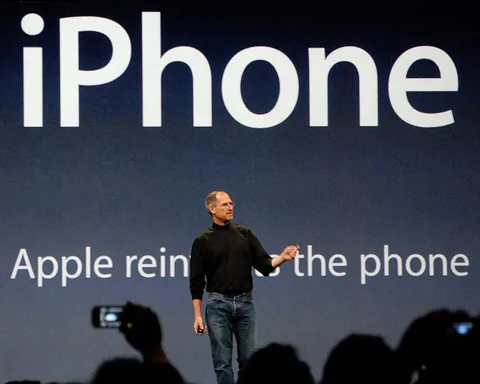
Jobs presenting the iPhone at Macworld in San Francisco, January 9, 2007.2007-01-09Photo: · CC BY 2.0 · Wikimedia Commons 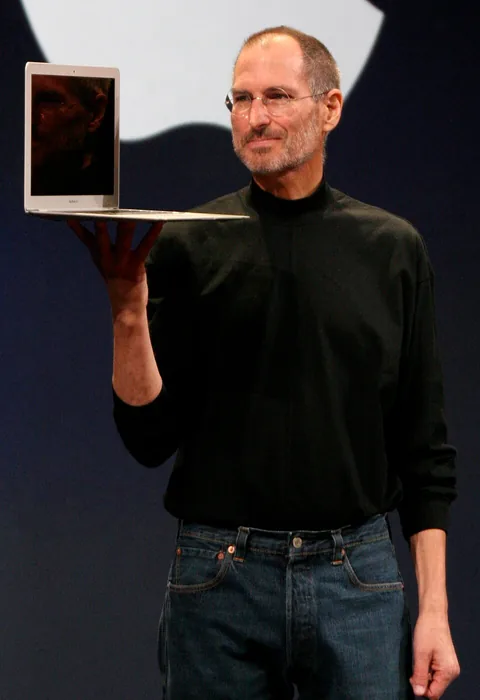
Jobs at Macworld 2008 with the MacBook Air.2008-03-04Photo: · CC BY 3.0 · Wikimedia Commons 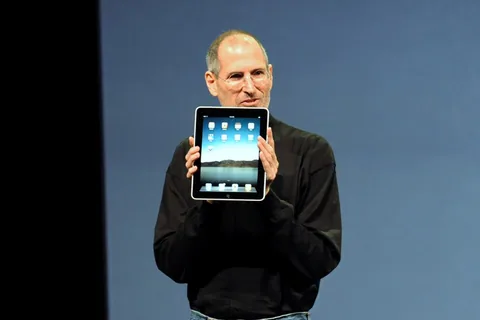
Jobs introducing the iPad in San Francisco, January 27, 2010.2010-01-27Photo: · CC BY 2.0 · Wikimedia Commons Jobs at the 2010 Worldwide Developers Conference, where he showed the iPhone 4.2010-06-07Photo: · CC BY-SA 3.0 · Wikimedia Commons 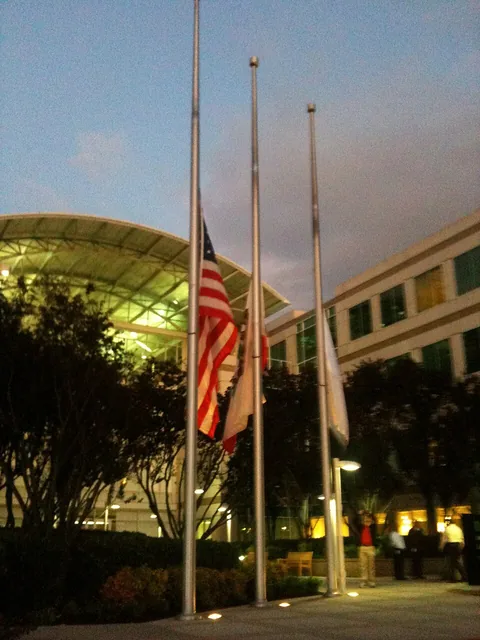
American, California, and Apple flags at half-mast on the evening Jobs died.2011-10-05Photo: · CC BY-SA 3.0 · Wikimedia Commons


Watch and listen
- Stay hungry, stay foolish: Steve's 2005 Stanford commencement address (enhanced video)
- Steve Jobs: How to live before you die (Stanford commencement address, 2005)
- Read and Watch Steve Jobs' Stanford Commencement Address
- The Objects of Our Life: clips from Steve's talk at the 1983 International Design Conference in Aspen
- The Very First Stevenote: Jobs introduces the Macintosh to the Boston Computer Society
Read
Notes
- "Steve Jobs," Wikipedia, accessed November 27, 2026 (used for birth, adoption, schooling and early jobs, the Reed and India period, the Sculley dispute, the Disney-Pixar announcement, health history, death, burial, the Medal of Freedom, and his clothing). https://en.wikipedia.org/wiki/Steve_Jobs↩1↩2↩3↩4↩5↩6↩7↩8↩9↩10↩11↩12↩13↩14↩15↩16↩17↩18↩19↩20↩21↩22↩23
- Steve Jobs, Make Something Wonderful: Steve Jobs in His Own Words, ed. Leslie Berlin (Steve Jobs Archive, 2023), editor's notes, "Key Events" timeline, and interview and speech excerpts, accessed November 27, 2026. https://book.stevejobsarchive.com/↩1↩2↩3↩4↩5↩6↩7↩8↩9↩10↩11↩12↩13↩14↩15↩16↩17↩18↩19↩20↩21↩22↩23↩24↩25↩26↩27↩28↩29↩30↩31↩32↩33↩34↩35↩36↩37↩38↩39↩40↩41↩42↩43↩44↩45↩46↩47↩48↩49↩50↩51↩52↩53↩54↩55↩56↩57↩58↩59↩60↩61↩62
- Steve Jobs, oral history interview by Daniel Morrow, Computerworld Smithsonian Awards Program, April 20, 1995, excerpts, Smithsonian National Museum of American History, accessed November 27, 2026. https://americanhistory.si.edu/comphist/sj1.html↩1↩2↩3↩4↩5
- "About the Archive," Steve Jobs Archive, accessed November 27, 2026. https://stevejobsarchive.com/about↩1↩2
- Steve Jobs, "Commencement Address," Stanford University, June 12, 2005, prepared text published as "'You've got to find what you love,' Jobs says," Stanford Report, June 12, 2005, accessed November 27, 2026. https://news.stanford.edu/stories/2005/06/youve-got-find-love-jobs-says↩1↩2↩3↩4↩5↩6↩7↩8↩9↩10↩11↩12↩13↩14↩15↩16↩17↩18↩19↩20↩21
- "Something's Rotten in Cupertino," Fortune, March 3, 1997, accessed November 27, 2026. https://fortune.com/1997/03/03/somethings-rotten-in-cupertino/↩1↩2↩3
- Walter Isaacson, "How Steve Jobs' Love of Simplicity Fueled a Design Revolution," Smithsonian magazine, September 2012, accessed November 27, 2026. https://www.smithsonianmag.com/arts-culture/how-steve-jobs-love-of-simplicity-fueled-a-design-revolution-23868877/↩1↩2↩3↩4↩5↩6↩7↩8↩9↩10
- Alan Deutschman, "The once and future Steve Jobs," Salon, October 11, 2000, accessed November 27, 2026. https://salon.com/2000/10/11/jobs_excerpt↩1↩2↩3↩4
- "Steve Jobs: 'There's Sanity Returning,'" BusinessWeek, May 25, 1998 (extended online Q&A), accessed November 27, 2026 through an archived copy. Original: https://www.bloomberg.com/news/articles/1998-05-25/steve-jobs-theres-sanity-returning; archived copy read: https://web.archive.org/web/2012/https://www.bloomberg.com/news/articles/1998-05-25/steve-jobs-theres-sanity-returning↩1↩2↩3↩4
- "Apple Presents iPod," Apple press release, October 23, 2001, accessed November 27, 2026. https://www.apple.com/newsroom/2001/10/23Apple-Presents-iPod/↩
- "Apple Launches the iTunes Music Store," Apple press release, April 28, 2003, accessed November 27, 2026. https://www.apple.com/newsroom/2003/04/28Apple-Launches-the-iTunes-Music-Store/↩
- "Disney Completes Pixar Acquisition," The Walt Disney Company press release, May 5, 2006, accessed November 27, 2026. https://thewaltdisneycompany.com/press-releases/disney-completes-pixar-acquisition/↩
- "Apple Reinvents the Phone with iPhone," Apple press release, January 9, 2007, accessed November 27, 2026. https://www.apple.com/newsroom/2007/01/09Apple-Reinvents-the-Phone-with-iPhone/↩1↩2
- "Apple Launches iPad," Apple press release, January 27, 2010, accessed November 27, 2026. https://www.apple.com/newsroom/2010/01/27Apple-Launches-iPad/↩1↩2
- Steve Jobs, "Letter from Steve Jobs," Apple Newsroom, August 24, 2011, accessed November 27, 2026. https://www.apple.com/newsroom/2011/08/24Letter-from-Steve-Jobs/↩1↩2↩3↩4
- Gary Wolf, "Steve Jobs: The Next Insanely Great Thing," Wired, February 1, 1996, accessed November 27, 2026. https://www.wired.com/1996/02/jobs-2/↩1↩2↩3↩4
- "Stay hungry, stay foolish," Steve Jobs Archive, June 12, 2025, accessed November 27, 2026. https://stevejobsarchive.com/stories/stay-hungry-stay-foolish↩