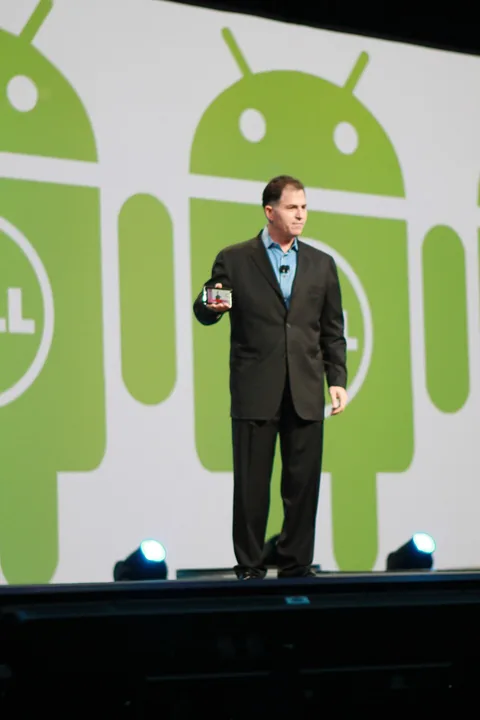

businessman, investor, philanthropist, author
Michael Dell
Also known as Michael Saul Dell
Born in Houston, Texas, United States
American founder, chairman, and chief executive of Dell Technologies, who started his company with $1,000 at 19 after selling computer upgrade kits from a University of Texas dorm room. He also formed the family investment firm now called DFO Management and, with his wife Susan, the Michael & Susan Dell Foundation.
Official and reference links
- Michael Dell at Dell TechnologiesOfficial
- WikipediaReference
- WikiquoteReference
- Michael & Susan Dell FoundationFoundation
- Academy of Achievement profile and interviewArchive
- Wikimedia Commons categoryArchive
Overview
Michael Saul Dell was born on February 23, 1965, in Houston, Texas.[1] As a University of Texas freshman he sold computer upgrade kits, and in 1984, at 19, he founded his company with $1,000. Today he is chairman and chief executive of Dell Technologies.[2][3]
His business model was to assemble computers to order and sell them directly to customers, bypassing traditional retailers. In 1992, at 27, he became the youngest CEO of a company on the Fortune 500.[2]
The path was not a straight line. He stepped down as CEO in 2004 while staying chairman and was asked back by the board in 2007.[2][4] In 2010 he agreed to pay $4 million to settle SEC charges that he played a role in the company's disclosure violations.[5] He won a long fight with large shareholders to take Dell private in 2013 and completed the record EMC acquisition in 2016.[6][7] The company returned to the public markets in 2018.[1]
He and his wife, Susan, established the Michael & Susan Dell Foundation in 1999, and in 2025 they committed $6.25 billion to fund investment accounts for 25 million American children.[1][3] This profile is current to November 27, 2026, and carries the dates of its sources.
Life
1965–1983
A curious kid in Houston
Dell was born in Houston on February 23, 1965. His father, Alexander, was an orthodontist, and his mother, Lorraine, was a stockbroker.[1] He described himself in 2008 as the middle of three boys, and as an "okay student" who did better in math and science.[2]
Taking things apart came first. He told the Academy of Achievement that he liked to take apart telephones, radios, and televisions to see how they worked, and in 2014 he remembered being fascinated by his father's adding machine.[2][8] In a junior high math class, a teletype terminal let him write a program, send it to a mainframe, and get the answer back.[2][8] When he finally got his first computer, at 14, he said in 2019, he took it apart piece by piece to examine the circuits.[9]
He was in a hurry, too. At eight he sent away for a high school equivalency exam after seeing an ad in a magazine; a woman from the testing company came to the door, and his mother told her he was taking his bath.[9] At 12 he had his first job, washing dishes at a Chinese restaurant. By his early teens he was investing money from part-time jobs in stocks and precious metals, and he said that at 13 he was reading reports on currencies, interest rates, and commodity prices and investing real money.[2]
At 16 he sold subscriptions to a Houston newspaper by phone. He noticed that the people buying were usually moving or getting married, learned that marriage license applications in Texas are public information, hired his friends to collect the applicants' addresses in the 16 counties around Houston, and mailed them offers of a free trial. He made about $18,000 in a year, and his government economics teacher told him his tax return, filled out for a class assignment, could not be right because he had made more money than she had.[2]
1983–1988
Dobie dorm room and PC's Limited
Dell enrolled at the University of Texas at Austin in 1983 as a pre-med student, following his family's expectations.[10] From his dorm room in Dobie he started a business selling hard disk drive and memory upgrade packages for the computers of the day.[10]
His parents found out. Around Thanksgiving of 1983 they made him promise to drop the business and focus on his studies; that lasted about ten days, and he said in 2008 that being told to stop is "probably what caused the company to get created."[2] He moved into a larger apartment with high ceilings, where he could stack things up and keep the business hidden from them, then reached an arrangement: he would take the fall 1984 semester off, and if the business did not work out he would go back to school. He incorporated in May 1984.[2]
The early product was an upgrade kit, not a computer. A customer from Martin Marietta who wanted 150 hard disk drive kits saw the basic computers the team used to format the drives and asked whether he could buy those. The team built a fully assembled computer for an Austin computer fair, priced it at $795, and within about three or four months the whole business had shifted to making computers.[2] Most of the business, he said, came from large companies and public institutions rather than consumers and hobbyists.[2]
At the Comdex trade show in the spring of 1986, he said, his 12-megahertz 286 computer sold for $1,995, while IBM's fastest, a six-megahertz 286, cost $3,995; there were two long lines at his booth.[2] Because customers often paid right when the product shipped, the company could grow quickly without much capital.[2] In 1988, at 23, he took the company public, raising $30 million.[2]
1987–1996
Going global, learning fast
Dell launched in the United Kingdom in 1987, when the company was three years old. By his account about 21 of the 22 journalists at the launch said it would never work; the company had already started selling there, and the U.K. grew faster than the U.S.[2] About seven or eight months earlier, he and some of the company's people and a few outside advisors had set three strategies: go outside the United States, go after large companies, and differentiate on service, including next-day on-site repair.[2]
In 1989 he flew to California to take business classes at Stanford and, while he was there, called Silicon Valley chief executives, including Irwin Federman, Jimmy Treybig, and Andy Grove, to ask how they managed big companies. Most said yes.[11] In a 2007 Stanford talk, as the university's repository summarizes it, he explained that in 1989 the company had a large problem with inventory management and failed to make a technology transition properly; it learned to manage inventory correctly and, he said, became the best in the world at it.[12]
By 1992, at age 27, he was the youngest CEO ever to lead a Fortune 500 company.[2] In 1993 the company had problems that he called multifaceted, one big challenge being that it had grown so fast; the setbacks section tells that story.[2] In the 2007 Stanford talk he also described an early team of hardworking, versatile people who were action-oriented and willing to listen, and noted that at a fast-growing company the job grows faster than the person.[13]
1996–2004
The web and the top of the PC market
When Dell filled its first web orders in July 1996, many in business were skeptical of online sales, but the site sold 30 to 50 computers a day with no promotion, and by the end of the decade daily online sales reached $18 million.[2] In the first quarter of 2001 the company passed Compaq to become the world's largest PC maker, with a 12.8 percent market share.[1]
He also built outside the company. In 1998 he formed MSD Capital, now DFO Management, a private investment firm that manages the Dell family's capital, and in 1999 he and Susan established the Michael & Susan Dell Foundation.[3][1] The same year he published his first book, Direct from Dell, written with Catherine Fredman.[1]
In 2004 he stepped down as CEO and stayed on as chairman.[2] He explained in 2008 that after 20 years as CEO he decided to give somebody else a shot at the job.[2]
2004–2012
Chairman, then CEO again
While Dell focused on philanthropy (in 2006 the University of Texas announced a $50 million matching grant from the family foundation for three new facilities), the company fell to second place in the PC market.[2] On January 31, 2007, the board brought him back as CEO.[1][4]
He set the company on a new course: build capability in solutions, services, and software, and start acquiring other companies.[8] The company began selling through national retailers such as Wal-Mart and Sam's Club, moved aggressively into China, and in 2008 its sales topped $60 billion, according to the Academy of Achievement.[2] Dell later described a "negative feedback loop" in which the company would pursue new businesses, the market would object, the stock would fall, and "that wears on people."[8]
In July 2010, Dell Inc. settled SEC charges over its disclosures and accounting; the setbacks section covers it.[5] In 2012, as consumers spent more on smartphones and tablets, PC sales fell for the first time in a decade.[2]
2012–2016
Taking Dell private, then buying EMC
On February 5, 2013, the company announced that Dell and the investment firm Silver Lake had offered $24.4 billion, or $13.65 a share, to take it private; the financing included a $2 billion loan from Microsoft.[6] Major shareholders including Carl Icahn and Southeastern Asset Management said the company was undervalued. After months of counteroffers, Dell and Silver Lake raised their bid to $13.75 a share plus a special dividend. Icahn gave up that September, writing that the offer would be "almost impossible" to defeat, and shareholders approved the buyout on September 12, 2013.[6][14] Dell Inc. officially went private that October.[1]
A year later Dell told the Council on Foreign Relations that going private had been "a pretty harrowing process" with "some pretty dark moments," but that he felt "absolutely great" and was "even more convinced that it was the right thing to do."[8] Asked about the "ninety-day shot clock" of quarterly reporting, he said a large public company's leaders focus on delivering the expected results, and that after going private the company had to retrain people to look for new opportunities, take on some new risks, and accept some volatility.[8]
On October 12, 2015, Dell Inc. announced its intent to acquire EMC; at $67 billion, the deal was then labeled the highest-valued technology acquisition in history.[1] It was completed on September 7, 2016, creating Dell Technologies, which Agence France-Presse described as the largest privately held technology group.[1][7] Dell said, "We are at the dawn of the next industrial revolution."[7]
2016–present
Dell Technologies and the AI era
Dell Technologies returned to the public markets in December 2018.[1] Speaking to University of Texas graduates in 2019, he said that transforming the company, by going private and then making the largest acquisition in technology history, took "some of the biggest risks of my life," and that the skeptics had been motivation to prove them all wrong.[9]
In November 2023, according to the Academy of Achievement, Dell and Silver Lake made substantial profits from VMware's $92 billion sale to Broadcom.[2] In a May 20, 2024 keynote at Dell Technologies World he called artificial intelligence "a generational opportunity for productivity, innovation, and growth," and the company introduced its AI Factory, built in part on a partnership with NVIDIA.[15]
The family's giving has grown with the company. The Michael & Susan Dell Foundation says it is a private foundation established by the Dell family and not affiliated with Dell Technologies.[16] In 2025 the couple committed $6.25 billion to fund $250 investment accounts for 25 million American children.[3][2][16] In April 2026 they announced a $750 million gift to The University of Texas at Austin.[2] As of the Dell page read on November 27, 2026, he is chairman and chief executive of Dell Technologies and was honored in 2026 with the National Medal of Technology and Innovation.[3]
Habits and rituals
Taking things apart to see how they work
1970s–1980s
Dell's start in computing was hands-on. He took apart phones, radios, and televisions as a boy, and he took his first computer apart piece by piece to study the circuits.[2][9] In 2008 he explained that early PCs used standardized chips, so you could get a book about each chip, read what each pin did, and then start asking how to improve the machine.[2]
Listening to the customer directly
1984–present
The direct model was a way of listening. Dell said in 2008 that the company had about two billion conversations a year with customers, through Dell.com, face-to-face meetings, phone, email, and conferences, and that "this theme of listening has really been important for us."[2] The first item in his 2021 list of principles is curiosity: "You want to have big ears," and "Design your product from the customer back."[17]
Letting facts and data decide
1981–present
He called his teenage newspaper business "data-driven": he found that buyers were usually newlyweds or people moving to a new home and went looking for them in public records, and he said Dell later applied some of the same ideas.[2] In 2021 he made it a principle: "Use facts and data to make decisions," and be objective, humble, and willing to change your mind if the facts and data suggest it.[17]
Learning from people further down the road
1989–present
Five years into the company, he took business classes at Stanford and built his own curriculum by calling Silicon Valley chief executives to ask how they managed big companies. "I was doing everything I could to learn and get help," he said.[11] His principles include a related rule: try never to be the smartest person in the room.[17]
Experiment, make mistakes, fix them fast
1984–present
In 2011 Dell told University of Texas students that "you don't want to try to have a perfect plan," that you learn when you are failing, not when you are succeeding, and that you want to make a lot of mistakes and correct them.[10] On problems, he said in 2008, "you fix it as fast as you can find it and just move on," and that repeating the same mistake is what is not acceptable.[2]
Calculated risk, not gambling
1984–present
In 2014 Dell said risk-taking is natural for him but that he is "not like a gambler," so his risks are "pretty calculated." He added that big companies are not good at taking risks.[8] In 2019 he said that taking the company private and then making the largest acquisition in technology history took "some of the biggest risks of my life."[9]
Early to bed, exercise before dawn
As reported in December 2024
On the In Good Company podcast, as Entrepreneur reported in December 2024, when he was 59, Dell said he goes to bed at about 8:30 or 9 p.m. and wakes up around 4 or 5 a.m. to exercise: "You won't find me at the nightcap. I'll be asleep." He also said he learned long ago that there is a diminishing return to the number of hours worked in a day, and that anyone doing something for a long time needs the right mix of working, playing, and relaxing.[18]
Laughing, joking, and staying restless
2021 and as reported in December 2024
In the same interview, Entrepreneur reported, he said humor plays a key role at his company, adding, "You have to be able to laugh at yourself."[18] His 2021 principles add a restless streak: be, as he says they like to say at Dell, "pleased, but never satisfied," which "means being in a race with no finish line."[17]
Setbacks and comebacks
1989 to 1993: growing faster than the company could manage 1989–1993
What happened
Dell has described two stumbles in these years. In 1989, the year after the IPO, the company had a large problem with inventory management and failed to transition properly from one technology to the next.[12] By 1993 revenue had grown so fast, in one year from less than $900 million to over $2 billion, that, in his words, "the infrastructure and the systems and processes were not really keeping up."[2] In the same 2008 interview he described a failed project called Olympic: a new computer architecture reaching into servers and workstations that proved technically too much for the team to digest, for customers who were not really ready for it.[2]
The cause
He took the blame for doing too much at once: "I was absolutely to blame. We were going and doing so many things at one time."[2] In a 2007 Stanford talk, as the university's repository summarizes it, he also said the company did not have the systems and processes to deal with rapid growth, and that at a fast-growing company the job grows faster than the person.[12][13]
The comeback
The company, he said, had to stop and re-evaluate things. He learned the hard way, he said, that there is such a thing as growing too fast, and that the company had to "take a time out" and "hone it back."[2] After the inventory problem, the company learned to manage inventory correctly and, he said, became the best in the world at it; it also installed a much better set of processes that supported further growth.[12] On Olympic, he drew the lesson that the goal is relevant technology that matters to customers, not technology for its own sake.[2]
2004 to 2007: losing the lead 2004–2007
What happened
In the two and a half years after Dell handed the CEO title to Kevin Rollins, the company lost its position as the top PC vendor, with Hewlett-Packard passing it in the third quarter of 2006, according to Gartner.[4] In August 2006 Dell was forced to recall 4.2 million defective laptop batteries because of a fire hazard, and the company was weathering a formal SEC investigation into its accounting practices.[4] On January 31, 2007, Rollins resigned and the board returned Dell to the CEO role, saying there was "no better person in the world to run Dell at this time."[4]
The cause
A Gartner analyst quoted at the time said Dell's core U.S. enterprise market had slowed, HP had rebounded, and Dell had not gained ground outside the United States.[4] Dell's own explanation in 2008 was that "a number of things changed in the industry" and that it was time for "a clear, decisive set of decisions to set the company on a different path."[2] On the batteries, he said Dell's investigation found that a supplier, Sony, had made some batteries with a small likelihood of a defect.[2]
The comeback
After returning, Dell set a new direction around solutions, services, and software, with acquisitions, and the company began selling through national retailers and moved into China; its sales topped $60 billion in 2008.[8][2] On the batteries, he said Dell decided to recall all of them, and that every company that used the same Sony batteries eventually announced recalls too: "One battery failing is one too many." His rule, he said, is that "when you find a problem, you fix it as fast as you can find it and just move on."[2]
2005 to 2010: the SEC disclosure and accounting case 2005–2010
What happened
The Securities and Exchange Commission opened an investigation into Dell in 2005, and the next year the company launched an internal investigation into its accounting and financial reporting. In 2007, The Register reported, the company said it had manipulated financial results between 2003 and 2006.[5] In July 2010 Dell Inc. agreed to pay $100 million to settle SEC charges that it failed to disclose information to investors and used fraudulent accounting practices. Michael Dell agreed to pay $4 million to settle charges that he played a role in the disclosure violations; former CEO Kevin Rollins agreed to pay $4 million and former CFO James Schneider $3 million. The company settled without admitting or denying the SEC's charges.[5]
The cause
According to the SEC complaint as reported by The Register, Dell did not disclose large payments it received from Intel for not using processors made by its rival AMD. The complaint said that without those payments Dell would have missed consensus analyst earnings estimates in every quarter from 2002 through 2006, and that after Intel cut them in 2007, Michael Dell, Rollins, and Schneider told investors profits had dropped because prices had been set too high as demand slowed. The SEC separately charged Schneider and two other former finance officials with violations related to improper accounting.[5]
The comeback
The sources read for this profile describe the settlement, not a separate comeback from this case. Michael Dell was chairman and CEO when the settlement was announced and remained at the helm as CEO when he took the company private in 2013; he is chairman and chief executive of Dell Technologies today.[5][2][3]
2012 to 2013: a shrinking PC market and a contested buyout 2012–2013
What happened
In 2012 PC sales fell for the first time in a decade, and Dell felt the squeeze along with HP, Intel, and Microsoft.[2] In 2013 Dell and Silver Lake offered to take the company private. The vote was delayed twice; Carl Icahn, Yacktman Asset Management, Southeastern Asset Management, and other major shareholders said the company was undervalued; and groups led by Blackstone and by Icahn made counterproposals before a special committee of the board backed the Dell and Silver Lake offer.[6] He later called it "a pretty harrowing process" that effectively put the company "in play."[8]
The cause
PCWorld reported that the company's move from PCs to enterprise computing had yet to translate into strong financial results, and that investors had lost patience.[6] Dell argued that revamping the company into a provider of enterprise computing services was a complex undertaking best performed outside the spotlight of public markets.[14] He also described a "negative feedback loop" after 2007, in which the company would pursue new businesses, the market would object, and the stock would fall.[8]
The comeback
Under pressure from Icahn, Dell and his partners raised the offer to $13.75 a share plus a $0.13 special dividend, and the new proposal changed the voting rules so that only yes and no votes counted. Icahn gave up his fight, and shareholders approved the deal on September 12, 2013.[6][14] Dell Inc. went private that October, completed the EMC acquisition in 2016, and returned to the public markets in December 2018.[1][7] In December 2014 he said the company was "gaining share" and "growing."[8]
In their own words
My parents telling me to stop doing it is probably what caused the company to get created.[2]
Academy of Achievement interview, July 3, 2008 · Source I learned the hard way, there is such a thing as growing too fast, where the wheels sort of come off and you have to take a time out and say, “Wait a second here, let’s prioritize.”[2]
Academy of Achievement interview, July 3, 2008 · Source One battery failing is one too many.[2]
Academy of Achievement interview, July 3, 2008 · Source My experience is that when you find a problem, you fix it as fast as you can find it and just move on.[2]
Academy of Achievement interview, July 3, 2008 · Source I think you have to be able to experiment and make mistakes.[2]
Academy of Achievement interview, July 3, 2008 · Source You learn when you are failing, not when you are succeeding. You want to make a lot of mistakes and correct them.[10]
Conversation with Bob Metcalfe at the University of Texas, reported by The Horn (November 2011) · Source We have this real belief that entrepreneurs and startups are essential to the American economy.[10]
Conversation with Bob Metcalfe at the University of Texas, reported by The Horn (November 2011) · Source If you want to really make it big, you better come up with something unique.[19]
Fortune interview (2017), quoted by Fortune (2024) · Source You have to embrace risk, and you have to accept failure.[19]
Interview with Fortune, quoted by Fortune (2024) · Source There’s a simple part of this, which is, you just don’t quit.[20]
Fortune interview (2024), quoted in Fortune's CEO Daily newsletter · Source You have to do stuff that you're actually incredibly passionate and excited about, and you know something about.[11]
Fortt Knox podcast interview with Jon Fortt, CNBC (May 2017) · Source If you can’t laugh, joke around, play tricks on people, you’re doing it wrong, right?[18]
In Good Company podcast, as reported by Entrepreneur (December 16, 2024) · Source I learned a long time ago that there’s a diminishing return to the number of hours worked in any given day.[18]
In Good Company podcast, as reported by Entrepreneur (December 16, 2024) · Source Experiment, take risks, fail, find difficult problems, do something valuable, don’t be afraid, and, you know, be bold.[18]
In Good Company podcast, as reported by Entrepreneur (December 16, 2024) · Source Try never to be the smartest person in the room.[17]
Essay by Michael Dell listing his principles, CNBC Make It (October 6, 2021) · Source Success is a horrible teacher.[17]
Essay by Michael Dell listing his principles, CNBC Make It (October 6, 2021) · Source Ideas are a commodity. Execution of them is not.[17]
Essay by Michael Dell listing his principles, CNBC Make It (October 6, 2021) · Source Don't be a victim, ever. Victimhood is a losing mindset.[17]
Essay by Michael Dell listing his principles, CNBC Make It (October 6, 2021) · Source The truth, though, is that I’m a massive optimist.[9]
Commencement address, The University of Texas at Austin (May 25, 2019) · Source Many people never realize what they’re capable of because they’re afraid to make mistakes.[9]
Commencement address, The University of Texas at Austin (May 25, 2019) · Source That’s why I made sure people were at the center of everything we did. Not technology. People.[9]
Commencement address, The University of Texas at Austin (May 25, 2019) · Source Technology itself is neutral. It’s neither good nor bad. Technology can amplify human genius, but it can also amplify human frailty. The choice is ours.[9]
Commencement address, The University of Texas at Austin (May 25, 2019) · Source Risk-taking for me is pretty natural. But I’m not—I’m not like a gambler, and I don’t jump out of airplanes, you know? So my risks are pretty calculated.[8]
Council on Foreign Relations conversation (December 3, 2014) · Source We are at the dawn of the next industrial revolution.[7]
Remarks on completing the EMC acquisition, reported by Agence France-Presse in IndustryWeek (September 7, 2016) · Source
Pictures
Dell speaking at Oracle OpenWorld in San Francisco, September 2010.2010-09-22Photo: · CC BY-SA 3.0 · Wikimedia Commons 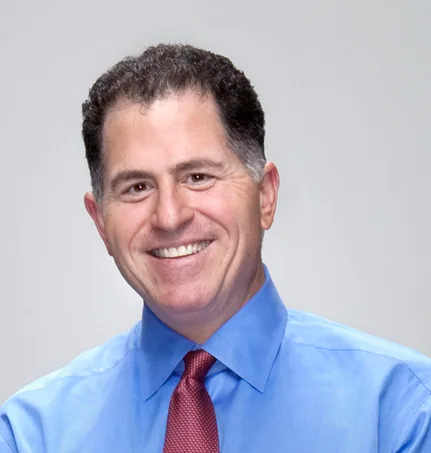
Michael Dell in February 2010, as founder and CEO of Dell Inc.2010-02-10Photo: · CC BY 2.0 · Wikimedia Commons 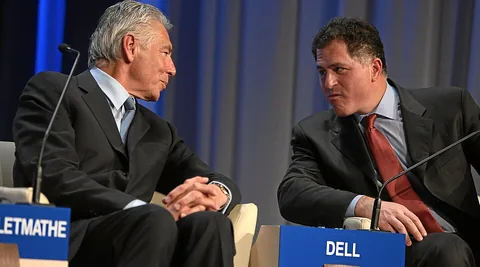
Dell talking with Peter Brabeck-Letmathe of Nestle at the World Economic Forum in Davos-Klosters, January 2009.2009-01-28Photo: · CC BY-SA 2.0 · Wikimedia Commons 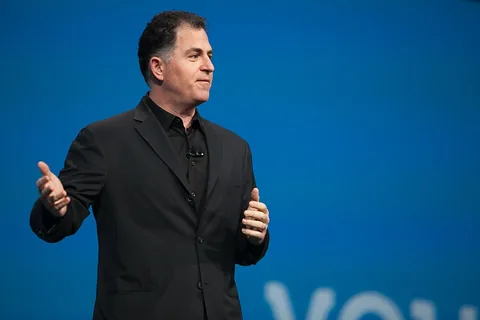
Michael Dell in October 2011, in a photo posted by Oracle.2011-10-04Photo: · CC BY 2.0 · Wikimedia Commons 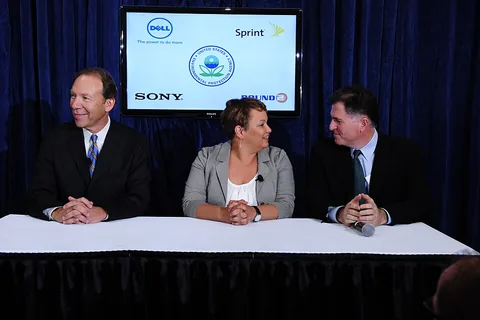
Dell with EPA Administrator Lisa Jackson and Sprint CEO Dan Hesse at the signing of an electronics recycling commitment, July 2011.2011-07-20Photo: · Public domain · Wikimedia Commons 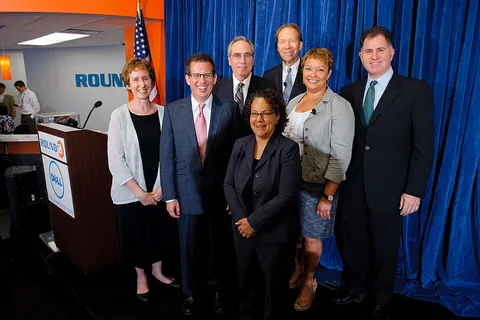
Dell and other business and government leaders at Round2, an Austin electronics recycling facility, for the announcement of a national electronics stewardship strategy, July 2011.2011-07-20Photo: · Public domain · Wikimedia Commons 
A photo Commons titles "Lunch with Michael Dell," dated on Commons January 27, 2013.2013-01-27Photo: · CC BY 2.0 · Wikimedia Commons 
Michael Dell at The Grove in 2021.2021Photo: · CC BY 2.0 · Wikimedia Commons 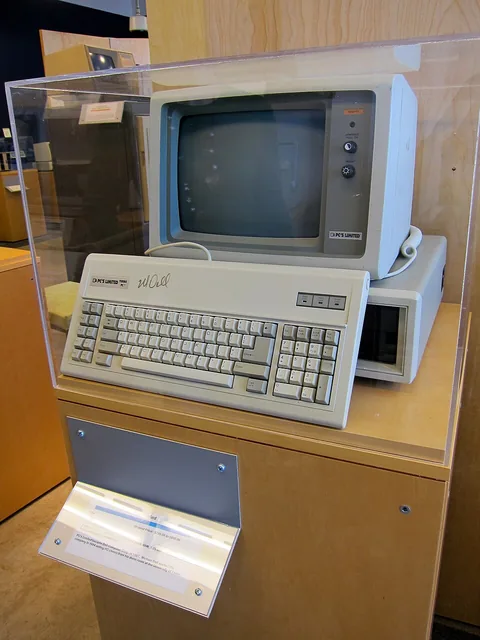
A 1984 PC's Limited Turbo PC signed by Dell, photographed in 2011 at the Goodwill Computer Museum in Austin.2011-01-07Photo: · CC BY-SA 2.0 · Wikimedia Commons 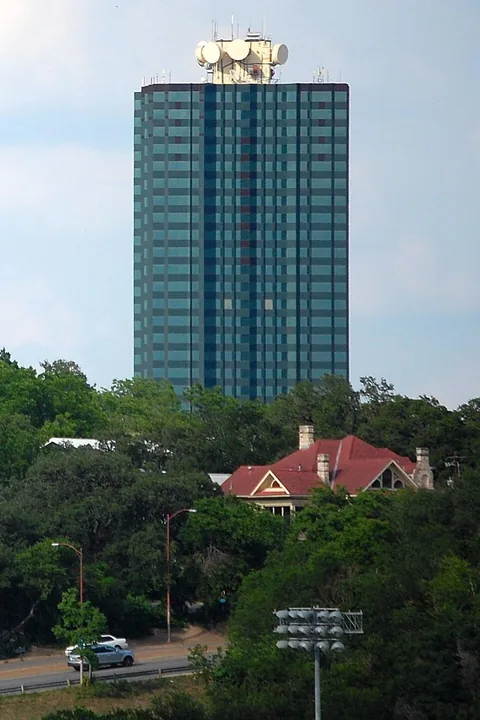
The Dobie Center residence hall in Austin, where Dell began selling upgrade kits as a freshman.2009-05-22Photo: · CC BY-SA 3.0 · Wikimedia Commons 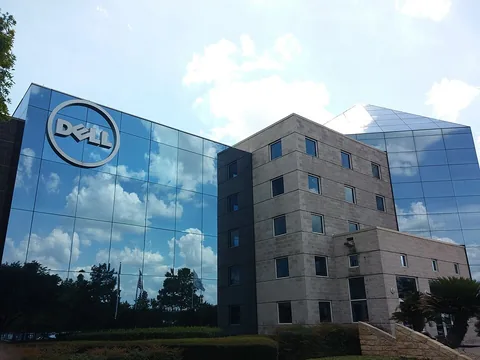
Dell headquarters in the Austin area, photographed June 2015.2015-06-02Photo: · CC BY-SA 4.0 · Wikimedia Commons 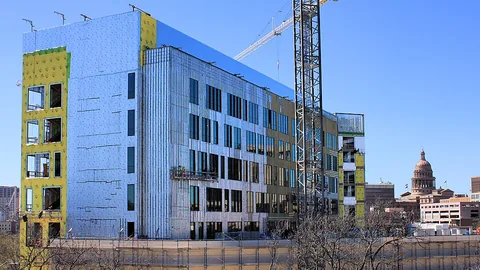
The Dell Medical School research building under construction in downtown Austin, February 2016.2016-02-25Photo: · CC BY 4.0 · Wikimedia Commons 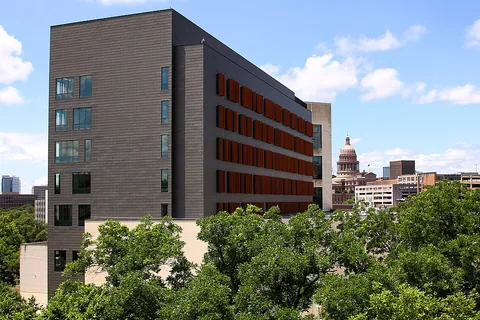
The completed Health Discovery Building at Dell Medical School, May 2020.2020-05-26Photo: · CC BY 4.0 · Wikimedia Commons


Watch and listen
- The Origins of Dell, Inc. (Michael Dell, Stanford eCorner)
- Overcoming Some of the Early Mistakes of Dell, Inc.
- The Culture and Dynamics of Dell, Inc. During the Early Years
- The Reasons Behind Dell, Inc. Going Public
- Current Threats to the PC Industry
- Michael Dell interview, International Achievement Summit
- Growth, Innovation, and Technology: A Conversation with Michael Dell
- New book details how Michael Dell built billion-dollar, resilient tech company
- Inventing the Future: A Conversation With Michael Dell (Six Five On The Road)
- Dell Computers: Michael Dell (How I Built This with Guy Raz)
Read
Notes
- "Michael Dell," Wikipedia, accessed November 27, 2026 (used for his birth date and parents, the 1999 foundation, Direct from Dell and its co-author, the 2001 market-share milestone, the January 31, 2007 return, the October 2013 completion of the buyout, the EMC announcement and completion, and the December 2018 relisting). https://en.wikipedia.org/wiki/Michael_Dell↩1↩2↩3↩4↩5↩6↩7↩8↩9↩10↩11↩12↩13
- American Academy of Achievement, "Michael Dell," profile and interview recorded at the 2008 International Achievement Summit, Kailua-Kona, Hawaii, July 3, 2008, with profile text updated through 2026, accessed November 27, 2026. https://achievement.org/achiever/michael-dell/↩1↩2↩3↩4↩5↩6↩7↩8↩9↩10↩11↩12↩13↩14↩15↩16↩17↩18↩19↩20↩21↩22↩23↩24↩25↩26↩27↩28↩29↩30↩31↩32↩33↩34↩35↩36↩37↩38↩39↩40↩41↩42↩43↩44↩45↩46↩47↩48↩49
- "Michael Dell," Dell Technologies, accessed November 27, 2026 (the company's own biography of its chairman and chief executive). https://www.dell.com/en-us/lp/michael-dell↩1↩2↩3↩4↩5↩6
- Robert McMillan, "Michael Dell Back in Charge as Rollins Exits Dell," InfoWorld, January 31, 2007, accessed November 27, 2026. https://www.infoworld.com/article/2198136/michael-dell-back-in-charge-as-rollins-exits-dell-2.html↩1↩2↩3↩4↩5↩6
- Cade Metz, "Dell Pays $100m to Settle Accounting Fraud Charges," The Register, July 22, 2010, accessed November 27, 2026. https://www.theregister.com/on-prem/2010/07/22/dell-pays-100m-to-settle-accounting-fraud-charges/1493327↩1↩2↩3↩4↩5↩6
- Agam Shah and Chris Kanaracus, "Dell Goes Private as Shareholders Approve $24.9 Billion Deal," PCWorld, September 12, 2013, accessed November 27, 2026. https://www.pcworld.com/article/447649/dell-goes-private-as-shareholders-approve-249-billion-deal.html↩1↩2↩3↩4↩5↩6
- "Dell Finalizes Huge EMC Deal to Become Largest Tech Group," Agence France-Presse, IndustryWeek, September 7, 2016, accessed November 27, 2026. https://www.industryweek.com/technology-and-iiot/article/21980682/dell-finalizes-huge-emc-deal-to-become-largest-tech-group↩1↩2↩3↩4↩5
- "Michael Dell on Innovation and Global Technology Solutions," Council on Foreign Relations, December 3, 2014, with transcript, accessed November 27, 2026. https://www.cfr.org/event/michael-dell-innovation-and-global-technology-solutions↩1↩2↩3↩4↩5↩6↩7↩8↩9↩10↩11↩12
- Michael S. Dell, commencement address, The University of Texas at Austin, May 25, 2019, transcript published as "Michael Dell Urges Graduates Not Just to Succeed But to Serve," UT News, May 26, 2019, accessed November 27, 2026. https://news.utexas.edu/2019/05/26/michael-dell-urges-graduates-not-just-to-succeed-but-to-serve/↩1↩2↩3↩4↩5↩6↩7↩8↩9
- "Michael Dell Speaks During Return to Campus," The Horn, November 18, 2011, reposted by Staci R. Norman, UT Austin Department of Computer Science, accessed November 27, 2026. https://www.cs.utexas.edu/news/2011/michael-dell-speaks-during-return-campus↩1↩2↩3↩4↩5
- Jon Fortt, "How Michael Dell Started a Business and Kept It Going," CNBC, May 7, 2017, accessed November 27, 2026. https://www.cnbc.com/2017/05/07/how-michael-dell-started-a-business-and-kept-it-going.html↩1↩2↩3
- "Overcoming Some of the Early Mistakes of Dell, Inc.," Stanford Digital Repository, recorded May 1, 2007 (abstract), accessed November 27, 2026. https://purl.stanford.edu/jd586bd7150↩1↩2↩3↩4
- "The Culture and Dynamics of Dell, Inc. During the Early Years," Stanford Digital Repository, recorded May 1, 2007 (abstract), accessed November 27, 2026. https://purl.stanford.edu/pz278hf4575↩1↩2
- Mark Memmott, "Bitter Battle Ends as Dell Shareholders OK $25 Billion Buyout," The Two-Way, NPR, September 12, 2013, accessed November 27, 2026. https://www.npr.org/sections/thetwo-way/2013/09/12/221741275/bitter-battle-ends-as-dell-shareholders-ok-25b-buyout↩1↩2↩3
- "After 40 Years, Another Revolution," Dell Technologies blog, May 20, 2024, reporting Michael Dell's keynote at Dell Technologies World, accessed November 27, 2026. https://www.dell.com/en-us/blog/after-40-years-another-revolution/↩
- "About Us," Michael & Susan Dell Foundation, accessed November 27, 2026 (the foundation states that it is a private foundation established by the Dell family and not affiliated with Dell Technologies, and describes the $6.25 billion commitment to invest $250 in Trump Accounts for 25 million children). https://www.msdf.org/about-us/↩1↩2
- Michael Dell, "Michael Dell Started a Billion-Dollar Company at Age 19—with Just $1,000. Here Are 21 Lessons That Helped Him 'Play Nice but Win,'" CNBC Make It, October 6, 2021, accessed November 27, 2026. https://www.cnbc.com/2021/10/06/billionaire-michael-dell-started-his-company-at-19-with-just-1000-here-are-his-top-lessons-for-success.html↩1↩2↩3↩4↩5↩6↩7↩8
- Theron Mohamed, "Tech Legend Michael Dell Says Workers Need to Laugh and Play—and Parents' Advice Can Be Hit or Miss," Entrepreneur, December 16, 2024, reporting Dell's remarks on the In Good Company podcast, accessed November 27, 2026. https://www.entrepreneur.com/business-news/michael-dells-morning-routine-work-life-balance-advice/484353↩1↩2↩3↩4↩5
- Sydney Lake, "Michael Dell Turned $1,000 and a College Dorm Room into a $302 Billion Company. His Advice to Founders Seeking Validation: 'Don't Go Ask,'" Fortune, February 23, 2024 (the page notes that a version appeared on November 17, 2025), accessed November 27, 2026. https://fortune.com/2024/02/23/michael-dell-success-secrets-founder-billionaire-college-dropout↩1↩2
- Michal Lev-Ram, "Michael Dell, Who's Led His Company for 40 Years, Shares the 'Simple' Secret to His Longevity," Fortune CEO Daily, March 25, 2024, accessed November 27, 2026. https://fortune.com/2024/03/25/michael-dell-technologies-ceo-founder-longevity/↩