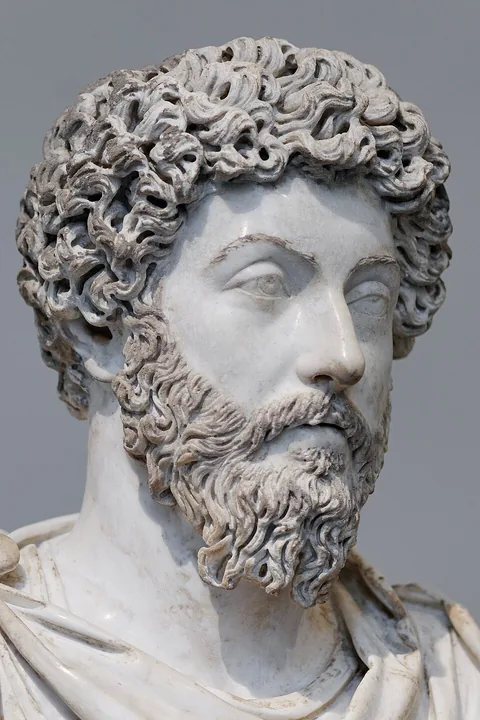

Roman emperor, Stoic philosopher
Marcus Aurelius
Also known as Marcus Annius Verus, Marcus Aurelius Antoninus
Born in RomeDied in Vindobona (modern Vienna) or near Sirmium, Pannonia
Roman emperor from 161 to 180 and a Stoic philosopher, remembered for the Meditations, the private notebook he wrote in Greek while leading the Roman army on the northern frontier.
Official and reference links
- WikipediaReference
- Stanford Encyclopedia of PhilosophyReference
- WikiquoteReference
- Wikisource: Meditations (George Long translation, 1862)Library
- Wikisource author pageLibrary
- WikidataOther
Overview
Marcus Aurelius was Roman emperor from 161 until his death in 180, and he was a Stoic philosopher.[1] He was the last of the Five Good Emperors, and he is counted as the last emperor of the Pax Romana, the long stretch of relative peace in the Roman Empire.[2]
He did not go looking for power. Hadrian picked his adoptive father, Antoninus Pius, with the condition that Pius adopt Marcus in turn, and when Pius died the Senate had to force the government on him.[3][4] Marcus then refused to take office unless his adoptive brother, Lucius Verus, received equal powers, so Rome had two emperors for the first time.[5][6] His reign was troubled by attacks from Germany, rebellions, and an outburst of plague.[7]
The notebook, now called the Meditations, is why people still read him. He wrote it in Greek, on campaign, as a guide for his own conduct, not for an audience.[8][9] His record is not spotless. The ancient sources about him are patchy and often unreliable, and historians have criticized the succession of his son Commodus.[10][11]
Life
121–138
A boy on the Caelian Hill
Marcus was born in Rome on April 26, 121, in a villa on the Caelian Hill.[12][13] His father died when he was three, and his mother and paternal grandfather raised him.[14] The Historia Augusta, the chief ancient biography and a patchy source, calls him a solemn child who was handed early to advanced teachers, among them Herodes Atticus in oratory.[15][16][10]
At twelve he took up the dress of a philosopher and, soon after, its hardships: a rough Greek cloak, and sleeping on the ground.[17] His mother talked him into a couch strewn with skins, and he gave in reluctantly.[18] He was not all gravity. The same source says he enjoyed boxing, wrestling, running, ball games, and hunting, until philosophy pulled him away from them.[19][20] Hadrian watched over the boy and gave him the nickname Verissimus, and had him enrolled in the equestrian order at six and appointed to the college of the Salii in his eighth year.[21][22][23]
The schooling was broad. His early tutors taught literature, drama, music, and geometry, and he also gave some attention to painting under the teacher Diognetus.[24][25]
138–145
Chosen by Hadrian
In 138 Hadrian settled his succession in a way that put Marcus in line for the throne: he chose Antoninus Pius, with the proviso that Pius adopt Marcus.[3][26] By the Historia Augusta's account, Marcus was appalled rather than overjoyed, and he was adopted in his eighteenth year.[27][28]
The Historia Augusta says that on the day he was adopted Marcus dreamed he had shoulders of ivory, and when he asked whether they could bear a burden, he found them much stronger than before.[29] When his household asked why he was sorry to receive royal adoption, he listed for them the evils that sovereignty brought with it.[30] Adoption did not change his habits: he stayed as frugal and careful with money as he had been in a private home.[31]
He was consul in 140 and again in 145, and in 145 he married Faustina, the daughter of Antoninus Pius.[32][33]
145–161
Heir to Antoninus Pius
For twenty-three years, according to the Historia Augusta, Marcus lived in his adoptive father's house and Pius's affection for him grew day by day.[34] He kept up his studies: Dio says he was always steeping himself in Greek and Latin rhetoric and philosophy, even after he had grown up and had hopes of becoming emperor.[35] His lifelong correspondence with his rhetoric teacher Fronto began before he was twenty, and in a letter written between 145 and 147 he reported that reading the Stoic Aristo of Chios filled him with both joy and shame at his own shortcomings.[36][37]
In Book I of the Meditations he later recorded his gratitude to his Stoic teachers Rusticus, Apollonius, and Sextus for their examples and teachings.[38] The Historia Augusta says he received most instruction from the Stoic Junius Rusticus, whom he ever revered, and Marcus credits Rusticus with introducing him to the discourses of Epictetus.[39][40] Fronto's letters show the routine of a young consul: in one he urged Marcus to get plenty of sleep so that he could come into the Senate with a good color and read his speech with a strong voice.[41]
When Pius saw that the end of his life was near, the watchword he gave the officer of the day was "Equanimity," and he had the golden statue of Fortune moved from his own bedchamber to Marcus's.[42][43]
161–169
Co-emperor with Lucius Verus
Marcus took power in March 161, and Lucius Verus ruled beside him until 169.[44][45] The Senate had planned to confirm Marcus alone, but he would not take office unless Lucius got equal powers, and the new emperors promised the common soldiers twenty thousand sesterces apiece.[5][46] The Historia Augusta says they ruled so democratically that no one missed Pius's lenient ways: a writer of farces who mocked them went unpunished, and Marcus at first refused the victory title Armeniacus out of modesty before accepting it.[47][48]
The crises came at once. The Tiber flooded in 161 or 162, and Marcus and Lucius gave the resulting famine their personal attention.[49] In late summer or early autumn of 161 Vologases IV of Parthia entered Armenia, a Roman client state, expelled its king and installed his own, and it was decided that Lucius should direct the Parthian war in person, since he was thought stronger and healthier than Marcus.[50][51][52][53] A plague began in Mesopotamia in 165 or 166, at the end of Lucius's campaign against the Parthians, and reached Rome in 166.[54][55] In the same year the Marcomanni of Bohemia crossed the Danube with other Germanic tribes, and the Iazyges attacked soon after.[56]
The Historia Augusta says thousands died of the pestilence, including many nobles.[57] The same source says that Marcus gave the courts singular care and added court days to the calendar until 230 were set aside for pleading cases.[58]
The law held his attention. He took a marked interest in the freeing of slaves, the guardianship of orphans and minors, and the choice of city councilors, and he reminded the Senate that the imperial palace was theirs, not his.[59][60] The Historia Augusta adds that he was careful with public money, limited gladiatorial shows, fed Italian communities in famine, and was quick to forgive.[61][62][63][64] It also says that after a young rope-dancer fell, he ordered mattresses spread under all rope-dancers.[65]
169–175
The Danube front
Lucius's co-rule ended in 169.[45] The spiral relief on the Column of Marcus Aurelius tells the story of the Marcomannic Wars that Marcus waged from 169 until his death.[66] The Historia Augusta says he crushed the Marcomanni, Sarmatians, Vandals, and Quadi and freed the Pannonias from bondage.[67] With the plague still raging, he revived the worship of the gods and trained slaves for military service, and he armed gladiators and turned bandits into soldiers.[68] Many nobles died in what the source calls the war of many nations, and he put up statues for all of them in the Forum of Trajan.[69]
It was on this front that he wrote the Meditations. Wikipedia dates the writing to between 170 and 180. In Long's translation Book I closes with the line "Among the Quadi at the Granua" and Book II with "This in Carnuntum," though Long cautions that the first may not be genuine.[8][70][71] His friends often urged him to give up the war and return to Rome, and he stayed.[72]
Just before he left for the German war, the Historia Augusta says, he lost his seven-year-old son, Verus Caesar. He mourned five days, and during them he still gave some time to public business.[73][74]
175–176
Rebellion and return
In 175 Avidius Cassius raised a rebellion in the East, which interrupted Marcus's plan to turn Marcomannia and Sarmatia into provinces.[75][76][77] Marcus broke off the northern wars to march against him, and Cassius was killed quickly; Dio says the attempt lasted three months and six days.[78][79][80] Around the same time Faustina died.[81] Dio reports that Marcus refused barbarian help against Cassius, and in the speech Dio gives him he says the prize he hoped for was to forgive a man who had wronged him.[82][83]
In the East, Marcus negotiated with kings and ratified peace with the kings and satraps of Persia who came to meet him, and after settling affairs there he went to Athens and was initiated into the Eleusinian mysteries.[84][85]
Marcus came home and celebrated a triumph in Rome in 176.[86][87] The Column of Marcus Aurelius, finished later, was built to mark his victory over the Sarmatians and Germanic tribes in 176.[88]
177–180
The last campaign
In 177 his son Commodus became his joint ruler.[89] The Historia Augusta says Marcus fought the northern peoples for three more years, and that a year more would have let him make their lands provinces.[90]
He died on March 17, 180, at age 58, either at Vindobona (modern Vienna) or near Sirmium.[91] In his last illness, the Historia Augusta says, he asked his son not to treat the rest of the war lightly, and he told his friends that if they now granted him leave to go, he bid them farewell and would pass on before.[92][93] The army, on learning he was sick, lamented loudly, since the soldiers loved him singularly.[94] The accounts of how he died do not agree. The Historia Augusta says he stopped eating and drinking, sent his son away so he would not catch the illness, and died in the night.[95][96] Cassius Dio says he died not of his disease but by the act of his physicians, who wished to do Commodus a favor, as Dio had been plainly told.[97] He was deified at once, and his ashes were placed in Hadrian's mausoleum.[98]
180–present
Afterlife of a philosopher-emperor
The Historia Augusta reports that, by many accounts, the Senate and people sat together before his funeral and hailed him as a gracious god, and that even in its author's day statues of him stood in many homes among the household gods.[99][100] He had the reputation of a philosopher king in his own lifetime, and the Historia Augusta says a saying of Plato's, that states prosper when philosophers are kings or kings philosophers, was often on his lips.[101][102] His reign also has a shadow. The persecution of Christians appears to have increased under him, though his own involvement is unlikely, since no Christian source blames him and he was praised by Justin Martyr and Tertullian.[103]
His bronze equestrian statue, put up around 175, owes its preservation to a common mistake: people took the rider for Constantine the Great, the Christian emperor.[104][105] The Meditations was first published in 1558 in Zurich, and George Long's English translation appeared in 1862.[106][107]
Habits and rituals
Rehearsing the day's difficult people
adult life
Marcus began the morning by telling himself that he would meet the busybody, the ungrateful, the arrogant, the deceitful, the envious, and the unsocial.[108] The point was to be ready: Epictetus advised writing down, and rehearsing daily, the responses one wanted close at hand, and Marcus's goal was to equip himself mentally for whatever came his way.[109][110]
Getting up for the work of a human being
adult life
When he did not want to get up, he told himself that he was rising to the work of a human being.[111]
Writing to himself
c. 170-180
The Meditations is a private notebook. Scholars now generally agree that Marcus wrote it for his own moral improvement, to remind himself of the Stoic doctrines he wanted to live by.[9] The title came later, from the modern editor Casaubon.[112] Its short, blunt lines match that purpose, since he was equipping himself to deal with what came his way.[110]
Retreating into himself
adult life
He told himself that people look for retreats in the country, by the sea, or in the mountains, but that a person can retire into his own soul whenever he chooses, and nowhere is it quieter.[113] So he told himself to give himself this retreat constantly and renew himself, and to keep his principles brief and fundamental.[114]
Naming his teachers and honoring them
adult life
Book I of the Meditations is a ledger of debts: Marcus credits his Stoic teachers Rusticus, Apollonius, and Sextus, and others, for what each taught him, and he ends by thanking the gods for the people he was given.[38][115] In life he kept golden statues of his teachers in his chapel and made a custom of visiting their tombs with offerings of sacrifices and flowers.[116][117] He kept going to Apollonius's house for lessons even after he was part of the imperial family.[118]
Slow, careful courts
161-180
Cassius Dio says Marcus would try one case for eleven or twelve days, sometimes sitting at night, because he treated nothing as a minor matter.[119][120] The Historia Augusta adds that he read, listened to, and signed documents at the circus games, a habit for which the crowd openly mocked him.[121]
Living lean
from boyhood
Early on he took to a rough cloak and the ground for a bed.[17] In Book I he credits his governor with teaching him endurance of labor and to want little.[122] Dio says that as emperor he ate very little, and only at night, apart from a dose of the drug theriac in the daytime, which he took because his stomach and chest were in bad condition.[123][124]
Asking his friends first
161-180
The Historia Augusta says that before any move he conferred with the foremost men, and that a saying often on his lips was that it was juster for him to yield to the counsel of so many friends than for them to yield to the wishes of one man.[125][126]
Writing his own letters
adult life
Dio says that not only in his early youth but later too he wrote most of his letters to his close friends in his own hand.[127] His correspondence with Fronto, which began before he was twenty and continued into his years as emperor, is among his surviving writings.[36]
Setbacks and comebacks
A frail body 161–180
What happened
Dio says that Marcus, though vigorous enough in his youth to fight in armor, became extremely frail in body, and that at first he could not endure the cold.[128][129] Dio also notes that he was not strong in body and faced troubles through almost his entire reign.[130]
Plague, invasion, and an empty treasury 165–176
What happened
A plague that began in Mesopotamia at the end of Lucius Verus's Parthian campaign reached Rome in 166, and in the same year the Marcomanni crossed the Danube.[54][55][56] The Historia Augusta says thousands died of the pestilence, including many nobles, and the wars strained the money supply: the silver content of the denarius was raised in 168 and put back two years later because of the military crises.[57][133][134]
The cause
The war drained the treasury, and Marcus could not bring himself to impose any extraordinary tax on the provinces.[135]
The comeback
He held a public sale of the imperial furnishings in Trajan's Forum.[135] It ran for two months, and he told buyers they could return what they had bought and get their money back, if they wished.[136][137] He celebrated a triumph at Rome in 176, though the Historia Augusta says he fought the northern peoples for three more years after that.[87][90]
Cassius's revolt and Faustina's death 175–176
What happened
In 175 Avidius Cassius rebelled in the East while Marcus was fighting on the northern frontier.[75][77] Faustina died around the same time.[81]
The cause
Cassius, who had earlier checked raiders in Egypt, tried to seize the throne while Marcus was committed to the northern frontier.[138][77]
The comeback
Marcus gave up the northern campaign, marched east, and Cassius was killed within months.[78][79][80] He did not rejoice at the death and could not bring himself to look at the severed head, and he ordered it buried.[139][140] Dio says he treated the provinces that had joined the uprising very leniently, and that he destroyed the conspirators' papers unread so that he would not learn their names and be forced to hate them, though Dio also gives another story in which Verus, the man sent ahead to govern Syria, found the papers among Cassius's effects and destroyed them himself.[141][142][143] In his grief over Faustina he wrote to the Senate asking that none of Cassius's associates be put to death.[144] Cassius's sons were granted over half their father's estate.[145]
A son who disappointed him 177–180
What happened
Dio says one thing kept Marcus from being completely happy: after raising and educating his son in the best way he could, he was vastly disappointed in him.[146] The Historia Augusta reports that two days before his death he told his friends he thought poorly of his son, as Philip had of Alexander.[147]
The cause
Marcus had made Commodus Caesar in 166 and joint ruler in 177, and when he died in 180 Commodus succeeded him.[89]
The comeback
There was no comeback. The Historia Augusta says Marcus asked his son not to treat the rest of the war lightly, and Commodus took the throne, a succession historians have criticized.[92][89][11] The historian Michael Grant argues that passing over Commodus would almost certainly have meant civil war.[148]
In their own words
Begin the morning by saying to thyself, I shall meet with the busybody, the ungrateful, arrogant, deceitful, envious, unsocial.[108]
Meditations, book 2, section 1 (George Long translation, 1862) · Source A limit of time is fixed for thee, which if thou dost not use for clearing away the clouds from thy mind, it will go and thou wilt go, and it will never return.[149]
Meditations, book 2, section 4 (George Long translation, 1862) · Source It is in thy power whenever thou shalt choose to retire into thyself. For nowhere either with more quiet or more freedom from trouble does a man retire than into his own soul.[113]
Meditations, book 4, section 3 (George Long translation, 1862) · Source Take away thy opinion, and then there is taken away the complaint, "I have been harmed." Take away the complaint, "I have been harmed," and the harm is taken away.[150]
Meditations, book 4, section 7 (George Long translation, 1862) · Source Do not act as if thou wert going to live ten thousand years. Death hangs over thee. While thou livest, while it is in thy power, be good.[151]
Meditations, book 4, section 17 (George Long translation, 1862) · Source Be like the promontory against which the waves continually break, but it stands firm and tames the fury of the water around it.[152]
Meditations, book 4, section 49 (George Long translation, 1862) · Source In the morning when thou risest unwillingly, let this thought be present,—I am rising to the work of a human being.[111]
Meditations, book 5, section 1 (George Long translation, 1862) · Source Such as are thy habitual thoughts, such also will be the character of thy mind; for the soul is dyed by the thoughts.[153]
Meditations, book 5, section 16 (George Long translation, 1862) · Source The mind converts and changes every hindrance to its activity into an aid; and so that which is a hindrance is made a furtherance to an act; and that which is an obstacle on the road helps us on this road.[154]
Meditations, book 5, section 20 (George Long translation, 1862) · Source The best way of avenging thyself is not to become like [the wrong-doer].[155]
Meditations, book 6, section 6 (George Long translation, 1862) · Source Take care that thou art not made into a Caesar, that thou art not dyed with this dye; for such things happen.[156]
Meditations, book 6, section 30 (George Long translation, 1862) · Source The perfection of moral character consists in this, in passing every day as the last, and in being neither violently excited nor torpid nor playing the hypocrite.[157]
Meditations, book 7, section 69 (George Long translation, 1862) · Source If thou art pained by any external thing, it is not this thing that disturbs thee, but thy own judgment about it. And it is in thy power to wipe out this judgment now.[158]
Meditations, book 8, section 47 (George Long translation, 1862) · Source No longer talk at all about the kind of man that a good man ought to be, but be such.[159]
Meditations, book 10, section 16 (George Long translation, 1862) · Source So much more respect have we to what our neighbors shall think of us than to what we shall think of ourselves.[160]
Meditations, book 12, section 4 (George Long translation, 1862) · Source If it is not right, do not do it: if it is not true, do not say it.[161]
Meditations, book 12, section 17 (George Long translation, 1862) · Source It is juster that I should yield to the counsel of such a number of such friends than that such a number of such friends should yield to my wishes, who am but one.[126]
Reported by the Historia Augusta, Life of Marcus Aurelius, ch. 22 (Loeb Classical Library, 1921) · Source If you now grant me leave to go, I bid you farewell and pass on before.[93]
Reported by the Historia Augusta, Life of Marcus Aurelius, ch. 28 (Loeb Classical Library, 1921) · Source
Pictures
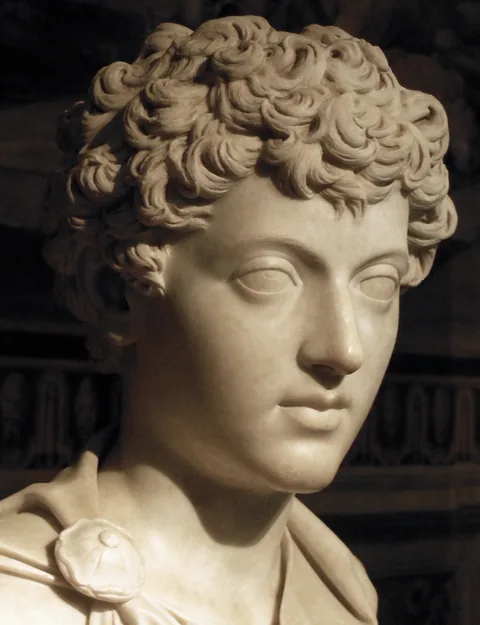
Portrait of the young Marcus Aurelius, about 140, in the Capitoline Museums, Rome (Albani collection).c. 140Photo: · CC BY-SA 4.0 · Wikimedia Commons 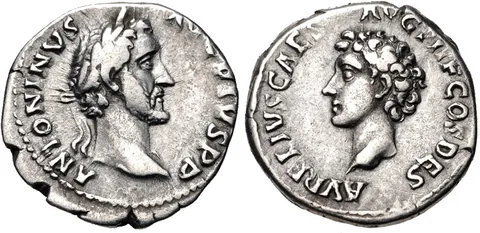
A silver denarius struck in 139 with Antoninus Pius on one side and Marcus as Caesar on the other.AD 139Photo: · CC BY-SA 2.5 · Wikimedia Commons Portrait bust of Marcus Aurelius (type III) from the Antonine period, in the Louvre.161-169Photo: · CC BY 2.5 · Wikimedia Commons 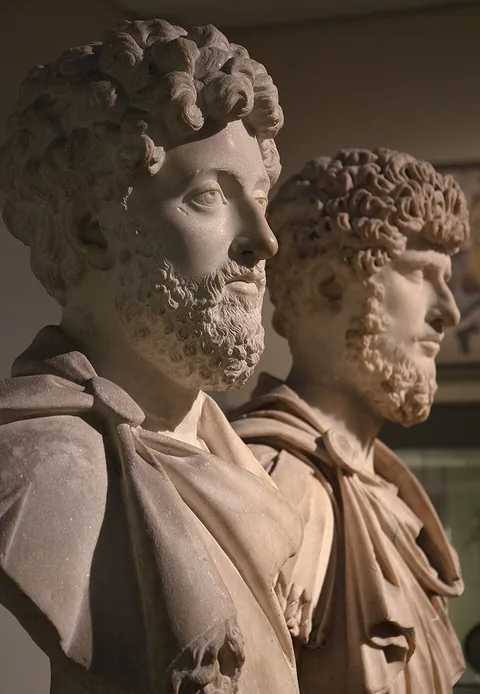
Marcus Aurelius and his co-emperor Lucius Verus, as shown in an object at the British Museum, about 161 to 170.c. 161-170Photo: · CC BY-SA 2.0 · Wikimedia Commons 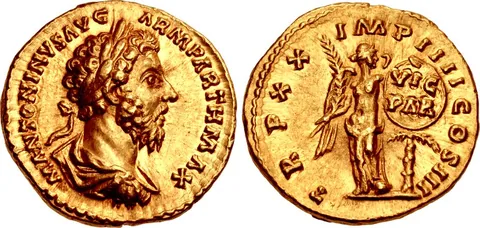
A gold aureus struck in 166 naming Marcus as Parthicus Maximus, with Victory on the reverse.AD 166Photo: · CC BY-SA 2.5 · Wikimedia Commons 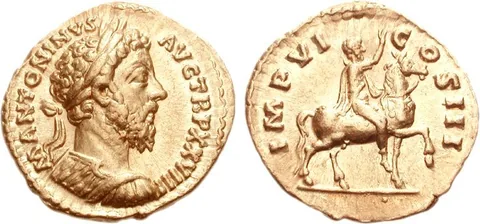
A gold aureus struck in 174 whose reverse shows Marcus on horseback.AD 174Photo: · CC BY-SA 2.5 · Wikimedia Commons 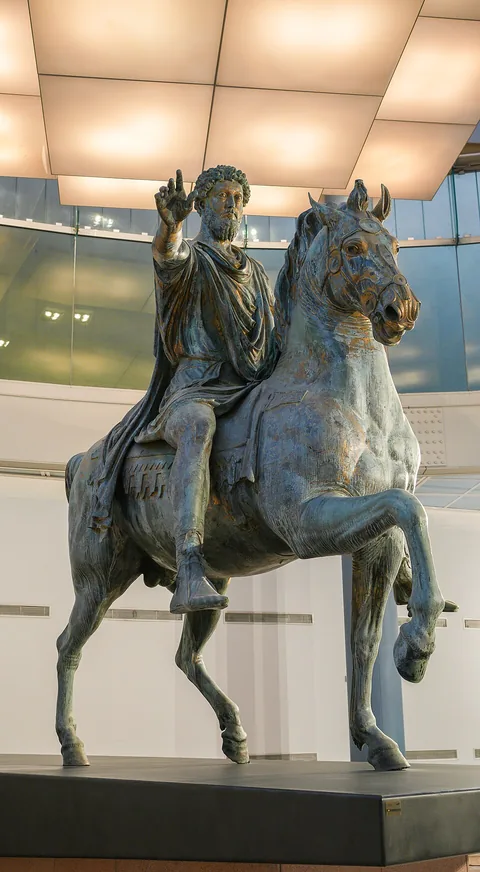
The equestrian statue of Marcus Aurelius in Rome.c. 175Photo: · CC BY-SA 4.0 · Wikimedia Commons 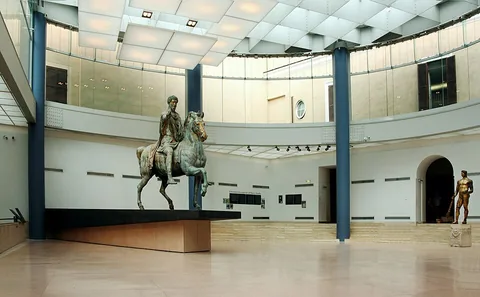
The equestrian statue of Marcus Aurelius in its exhibition hall at the Capitoline Museums, Rome.c. 175Photo: · CC BY-SA 4.0 · Wikimedia Commons 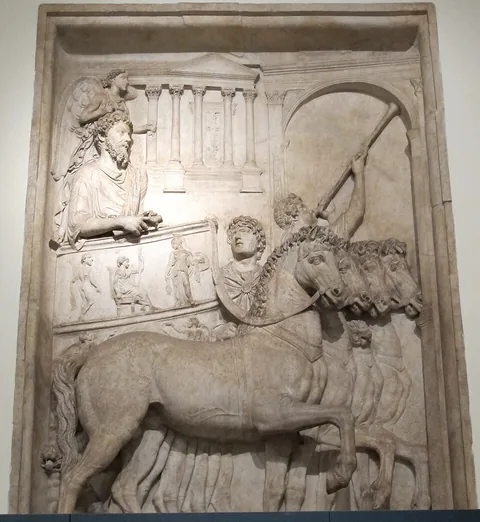
Relief of Marcus Aurelius's triumph from an honorary monument, Capitoline Museums.176-180Photo: · CC BY-SA 3.0 · Wikimedia Commons 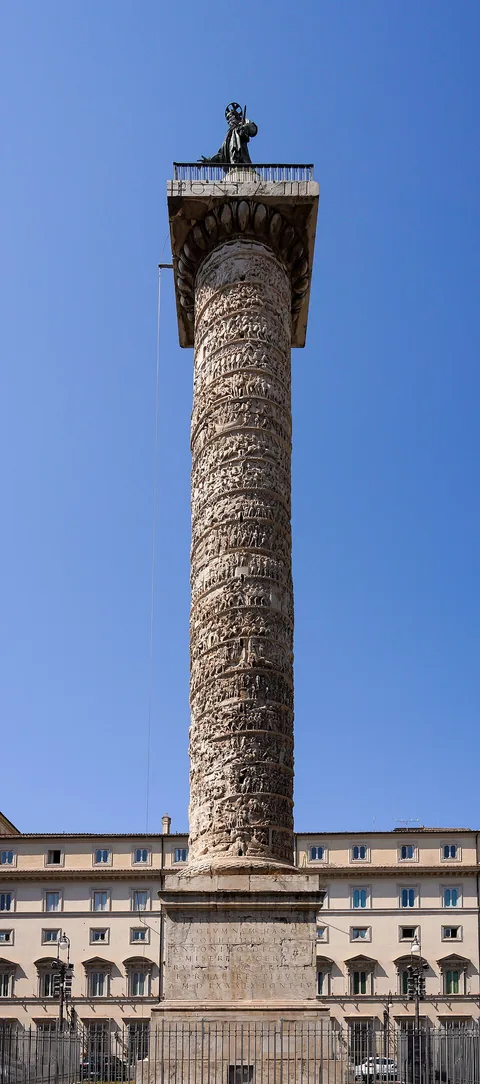
The Column of Marcus Aurelius in Piazza Colonna, Rome.column completed 193Photo: · CC BY-SA 4.0 · Wikimedia Commons 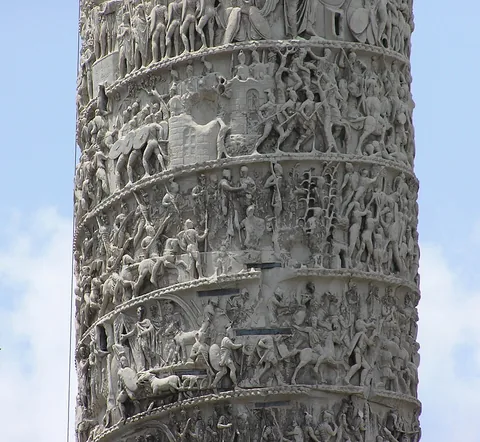
Detail of the spiral relief on the Column of Marcus Aurelius, with slits that let light into the interior stair.column completed 193Photo: · Public domain (Photograph released into the public domain by its author, Arpingstone (June 2007).) · Wikimedia Commons 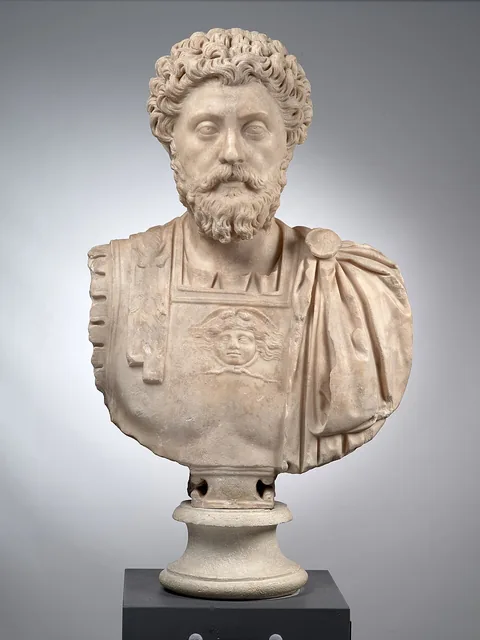
Marble bust of the older Marcus Aurelius from the Chiragan Roman villa, Musée Saint-Raymond, Toulouse.170sPhoto: · CC BY-SA 4.0 · Wikimedia Commons 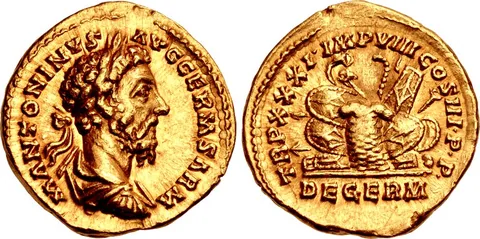
A gold aureus struck in 176 to 177 naming Marcus Germanicus and Sarmaticus, with a pile of arms on the reverse.AD 176-177Photo: · CC BY-SA 2.5 · Wikimedia Commons 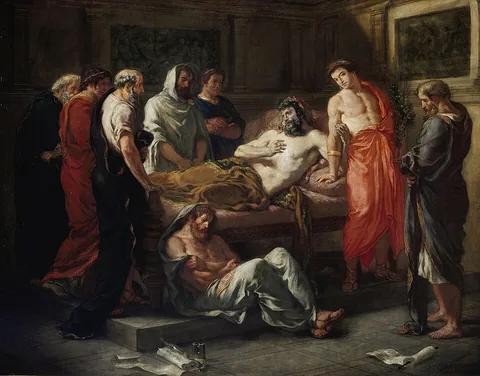
Eugène Delacroix, The Last Words of the Emperor Marcus Aurelius (1844), Museum of Fine Arts, Lyon.1844Photo: · Public domain (Oil painting of 1844 by Delacroix, who died in 1863; public domain in its country of origin and in the United States.) · Wikimedia Commons 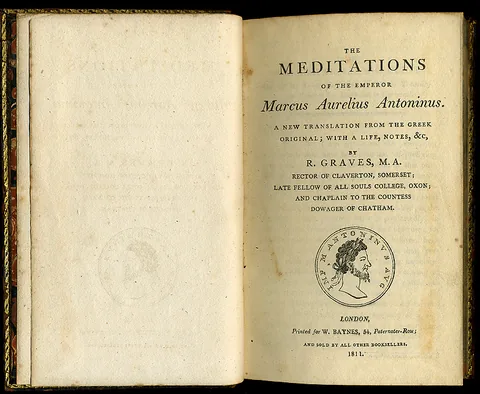
Title page of an 1811 English edition of the Meditations, translated by R. Graves.1811Photo: · Public domain (Title page of a book published in 1811; Commons lists it as public domain in its country of origin and in the United States.) · Wikimedia Commons 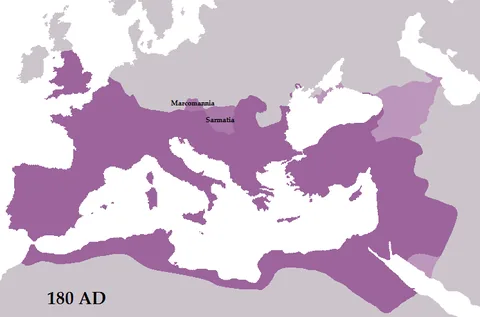
Map of the Roman Empire at the death of Marcus Aurelius in 180.2011Photo: · CC0 1.0 · Wikimedia Commons


Watch and listen
Read
About them
- The Inner Citadel: The Meditations of Marcus Aurelius
- Marcus Aurelius: A Biography
- Marcus Aurelius: A Life
Notes
- “Marcus Aurelius,” section “Top,” Wikipedia, accessed November 27, 2026, https://en.wikipedia.org/wiki/Marcus_Aurelius.↩
- “Marcus Aurelius,” section “Top,” Wikipedia, accessed November 27, 2026, https://en.wikipedia.org/wiki/Marcus_Aurelius.↩
- Historia Augusta, “The Life of Marcus Aurelius,” ch. 5 (Loeb Classical Library, 1921), on LacusCurtius, https://penelope.uchicago.edu/Thayer/E/Roman/Texts/Historia_Augusta/Marcus_Aurelius/1*.html.↩1↩2
- Historia Augusta, “The Life of Marcus Aurelius,” ch. 7 (Loeb Classical Library, 1921), on LacusCurtius, https://penelope.uchicago.edu/Thayer/E/Roman/Texts/Historia_Augusta/Marcus_Aurelius/1*.html.↩
- “Marcus Aurelius,” section “Accession of Marcus Aurelius and Lucius Verus (161),” Wikipedia, accessed November 27, 2026, https://en.wikipedia.org/wiki/Marcus_Aurelius.↩1↩2
- Historia Augusta, “The Life of Marcus Aurelius,” ch. 7 (Loeb Classical Library, 1921), on LacusCurtius, https://penelope.uchicago.edu/Thayer/E/Roman/Texts/Historia_Augusta/Marcus_Aurelius/1*.html.↩
- “Marcus Aurelius,” section 1, Stanford Encyclopedia of Philosophy (first published November 29, 2010; substantive revision March 31, 2025), https://plato.stanford.edu/entries/marcus-aurelius/.↩
- “Marcus Aurelius,” section “Meditations,” Wikipedia, accessed November 27, 2026, https://en.wikipedia.org/wiki/Marcus_Aurelius.↩1↩2
- “Marcus Aurelius,” section 1.1, Stanford Encyclopedia of Philosophy (first published November 29, 2010; substantive revision March 31, 2025), https://plato.stanford.edu/entries/marcus-aurelius/.↩1↩2
- “Marcus Aurelius,” section “Sources,” Wikipedia, accessed November 27, 2026, https://en.wikipedia.org/wiki/Marcus_Aurelius.↩1↩2
- “Marcus Aurelius,” section “Death and succession (180),” Wikipedia, accessed November 27, 2026, https://en.wikipedia.org/wiki/Marcus_Aurelius.↩1↩2
- “Marcus Aurelius,” section “Infobox,” Wikipedia, accessed November 27, 2026, https://en.wikipedia.org/wiki/Marcus_Aurelius.↩
- Historia Augusta, “The Life of Marcus Aurelius,” ch. 1 (Loeb Classical Library, 1921), on LacusCurtius, https://penelope.uchicago.edu/Thayer/E/Roman/Texts/Historia_Augusta/Marcus_Aurelius/1*.html.↩
- “Marcus Aurelius,” section “Top,” Wikipedia, accessed November 27, 2026, https://en.wikipedia.org/wiki/Marcus_Aurelius.↩
- Historia Augusta, “The Life of Marcus Aurelius,” ch. 2 (Loeb Classical Library, 1921), on LacusCurtius, https://penelope.uchicago.edu/Thayer/E/Roman/Texts/Historia_Augusta/Marcus_Aurelius/1*.html.↩
- Historia Augusta, “The Life of Marcus Aurelius,” ch. 2 (Loeb Classical Library, 1921), on LacusCurtius, https://penelope.uchicago.edu/Thayer/E/Roman/Texts/Historia_Augusta/Marcus_Aurelius/1*.html.↩
- Historia Augusta, “The Life of Marcus Aurelius,” ch. 2 (Loeb Classical Library, 1921), on LacusCurtius, https://penelope.uchicago.edu/Thayer/E/Roman/Texts/Historia_Augusta/Marcus_Aurelius/1*.html.↩1↩2
- Historia Augusta, “The Life of Marcus Aurelius,” ch. 2 (Loeb Classical Library, 1921), on LacusCurtius, https://penelope.uchicago.edu/Thayer/E/Roman/Texts/Historia_Augusta/Marcus_Aurelius/1*.html.↩
- Historia Augusta, “The Life of Marcus Aurelius,” ch. 4 (Loeb Classical Library, 1921), on LacusCurtius, https://penelope.uchicago.edu/Thayer/E/Roman/Texts/Historia_Augusta/Marcus_Aurelius/1*.html.↩
- Historia Augusta, “The Life of Marcus Aurelius,” ch. 4 (Loeb Classical Library, 1921), on LacusCurtius, https://penelope.uchicago.edu/Thayer/E/Roman/Texts/Historia_Augusta/Marcus_Aurelius/1*.html.↩
- Historia Augusta, “The Life of Marcus Aurelius,” ch. 4 (Loeb Classical Library, 1921), on LacusCurtius, https://penelope.uchicago.edu/Thayer/E/Roman/Texts/Historia_Augusta/Marcus_Aurelius/1*.html.↩
- Historia Augusta, “The Life of Marcus Aurelius,” ch. 4 (Loeb Classical Library, 1921), on LacusCurtius, https://penelope.uchicago.edu/Thayer/E/Roman/Texts/Historia_Augusta/Marcus_Aurelius/1*.html.↩
- Historia Augusta, “The Life of Marcus Aurelius,” ch. 4 (Loeb Classical Library, 1921), on LacusCurtius, https://penelope.uchicago.edu/Thayer/E/Roman/Texts/Historia_Augusta/Marcus_Aurelius/1*.html.↩
- Historia Augusta, “The Life of Marcus Aurelius,” ch. 2 (Loeb Classical Library, 1921), on LacusCurtius, https://penelope.uchicago.edu/Thayer/E/Roman/Texts/Historia_Augusta/Marcus_Aurelius/1*.html.↩
- Historia Augusta, “The Life of Marcus Aurelius,” ch. 4 (Loeb Classical Library, 1921), on LacusCurtius, https://penelope.uchicago.edu/Thayer/E/Roman/Texts/Historia_Augusta/Marcus_Aurelius/1*.html.↩
- “Marcus Aurelius,” section “Top,” Wikipedia, accessed November 27, 2026, https://en.wikipedia.org/wiki/Marcus_Aurelius.↩
- Historia Augusta, “The Life of Marcus Aurelius,” ch. 5 (Loeb Classical Library, 1921), on LacusCurtius, https://penelope.uchicago.edu/Thayer/E/Roman/Texts/Historia_Augusta/Marcus_Aurelius/1*.html.↩
- Historia Augusta, “The Life of Marcus Aurelius,” ch. 5 (Loeb Classical Library, 1921), on LacusCurtius, https://penelope.uchicago.edu/Thayer/E/Roman/Texts/Historia_Augusta/Marcus_Aurelius/1*.html.↩
- Historia Augusta, “The Life of Marcus Aurelius,” ch. 5 (Loeb Classical Library, 1921), on LacusCurtius, https://penelope.uchicago.edu/Thayer/E/Roman/Texts/Historia_Augusta/Marcus_Aurelius/1*.html.↩
- Historia Augusta, “The Life of Marcus Aurelius,” ch. 5 (Loeb Classical Library, 1921), on LacusCurtius, https://penelope.uchicago.edu/Thayer/E/Roman/Texts/Historia_Augusta/Marcus_Aurelius/1*.html.↩
- Historia Augusta, “The Life of Marcus Aurelius,” ch. 5 (Loeb Classical Library, 1921), on LacusCurtius, https://penelope.uchicago.edu/Thayer/E/Roman/Texts/Historia_Augusta/Marcus_Aurelius/1*.html.↩
- “Marcus Aurelius,” section “Top,” Wikipedia, accessed November 27, 2026, https://en.wikipedia.org/wiki/Marcus_Aurelius.↩
- “Marcus Aurelius,” section “Top,” Wikipedia, accessed November 27, 2026, https://en.wikipedia.org/wiki/Marcus_Aurelius.↩
- Historia Augusta, “The Life of Marcus Aurelius,” ch. 7 (Loeb Classical Library, 1921), on LacusCurtius, https://penelope.uchicago.edu/Thayer/E/Roman/Texts/Historia_Augusta/Marcus_Aurelius/1*.html.↩
- Cassius Dio, Roman History, “Epitome of Book 72” (Loeb Classical Library edition, 1927), on LacusCurtius, https://penelope.uchicago.edu/Thayer/E/Roman/Texts/Cassius_Dio/72*.html.↩
- “Marcus Aurelius,” section 1, Stanford Encyclopedia of Philosophy (first published November 29, 2010; substantive revision March 31, 2025), https://plato.stanford.edu/entries/marcus-aurelius/.↩1↩2
- “Marcus Aurelius,” section 1, Stanford Encyclopedia of Philosophy (first published November 29, 2010; substantive revision March 31, 2025), https://plato.stanford.edu/entries/marcus-aurelius/.↩
- “Marcus Aurelius,” section 1, Stanford Encyclopedia of Philosophy (first published November 29, 2010; substantive revision March 31, 2025), https://plato.stanford.edu/entries/marcus-aurelius/.↩1↩2
- Historia Augusta, “The Life of Marcus Aurelius,” ch. 3 (Loeb Classical Library, 1921), on LacusCurtius, https://penelope.uchicago.edu/Thayer/E/Roman/Texts/Historia_Augusta/Marcus_Aurelius/1*.html.↩
- Marcus Aurelius, The Thoughts of the Emperor Marcus Aurelius Antoninus, trans. George Long (1862), book I, section 7, on Wikisource, https://en.wikisource.org/wiki/The_Thoughts_of_the_Emperor_Marcus_Aurelius_Antoninus/Book_I.↩
- “Marcus Aurelius,” section “Heir to Antoninus Pius (138–145),” Wikipedia, accessed November 27, 2026, https://en.wikipedia.org/wiki/Marcus_Aurelius.↩
- Historia Augusta, “The Life of Marcus Aurelius,” ch. 7 (Loeb Classical Library, 1921), on LacusCurtius, https://penelope.uchicago.edu/Thayer/E/Roman/Texts/Historia_Augusta/Marcus_Aurelius/1*.html.↩
- Historia Augusta, “The Life of Marcus Aurelius,” ch. 7 (Loeb Classical Library, 1921), on LacusCurtius, https://penelope.uchicago.edu/Thayer/E/Roman/Texts/Historia_Augusta/Marcus_Aurelius/1*.html.↩
- “Marcus Aurelius,” section “Infobox,” Wikipedia, accessed November 27, 2026, https://en.wikipedia.org/wiki/Marcus_Aurelius.↩
- “Marcus Aurelius,” section “Infobox,” Wikipedia, accessed November 27, 2026, https://en.wikipedia.org/wiki/Marcus_Aurelius.↩1↩2
- Historia Augusta, “The Life of Marcus Aurelius,” ch. 7 (Loeb Classical Library, 1921), on LacusCurtius, https://penelope.uchicago.edu/Thayer/E/Roman/Texts/Historia_Augusta/Marcus_Aurelius/1*.html.↩
- Historia Augusta, “The Life of Marcus Aurelius,” ch. 8 (Loeb Classical Library, 1921), on LacusCurtius, https://penelope.uchicago.edu/Thayer/E/Roman/Texts/Historia_Augusta/Marcus_Aurelius/1*.html.↩
- Historia Augusta, “The Life of Marcus Aurelius,” ch. 9 (Loeb Classical Library, 1921), on LacusCurtius, https://penelope.uchicago.edu/Thayer/E/Roman/Texts/Historia_Augusta/Marcus_Aurelius/1*.html.↩
- “Marcus Aurelius,” section “Early rule,” Wikipedia, accessed November 27, 2026, https://en.wikipedia.org/wiki/Marcus_Aurelius.↩
- “Marcus Aurelius,” section “War with Parthia (161–166),” Wikipedia, accessed November 27, 2026, https://en.wikipedia.org/wiki/Marcus_Aurelius.↩
- “Marcus Aurelius,” section “War with Parthia (161–166),” Wikipedia, accessed November 27, 2026, https://en.wikipedia.org/wiki/Marcus_Aurelius.↩
- “Marcus Aurelius,” section “War with Parthia (161–166),” Wikipedia, accessed November 27, 2026, https://en.wikipedia.org/wiki/Marcus_Aurelius.↩
- “Marcus Aurelius,” section “War with Parthia (161–166),” Wikipedia, accessed November 27, 2026, https://en.wikipedia.org/wiki/Marcus_Aurelius.↩
- “Marcus Aurelius,” section “Trade with Han China and outbreak of plague,” Wikipedia, accessed November 27, 2026, https://en.wikipedia.org/wiki/Marcus_Aurelius.↩1↩2
- “Marcus Aurelius,” section “Trade with Han China and outbreak of plague,” Wikipedia, accessed November 27, 2026, https://en.wikipedia.org/wiki/Marcus_Aurelius.↩1↩2
- “Marcus Aurelius,” section “War with Germanic tribes (166–180),” Wikipedia, accessed November 27, 2026, https://en.wikipedia.org/wiki/Marcus_Aurelius.↩1↩2
- Historia Augusta, “The Life of Marcus Aurelius,” ch. 13 (Loeb Classical Library, 1921), on LacusCurtius, https://penelope.uchicago.edu/Thayer/E/Roman/Texts/Historia_Augusta/Marcus_Aurelius/1*.html.↩1↩2
- Historia Augusta, “The Life of Marcus Aurelius,” ch. 10 (Loeb Classical Library, 1921), on LacusCurtius, https://penelope.uchicago.edu/Thayer/E/Roman/Texts/Historia_Augusta/Marcus_Aurelius/1*.html.↩
- “Marcus Aurelius,” section “Legal and administrative work,” Wikipedia, accessed November 27, 2026, https://en.wikipedia.org/wiki/Marcus_Aurelius.↩
- “Marcus Aurelius,” section “Legal and administrative work,” Wikipedia, accessed November 27, 2026, https://en.wikipedia.org/wiki/Marcus_Aurelius.↩
- Historia Augusta, “The Life of Marcus Aurelius,” ch. 11 (Loeb Classical Library, 1921), on LacusCurtius, https://penelope.uchicago.edu/Thayer/E/Roman/Texts/Historia_Augusta/Marcus_Aurelius/1*.html.↩
- Historia Augusta, “The Life of Marcus Aurelius,” ch. 11 (Loeb Classical Library, 1921), on LacusCurtius, https://penelope.uchicago.edu/Thayer/E/Roman/Texts/Historia_Augusta/Marcus_Aurelius/1*.html.↩
- Historia Augusta, “The Life of Marcus Aurelius,” ch. 11 (Loeb Classical Library, 1921), on LacusCurtius, https://penelope.uchicago.edu/Thayer/E/Roman/Texts/Historia_Augusta/Marcus_Aurelius/1*.html.↩
- Historia Augusta, “The Life of Marcus Aurelius,” ch. 12 (Loeb Classical Library, 1921), on LacusCurtius, https://penelope.uchicago.edu/Thayer/E/Roman/Texts/Historia_Augusta/Marcus_Aurelius/1*.html.↩
- Historia Augusta, “The Life of Marcus Aurelius,” ch. 12 (Loeb Classical Library, 1921), on LacusCurtius, https://penelope.uchicago.edu/Thayer/E/Roman/Texts/Historia_Augusta/Marcus_Aurelius/1*.html.↩
- “Column of Marcus Aurelius,” Wikipedia, accessed November 27, 2026, https://en.wikipedia.org/wiki/Column_of_Marcus_Aurelius.↩
- Historia Augusta, “The Life of Marcus Aurelius,” ch. 17 (Loeb Classical Library, 1921), on LacusCurtius, https://penelope.uchicago.edu/Thayer/E/Roman/Texts/Historia_Augusta/Marcus_Aurelius/2*.html.↩
- Historia Augusta, “The Life of Marcus Aurelius,” ch. 21 (Loeb Classical Library, 1921), on LacusCurtius, https://penelope.uchicago.edu/Thayer/E/Roman/Texts/Historia_Augusta/Marcus_Aurelius/2*.html.↩
- Historia Augusta, “The Life of Marcus Aurelius,” ch. 22 (Loeb Classical Library, 1921), on LacusCurtius, https://penelope.uchicago.edu/Thayer/E/Roman/Texts/Historia_Augusta/Marcus_Aurelius/2*.html.↩
- Marcus Aurelius, The Thoughts, trans. George Long (1862), end of book I and editor's note, on Wikisource, https://en.wikisource.org/wiki/The_Thoughts_of_the_Emperor_Marcus_Aurelius_Antoninus/Book_I.↩
- Marcus Aurelius, The Thoughts, trans. George Long (1862), start of book II, on Wikisource, https://en.wikisource.org/wiki/The_Thoughts_of_the_Emperor_Marcus_Aurelius_Antoninus/Book_II.↩
- Historia Augusta, “The Life of Marcus Aurelius,” ch. 22 (Loeb Classical Library, 1921), on LacusCurtius, https://penelope.uchicago.edu/Thayer/E/Roman/Texts/Historia_Augusta/Marcus_Aurelius/2*.html.↩
- Historia Augusta, “The Life of Marcus Aurelius,” ch. 21 (Loeb Classical Library, 1921), on LacusCurtius, https://penelope.uchicago.edu/Thayer/E/Roman/Texts/Historia_Augusta/Marcus_Aurelius/2*.html.↩
- Historia Augusta, “The Life of Marcus Aurelius,” ch. 21 (Loeb Classical Library, 1921), on LacusCurtius, https://penelope.uchicago.edu/Thayer/E/Roman/Texts/Historia_Augusta/Marcus_Aurelius/2*.html.↩
- “Marcus Aurelius,” section “Death and succession (180),” Wikipedia, accessed November 27, 2026, https://en.wikipedia.org/wiki/Marcus_Aurelius.↩1↩2
- Historia Augusta, “The Life of Marcus Aurelius,” ch. 24 (Loeb Classical Library, 1921), on LacusCurtius, https://penelope.uchicago.edu/Thayer/E/Roman/Texts/Historia_Augusta/Marcus_Aurelius/2*.html.↩
- Historia Augusta, “The Life of Marcus Aurelius,” ch. 24 (Loeb Classical Library, 1921), on LacusCurtius, https://penelope.uchicago.edu/Thayer/E/Roman/Texts/Historia_Augusta/Marcus_Aurelius/2*.html.↩1↩2↩3
- Historia Augusta, “The Life of Marcus Aurelius,” ch. 25 (Loeb Classical Library, 1921), on LacusCurtius, https://penelope.uchicago.edu/Thayer/E/Roman/Texts/Historia_Augusta/Marcus_Aurelius/2*.html.↩1↩2
- Historia Augusta, “The Life of Marcus Aurelius,” ch. 25 (Loeb Classical Library, 1921), on LacusCurtius, https://penelope.uchicago.edu/Thayer/E/Roman/Texts/Historia_Augusta/Marcus_Aurelius/2*.html.↩1↩2
- Cassius Dio, Roman History, “Epitome of Book 72” (Loeb Classical Library edition, 1927), on LacusCurtius, https://penelope.uchicago.edu/Thayer/E/Roman/Texts/Cassius_Dio/72*.html.↩1↩2
- Cassius Dio, Roman History, “Epitome of Book 72” (Loeb Classical Library edition, 1927), on LacusCurtius, https://penelope.uchicago.edu/Thayer/E/Roman/Texts/Cassius_Dio/72*.html.↩1↩2
- Cassius Dio, Roman History, “Epitome of Book 72” (Loeb Classical Library edition, 1927), on LacusCurtius, https://penelope.uchicago.edu/Thayer/E/Roman/Texts/Cassius_Dio/72*.html.↩
- Cassius Dio, Roman History, “Epitome of Book 72” (Loeb Classical Library edition, 1927), on LacusCurtius, https://penelope.uchicago.edu/Thayer/E/Roman/Texts/Cassius_Dio/72*.html.↩
- Historia Augusta, “The Life of Marcus Aurelius,” ch. 26 (Loeb Classical Library, 1921), on LacusCurtius, https://penelope.uchicago.edu/Thayer/E/Roman/Texts/Historia_Augusta/Marcus_Aurelius/2*.html.↩
- Historia Augusta, “The Life of Marcus Aurelius,” ch. 27 (Loeb Classical Library, 1921), on LacusCurtius, https://penelope.uchicago.edu/Thayer/E/Roman/Texts/Historia_Augusta/Marcus_Aurelius/2*.html.↩
- Historia Augusta, “The Life of Marcus Aurelius,” ch. 27 (Loeb Classical Library, 1921), on LacusCurtius, https://penelope.uchicago.edu/Thayer/E/Roman/Texts/Historia_Augusta/Marcus_Aurelius/2*.html.↩
- “Marcus Aurelius,” section “War with Germanic tribes (166–180),” Wikipedia, accessed November 27, 2026, https://en.wikipedia.org/wiki/Marcus_Aurelius.↩1↩2
- “Marcus Aurelius,” section “Column,” Wikipedia, accessed November 27, 2026, https://en.wikipedia.org/wiki/Marcus_Aurelius.↩
- “Marcus Aurelius,” section “Death and succession (180),” Wikipedia, accessed November 27, 2026, https://en.wikipedia.org/wiki/Marcus_Aurelius.↩1↩2↩3
- Historia Augusta, “The Life of Marcus Aurelius,” ch. 27 (Loeb Classical Library, 1921), on LacusCurtius, https://penelope.uchicago.edu/Thayer/E/Roman/Texts/Historia_Augusta/Marcus_Aurelius/2*.html.↩1↩2
- “Marcus Aurelius,” section “Death and succession (180),” Wikipedia, accessed November 27, 2026, https://en.wikipedia.org/wiki/Marcus_Aurelius.↩
- Historia Augusta, “The Life of Marcus Aurelius,” ch. 28 (Loeb Classical Library, 1921), on LacusCurtius, https://penelope.uchicago.edu/Thayer/E/Roman/Texts/Historia_Augusta/Marcus_Aurelius/2*.html.↩1↩2
- Historia Augusta, “The Life of Marcus Aurelius,” ch. 28 (Loeb Classical Library, 1921), on LacusCurtius, https://penelope.uchicago.edu/Thayer/E/Roman/Texts/Historia_Augusta/Marcus_Aurelius/2*.html.↩1↩2
- Historia Augusta, “The Life of Marcus Aurelius,” ch. 28 (Loeb Classical Library, 1921), on LacusCurtius, https://penelope.uchicago.edu/Thayer/E/Roman/Texts/Historia_Augusta/Marcus_Aurelius/2*.html.↩
- Historia Augusta, “The Life of Marcus Aurelius,” ch. 28 (Loeb Classical Library, 1921), on LacusCurtius, https://penelope.uchicago.edu/Thayer/E/Roman/Texts/Historia_Augusta/Marcus_Aurelius/2*.html.↩
- Historia Augusta, “The Life of Marcus Aurelius,” ch. 28 (Loeb Classical Library, 1921), on LacusCurtius, https://penelope.uchicago.edu/Thayer/E/Roman/Texts/Historia_Augusta/Marcus_Aurelius/2*.html.↩
- Cassius Dio, Roman History, “Epitome of Book 72” (Loeb Classical Library edition, 1927), on LacusCurtius, https://penelope.uchicago.edu/Thayer/E/Roman/Texts/Cassius_Dio/72*.html.↩
- “Marcus Aurelius,” section “Death and succession (180),” Wikipedia, accessed November 27, 2026, https://en.wikipedia.org/wiki/Marcus_Aurelius.↩
- Historia Augusta, “The Life of Marcus Aurelius,” ch. 18 (Loeb Classical Library, 1921), on LacusCurtius, https://penelope.uchicago.edu/Thayer/E/Roman/Texts/Historia_Augusta/Marcus_Aurelius/2*.html.↩
- Historia Augusta, “The Life of Marcus Aurelius,” ch. 18 (Loeb Classical Library, 1921), on LacusCurtius, https://penelope.uchicago.edu/Thayer/E/Roman/Texts/Historia_Augusta/Marcus_Aurelius/2*.html.↩
- “Marcus Aurelius,” section “Meditations,” Wikipedia, accessed November 27, 2026, https://en.wikipedia.org/wiki/Marcus_Aurelius.↩
- Historia Augusta, “The Life of Marcus Aurelius,” ch. 27 (Loeb Classical Library, 1921), on LacusCurtius, https://penelope.uchicago.edu/Thayer/E/Roman/Texts/Historia_Augusta/Marcus_Aurelius/2*.html.↩
- “Marcus Aurelius,” section “Top,” Wikipedia, accessed November 27, 2026, https://en.wikipedia.org/wiki/Marcus_Aurelius.↩
- “Equestrian statue of Marcus Aurelius,” Wikipedia, accessed November 27, 2026, https://en.wikipedia.org/wiki/Equestrian_statue_of_Marcus_Aurelius.↩
- “Equestrian statue of Marcus Aurelius,” Wikipedia, accessed November 27, 2026, https://en.wikipedia.org/wiki/Equestrian_statue_of_Marcus_Aurelius.↩
- “Marcus Aurelius,” section “Meditations,” Wikipedia, accessed November 27, 2026, https://en.wikipedia.org/wiki/Marcus_Aurelius.↩
- The Thoughts of the Emperor Marcus Aurelius Antoninus, trans. George Long (1862), on Wikisource, https://en.wikisource.org/wiki/The_Thoughts_of_the_Emperor_Marcus_Aurelius_Antoninus.↩
- Marcus Aurelius, The Thoughts of the Emperor Marcus Aurelius Antoninus, trans. George Long (1862), book II, section 1, on Wikisource, https://en.wikisource.org/wiki/The_Thoughts_of_the_Emperor_Marcus_Aurelius_Antoninus/Book_II.↩1↩2
- “Marcus Aurelius,” section 1.1, Stanford Encyclopedia of Philosophy (first published November 29, 2010; substantive revision March 31, 2025), https://plato.stanford.edu/entries/marcus-aurelius/.↩
- “Marcus Aurelius,” section 1.1, Stanford Encyclopedia of Philosophy (first published November 29, 2010; substantive revision March 31, 2025), https://plato.stanford.edu/entries/marcus-aurelius/.↩1↩2
- Marcus Aurelius, The Thoughts of the Emperor Marcus Aurelius Antoninus, trans. George Long (1862), book V, section 1, on Wikisource, https://en.wikisource.org/wiki/The_Thoughts_of_the_Emperor_Marcus_Aurelius_Antoninus/Book_V.↩1↩2
- “Marcus Aurelius,” section 1.1, Stanford Encyclopedia of Philosophy (first published November 29, 2010; substantive revision March 31, 2025), https://plato.stanford.edu/entries/marcus-aurelius/.↩
- Marcus Aurelius, The Thoughts of the Emperor Marcus Aurelius Antoninus, trans. George Long (1862), book IV, section 3, on Wikisource, https://en.wikisource.org/wiki/The_Thoughts_of_the_Emperor_Marcus_Aurelius_Antoninus/Book_IV.↩1↩2
- Marcus Aurelius, The Thoughts of the Emperor Marcus Aurelius Antoninus, trans. George Long (1862), book IV, section 3, on Wikisource, https://en.wikisource.org/wiki/The_Thoughts_of_the_Emperor_Marcus_Aurelius_Antoninus/Book_IV.↩
- Marcus Aurelius, The Thoughts of the Emperor Marcus Aurelius Antoninus, trans. George Long (1862), book I, section 17, on Wikisource, https://en.wikisource.org/wiki/The_Thoughts_of_the_Emperor_Marcus_Aurelius_Antoninus/Book_I.↩
- Historia Augusta, “The Life of Marcus Aurelius,” ch. 3 (Loeb Classical Library, 1921), on LacusCurtius, https://penelope.uchicago.edu/Thayer/E/Roman/Texts/Historia_Augusta/Marcus_Aurelius/1*.html.↩
- Historia Augusta, “The Life of Marcus Aurelius,” ch. 3 (Loeb Classical Library, 1921), on LacusCurtius, https://penelope.uchicago.edu/Thayer/E/Roman/Texts/Historia_Augusta/Marcus_Aurelius/1*.html.↩
- Historia Augusta, “The Life of Marcus Aurelius,” ch. 3 (Loeb Classical Library, 1921), on LacusCurtius, https://penelope.uchicago.edu/Thayer/E/Roman/Texts/Historia_Augusta/Marcus_Aurelius/1*.html.↩
- Cassius Dio, Roman History, “Epitome of Book 72” (Loeb Classical Library edition, 1927), on LacusCurtius, https://penelope.uchicago.edu/Thayer/E/Roman/Texts/Cassius_Dio/72*.html.↩
- Cassius Dio, Roman History, “Epitome of Book 72” (Loeb Classical Library edition, 1927), on LacusCurtius, https://penelope.uchicago.edu/Thayer/E/Roman/Texts/Cassius_Dio/72*.html.↩
- Historia Augusta, “The Life of Marcus Aurelius,” ch. 15 (Loeb Classical Library, 1921), on LacusCurtius, https://penelope.uchicago.edu/Thayer/E/Roman/Texts/Historia_Augusta/Marcus_Aurelius/2*.html.↩
- Marcus Aurelius, The Thoughts of the Emperor Marcus Aurelius Antoninus, trans. George Long (1862), book I, section 5, on Wikisource, https://en.wikisource.org/wiki/The_Thoughts_of_the_Emperor_Marcus_Aurelius_Antoninus/Book_I.↩
- Cassius Dio, Roman History, “Epitome of Book 72” (Loeb Classical Library edition, 1927), on LacusCurtius, https://penelope.uchicago.edu/Thayer/E/Roman/Texts/Cassius_Dio/72*.html.↩
- Cassius Dio, Roman History, “Epitome of Book 72” (Loeb Classical Library edition, 1927), on LacusCurtius, https://penelope.uchicago.edu/Thayer/E/Roman/Texts/Cassius_Dio/72*.html.↩1↩2
- Historia Augusta, “The Life of Marcus Aurelius,” ch. 22 (Loeb Classical Library, 1921), on LacusCurtius, https://penelope.uchicago.edu/Thayer/E/Roman/Texts/Historia_Augusta/Marcus_Aurelius/2*.html.↩
- Historia Augusta, “The Life of Marcus Aurelius,” ch. 22 (Loeb Classical Library, 1921), on LacusCurtius, https://penelope.uchicago.edu/Thayer/E/Roman/Texts/Historia_Augusta/Marcus_Aurelius/2*.html.↩1↩2
- Cassius Dio, Roman History, “Epitome of Book 72” (Loeb Classical Library edition, 1927), on LacusCurtius, https://penelope.uchicago.edu/Thayer/E/Roman/Texts/Cassius_Dio/72*.html.↩
- Cassius Dio, Roman History, “Epitome of Book 72” (Loeb Classical Library edition, 1927), on LacusCurtius, https://penelope.uchicago.edu/Thayer/E/Roman/Texts/Cassius_Dio/72*.html.↩1↩2
- Cassius Dio, Roman History, “Epitome of Book 72” (Loeb Classical Library edition, 1927), on LacusCurtius, https://penelope.uchicago.edu/Thayer/E/Roman/Texts/Cassius_Dio/72*.html.↩
- “Marcus Aurelius,” section “Death and succession (180),” Wikipedia, accessed November 27, 2026, https://en.wikipedia.org/wiki/Marcus_Aurelius.↩
- Historia Augusta, “The Life of Marcus Aurelius,” ch. 3 (Loeb Classical Library, 1921), on LacusCurtius, https://penelope.uchicago.edu/Thayer/E/Roman/Texts/Historia_Augusta/Marcus_Aurelius/1*.html.↩
- Cassius Dio, Roman History, “Epitome of Book 72” (Loeb Classical Library edition, 1927), on LacusCurtius, https://penelope.uchicago.edu/Thayer/E/Roman/Texts/Cassius_Dio/72*.html.↩
- “Marcus Aurelius,” section “Legal and administrative work,” Wikipedia, accessed November 27, 2026, https://en.wikipedia.org/wiki/Marcus_Aurelius.↩
- “Marcus Aurelius,” section “Legal and administrative work,” Wikipedia, accessed November 27, 2026, https://en.wikipedia.org/wiki/Marcus_Aurelius.↩
- Historia Augusta, “The Life of Marcus Aurelius,” ch. 17 (Loeb Classical Library, 1921), on LacusCurtius, https://penelope.uchicago.edu/Thayer/E/Roman/Texts/Historia_Augusta/Marcus_Aurelius/2*.html.↩1↩2
- Historia Augusta, “The Life of Marcus Aurelius,” ch. 17 (Loeb Classical Library, 1921), on LacusCurtius, https://penelope.uchicago.edu/Thayer/E/Roman/Texts/Historia_Augusta/Marcus_Aurelius/2*.html.↩
- Historia Augusta, “The Life of Marcus Aurelius,” ch. 17 (Loeb Classical Library, 1921), on LacusCurtius, https://penelope.uchicago.edu/Thayer/E/Roman/Texts/Historia_Augusta/Marcus_Aurelius/2*.html.↩
- Historia Augusta, “The Life of Marcus Aurelius,” ch. 21 (Loeb Classical Library, 1921), on LacusCurtius, https://penelope.uchicago.edu/Thayer/E/Roman/Texts/Historia_Augusta/Marcus_Aurelius/2*.html.↩
- Historia Augusta, “The Life of Marcus Aurelius,” ch. 25 (Loeb Classical Library, 1921), on LacusCurtius, https://penelope.uchicago.edu/Thayer/E/Roman/Texts/Historia_Augusta/Marcus_Aurelius/2*.html.↩
- Cassius Dio, Roman History, “Epitome of Book 72” (Loeb Classical Library edition, 1927), on LacusCurtius, https://penelope.uchicago.edu/Thayer/E/Roman/Texts/Cassius_Dio/72*.html.↩
- Cassius Dio, Roman History, “Epitome of Book 72” (Loeb Classical Library edition, 1927), on LacusCurtius, https://penelope.uchicago.edu/Thayer/E/Roman/Texts/Cassius_Dio/72*.html.↩
- Cassius Dio, Roman History, “Epitome of Book 72” (Loeb Classical Library edition, 1927), on LacusCurtius, https://penelope.uchicago.edu/Thayer/E/Roman/Texts/Cassius_Dio/72*.html.↩
- Cassius Dio, Roman History, “Epitome of Book 72” (Loeb Classical Library edition, 1927), on LacusCurtius, https://penelope.uchicago.edu/Thayer/E/Roman/Texts/Cassius_Dio/72*.html.↩
- Cassius Dio, Roman History, “Epitome of Book 72” (Loeb Classical Library edition, 1927), on LacusCurtius, https://penelope.uchicago.edu/Thayer/E/Roman/Texts/Cassius_Dio/72*.html.↩
- Historia Augusta, “The Life of Marcus Aurelius,” ch. 26 (Loeb Classical Library, 1921), on LacusCurtius, https://penelope.uchicago.edu/Thayer/E/Roman/Texts/Historia_Augusta/Marcus_Aurelius/2*.html.↩
- “Marcus Aurelius,” section “Death and succession (180),” Wikipedia, accessed November 27, 2026, https://en.wikipedia.org/wiki/Marcus_Aurelius.↩
- Historia Augusta, “The Life of Marcus Aurelius,” ch. 27 (Loeb Classical Library, 1921), on LacusCurtius, https://penelope.uchicago.edu/Thayer/E/Roman/Texts/Historia_Augusta/Marcus_Aurelius/2*.html.↩
- “Marcus Aurelius,” section “Death and succession (180),” Wikipedia, accessed November 27, 2026, https://en.wikipedia.org/wiki/Marcus_Aurelius.↩
- Marcus Aurelius, The Thoughts of the Emperor Marcus Aurelius Antoninus, trans. George Long (1862), book II, section 4, on Wikisource, https://en.wikisource.org/wiki/The_Thoughts_of_the_Emperor_Marcus_Aurelius_Antoninus/Book_II.↩
- Marcus Aurelius, The Thoughts of the Emperor Marcus Aurelius Antoninus, trans. George Long (1862), book IV, section 7, on Wikisource, https://en.wikisource.org/wiki/The_Thoughts_of_the_Emperor_Marcus_Aurelius_Antoninus/Book_IV.↩
- Marcus Aurelius, The Thoughts of the Emperor Marcus Aurelius Antoninus, trans. George Long (1862), book IV, section 17, on Wikisource, https://en.wikisource.org/wiki/The_Thoughts_of_the_Emperor_Marcus_Aurelius_Antoninus/Book_IV.↩
- Marcus Aurelius, The Thoughts of the Emperor Marcus Aurelius Antoninus, trans. George Long (1862), book IV, section 49, on Wikisource, https://en.wikisource.org/wiki/The_Thoughts_of_the_Emperor_Marcus_Aurelius_Antoninus/Book_IV.↩
- Marcus Aurelius, The Thoughts of the Emperor Marcus Aurelius Antoninus, trans. George Long (1862), book V, section 16, on Wikisource, https://en.wikisource.org/wiki/The_Thoughts_of_the_Emperor_Marcus_Aurelius_Antoninus/Book_V.↩
- Marcus Aurelius, The Thoughts of the Emperor Marcus Aurelius Antoninus, trans. George Long (1862), book V, section 20, on Wikisource, https://en.wikisource.org/wiki/The_Thoughts_of_the_Emperor_Marcus_Aurelius_Antoninus/Book_V.↩
- Marcus Aurelius, The Thoughts of the Emperor Marcus Aurelius Antoninus, trans. George Long (1862), book VI, section 6, on Wikisource, https://en.wikisource.org/wiki/The_Thoughts_of_the_Emperor_Marcus_Aurelius_Antoninus/Book_VI.↩
- Marcus Aurelius, The Thoughts of the Emperor Marcus Aurelius Antoninus, trans. George Long (1862), book VI, section 30, on Wikisource, https://en.wikisource.org/wiki/The_Thoughts_of_the_Emperor_Marcus_Aurelius_Antoninus/Book_VI.↩
- Marcus Aurelius, The Thoughts of the Emperor Marcus Aurelius Antoninus, trans. George Long (1862), book VII, section 69, on Wikisource, https://en.wikisource.org/wiki/The_Thoughts_of_the_Emperor_Marcus_Aurelius_Antoninus/Book_VII.↩
- Marcus Aurelius, The Thoughts of the Emperor Marcus Aurelius Antoninus, trans. George Long (1862), book VIII, section 47, on Wikisource, https://en.wikisource.org/wiki/The_Thoughts_of_the_Emperor_Marcus_Aurelius_Antoninus/Book_VIII.↩
- Marcus Aurelius, The Thoughts of the Emperor Marcus Aurelius Antoninus, trans. George Long (1862), book X, section 16, on Wikisource, https://en.wikisource.org/wiki/The_Thoughts_of_the_Emperor_Marcus_Aurelius_Antoninus/Book_X.↩
- Marcus Aurelius, The Thoughts of the Emperor Marcus Aurelius Antoninus, trans. George Long (1862), book XII, section 4, on Wikisource, https://en.wikisource.org/wiki/The_Thoughts_of_the_Emperor_Marcus_Aurelius_Antoninus/Book_XII.↩
- Marcus Aurelius, The Thoughts of the Emperor Marcus Aurelius Antoninus, trans. George Long (1862), book XII, section 17, on Wikisource, https://en.wikisource.org/wiki/The_Thoughts_of_the_Emperor_Marcus_Aurelius_Antoninus/Book_XII.↩