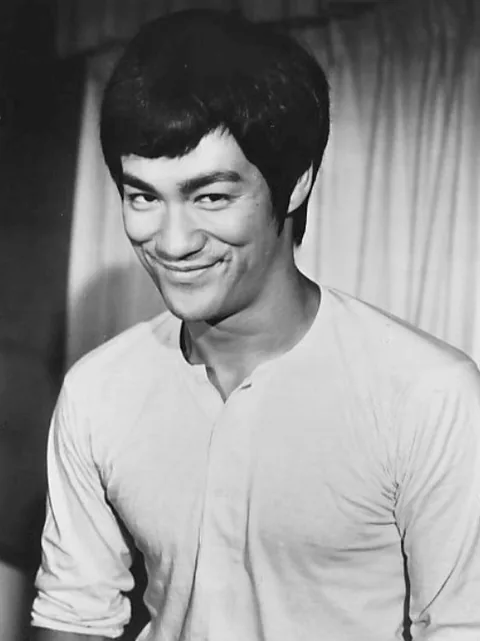

martial artist, actor, film director, screenwriter, producer, philosopher
Bruce Lee
Also known as Lee Jun-fan, Lee Siu-lung
Born in San Francisco, California, United StatesDied in Kowloon, Hong Kong
Hong Kong and American martial artist and actor who founded Jeet Kune Do and starred in The Big Boss, Fist of Fury, The Way of the Dragon, and Enter the Dragon. He died in Hong Kong at 32, six days before Enter the Dragon opened there.
Official and reference links
- Official website (Bruce Lee Enterprises)Official
- WikipediaReference
- WikiquoteReference
- BritannicaReference
- Bruce Lee FoundationFoundation
- HistoryLink essay on Lee's Seattle yearsArchive
- Wikimedia Commons categoryArchive
- Bruce Lee Podcast (official)Other
Overview
Bruce Lee was a martial artist, actor, filmmaker, and philosopher, born in San Francisco on November 27, 1940, and dead in Hong Kong at 32 on July 20, 1973.[1][2][3] Britannica calls him the first global star of kung fu films and says his style is considered a forerunner of modern mixed martial arts.[4][5]
He was born in the United States while his father, a Cantonese opera singer, was touring, and grew up in Hong Kong as a child actor whose fighting got him into trouble.[6][7][8] At 18 he went back to America with $100, waited tables at a Seattle restaurant, studied at the University of Washington, and started teaching martial arts on the side. The system he built later, Jeet Kune Do, takes its name from the Cantonese for "way of the intercepting fist."[8][9][10][11][12][13]
In Hollywood he found supporting roles, fight-choreography work, and private students among the stars, but not the parts he wanted.[14][15][16] Hong Kong made him a leading man: The Big Boss and Fist of Fury broke box-office records across Asia, and Britannica calls Enter the Dragon the first joint venture between Hong Kong and U.S. production companies.[17][18] He died six days before Enter the Dragon opened in Hong Kong.[19]
His life reads as a series of revisions: a fight he thought went on too long became a new training philosophy, a bad back became months of notebook writing, and a closed Hollywood door became a route through Hong Kong.[20][21][22][23]
Life
1940–1952
Born in San Francisco, raised in Hong Kong
Lee was born at the Jackson Street Hospital in San Francisco's Chinatown, the fourth of five children of the Cantonese opera singer Lee Hoi-chuen and Grace Ho.[2][24][25] His parents were in the United States on an opera tour, and his birth on American soil gave him a claim to U.S. citizenship.[7][26] The family returned to Hong Kong when he was a few months old, and Japan attacked the city in December 1941 and, Wikipedia says, ruled it for the next four years.[27][28]
Film was the family trade. Lee appeared on screen as a baby in Golden Gate Girl, and at nine he co-starred with his father in The Kid (1950), which Wikipedia describes as his first leading role.[29][30] He took a Chinese stage name meaning "Lee the Little Dragon" because he was born in both the year and the hour of the Dragon.[31] By the time he was 18 he had appeared in 20 films.[32] At seven he also began practicing tai chi with his father.[33]
1953–1959
Wing Chun, the boxing ring, and the street
At 12 Lee entered the Catholic La Salle College, where his grades were poor and his fights frequent, and in 1956 he was moved to St. Francis Xavier's College.[34][35] In 1953 his friend William Cheung introduced him to the Wing Chun teacher Ip Man, and the official Bruce Lee site says he studied with him diligently for five years.[36][37] Not everyone welcomed him: Wikipedia reports that most of the other students stopped training with him once they learned of his mixed ancestry, and that he kept training privately with Ip Man, William Cheung, and Wong Shun-leung.[38][39]
In 1958 he won the Hong Kong schools boxing tournament by knocking out the previous champion, Gary Elms, in the final, and he won the Crown Colony Cha-Cha Championship.[40][41] The official site says he studied dancing as assiduously as kung fu, keeping a notebook of 108 cha-cha steps.[42]
His street fights grew more frequent too.[43] After a 1958 rooftop fight with students from a rival school, in which he knocked out another boy's tooth, his mother had to sign a form at the police station accepting responsibility for him. She suggested he go back to the United States, and his father agreed because his college prospects looked poor.[44] In April 1959 he left on a steamship for San Francisco with $100.[9]
1959–1964
Seattle: a waiter, a student, and a teacher
After a short stay in San Francisco, Lee took a room above Ruby Chow's Chinese restaurant in Seattle and worked there as a waiter, a favor to his father.[10] He earned his high school diploma at Edison Technical School and went on to the University of Washington.[11][45] Sources disagree on his major: HistoryLink and the official site say philosophy, Wikipedia cites a 1999 alumni-magazine article saying his official major was drama, and Britannica says he studied both.[11][46][47][48]
Teaching started as a side job, because he disliked the odd jobs he took to stay solvent. His first classes met in the alley behind Ruby Chow's, and he also taught in parks and, on Sundays, in empty parking garages.[12] He began by teaching friends, the first of them the judo practitioner Jesse Glover, and Taky Kimura became his first assistant instructor and kept the Seattle school going after he left.[49][50][51] In the fall of 1963 he opened the Jun Fan Gung Fu Institute at 4750 University Way, charging $22 a month.[52]
Linda Emery, a University of Washington freshman, was one of his students. They married at the Seattle Congregational Church on August 17, 1964.[53][54]
1964–1966
Oakland, Long Beach, and a screen test
Lee and Linda moved to Oakland, where he and his friend James Yimm Lee set up the second Jun Fan Gung Fu Institute.[55] In August 1964 Ed Parker invited him to give a demonstration at the Long Beach International Karate Championships. There he performed the one-inch punch, and in the same appearance he criticized classical karate and kung fu styles and argued for modernizing martial arts.[56][57][58] The hairstylist Jay Sebring saw the demonstration and mentioned it to the producer William Dozier, who watched film of it and brought Lee to Los Angeles for a screen test.[59]
Their son Brandon was born on February 1, 1965, and Lee's father died a week later.[60] Lee took the family to Kowloon for four months while Dozier decided what to do with the show that had prompted the audition, then lived in Seattle and Oakland again until the call came in March 1966 that The Green Hornet was a go.[61][62]
1966–1970
Kato, Jeet Kune Do, and private students
The Green Hornet first aired on September 9, 1966. Lee's take-home pay was $313 a week, and he drew the most fan mail on the show.[63][64] His fight scenes were self-choreographed, and at first he moved so fast that the camera could not catch the action, so he had to slow his movements down.[65][66] The show lasted one season of 26 episodes; HistoryLink dates its cancellation to July 14, 1967, while Wikipedia says the season ran from September 1966 to March 1967.[67][68] By then he had opened a third institute in Los Angeles's Chinatown, and Wikipedia dates the origin of Jeet Kune Do to 1967, a hybrid that mixed boxing footwork, kung fu kicking, and fencing technique.[69][13][70]
Money was tight. The official site describes 1967 to 1971 as lean years for the family, and Lee taught private lessons, often to people in the entertainment business, among them Steve McQueen, James Coburn, and Stirling Silliphant.[71][72] He played a hired thug in Marlowe (1969) and did fight choreography for A Walk in the Spring Rain (1970).[73][16] His daughter Shannon was born on April 19, 1969.[74] He also read widely, eventually building a library of more than 2,500 books, and refused roles that portrayed Chinese people stereotypically.[75][76]
1970–1971
A broken back, a notebook, and a road home
On August 13, 1970, Lee hurt his back while training at home. His doctors told him the fourth sacral nerve was damaged and that his fighting days were over.[22] He refused to accept that, spent months in bed and then more months moving around the house, and used the time to read and write notes on Jeet Kune Do.[22][77] In 1971 he appeared in four episodes of Longstreet, a series written by Silliphant, whose scripts worked in key pieces of his martial arts philosophy.[78]
On a trip to Hong Kong with his son Brandon, he found fans mobbing him, because dubbed reruns of The Green Hornet had been airing there under the title Kato.[79][80] Back in the United States, he accepted an offer from Raymond Chow of Golden Harvest of $15,000 for two films, and in July 1971 he flew to Hong Kong and then Bangkok to start filming The Big Boss.[81]
1971–1973
Hong Kong stardom and Enter the Dragon
The Big Boss broke the Hong Kong box-office record that had belonged to The Sound of Music, and Britannica says more than a quarter of the city's estimated four million residents saw it.[82][83]Fist of Fury beat that record, and Lee then formed Concord Productions with Chow.[84][85] For The Way of the Dragon he was the writer, the director, the star, and the choreographer of the fights, and Wikipedia says the film's showdown with the karate champion Chuck Norris has been characterized as one of the best fight scenes in martial arts and film history.[86][87] HistoryLink says that on this film and Game of Death he had a hand in every part of the work, from dialogue and directing to choreography, editing, and design.[88]
In August 1972 he began shooting a fourth film, Game of Death, with his former student Kareem Abdul-Jabbar, Dan Inosanto, and the hapkido master Ji Han-jae. Production stopped in November when Warner Bros. offered him Enter the Dragon, the first film produced jointly by Concord, Golden Harvest, and Warner Bros.[89][90][91] Filming ran in Hong Kong from early 1973 into April.[92]
1973
The summer of 1973
On May 10, 1973, while re-recording dialogue for Enter the Dragon in a sweltering studio, Lee fainted, then collapsed again and had convulsions.[93] A neurosurgeon gave him mannitol to reduce the swelling in his brain. HistoryLink says doctors in Los Angeles found nothing wrong the following week, while Wikipedia says a brain scan in the United States diagnosed a convulsive disorder.[93][94][95]
On July 20, after a script meeting with Chow at the home of Betty Ting-Pei, who was to play the lead female role, Lee complained of a headache, took an Equagesic tablet, lay down, and could not be woken. He was pronounced dead at the hospital.[96] The coroner's court returned a verdict of death by misadventure, and the autopsy concluded the most likely cause of the brain swelling was a hypersensitivity or allergic reaction to aspirin, meprobamate, or both.[97][98] Others have since proposed different causes: the biographer Matthew Polly, after consulting medical experts, suggested heat stroke, and a 2022 journal article argued for dangerously low blood sodium. Wikipedia says the causes are still disputed.[99][100][3]
Some 25,000 people packed the streets outside his funeral parlor in Hong Kong on July 25. Linda had him buried in Seattle, where she planned to live, at Lake View Cemetery on July 30, with pallbearers who included Taky Kimura, Dan Inosanto, Steve McQueen, and James Coburn.[101][102][103]Enter the Dragon premiered in Los Angeles on August 24.[104]
1973–present
Legacy
In 1975 Linda compiled his eight volumes of notes into The Tao of Jeet Kune Do.[22]Game of Death was released in 1978 with a look-alike standing in for him and only fifteen minutes of real footage of Lee.[105] His son Brandon, also an actor, died on March 31, 1993, on the set of The Crow and is buried next to him.[106] Time named Lee one of the 100 most influential people of the twentieth century in 1999, and a bronze statue of him was unveiled in Hong Kong on November 27, 2005, what would have been his 65th birthday.[107][108] Britannica says he is often credited with changing how Asians were presented in American films.[109]
Habits and rituals
Meditating first
as recalled by Dan Inosanto
Dan Inosanto, one of Lee's students, recalled that meditation came first on Lee's schedule.[110] Lee maintained that mental and spiritual preparation are fundamental to the success of physical training.[111]
Total fitness, not just technique
from the mid-1960s
After his match with Wong Jack-man, Lee changed his approach to training, convinced that many martial artists of his time did too little conditioning.[112] He trained muscular strength and endurance, cardiovascular endurance, and flexibility, and built some muscle mass without overdoing it, because too much could cost speed or flexibility.[113][114] The official site says he "was devoted to physical culture and trained devotedly."[115] That zeal cost him his back in 1970, when, according to the official site, he picked up a 125-pound barbell without warming up and did a "good morning" exercise.[116]
Treating the body like an engine
from his first years in the United States
According to his wife Linda, soon after he reached the United States he began taking nutrition seriously, and he later concluded that a high-performance body was like a high-performance automobile engine.[117] He avoided baked goods and refined flour, often ate vegetables, rice, and fish together, and, because he disliked dairy products, used powdered milk.[118]
Reading, notebooks, and writing it down
1958–1973
From the cha-cha notebook of his teens to the eight volumes of notes Linda later compiled, Lee wrote down what he studied.[42][22] After the 1964 match he began reading in earnest on other martial arts, combat in general, philosophy, psychology, and motivation, and he built a library of more than 2,500 books.[119][75] His notebooks cite and comment on Plato, David Hume, René Descartes, Thomas Aquinas, Lao-tzu, Chuang-tzu, Miyamoto Musashi, and Alan Watts, and Wikipedia says he was especially interested in Jiddu Krishnamurti.[120]
Learning from other fighters
1959–1973
Lee swapped knowledge with specialists outside his own style. He trained with Gene LeBell, a stuntman on The Green Hornet, and the two traded what each knew best, and the taekwondo master Jhoon Rhee taught him the side kick while he taught Rhee a non-telegraphic punch.[121] He took an interest in boxing and in the techniques of Muhammad Ali and Sugar Ray Robinson, and his Jeet Kune Do combined boxing footwork, kung fu kicks, and fencing technique.[122][70]
Teaching each student individually
Seattle years and after
Students remembered that Lee spent time with each one and learned their individual strengths and weaknesses, and he socialized with them after Sunday workouts.[123] He insisted on serious students only, and HistoryLink says that was mostly why his Oakland school was not doing as well as he wanted.[124]
Changing the method after a hard result
1964–1967
After the 1964 match, Wikipedia says, Lee decided the fight had gone on too long and that his Wing Chun had not let him fight as well as he could, and he set out to find something more practical.[20] That search ended in Jeet Kune Do, which he described as "the style of no style."[125]
Setbacks and comebacks
The 1964 Oakland challenge match 1964–1967
What happened
In December 1964, leaders of the Chinese martial arts community who objected to his teaching non-Chinese students visited his Oakland studio with a scroll naming a challenger, Wong Jack-man. If Lee lost, he would have to close the school or stop teaching non-Chinese students.[21] Accounts of the match disagree. Linda Lee Cadwell, Lee, and James Yimm Lee said it lasted about three minutes and ended in a decisive win; Wong and the tai chi teacher William Chen said it ran 20 to 25 minutes, and a 1980 magazine article said it ended because Lee was unusually winded.[126][127][128] Wong published his account in a Chinese-language newspaper and offered a rematch, which Lee did not take up.[129]
The cause
Lee had publicly criticized a number of classical karate and kung fu styles, which more traditional kung fu practitioners took as an open challenge, and community leaders objected to his teaching non-Chinese students.[58][130][21] Wikipedia says Lee was unhappy with the outcome of the fight, and the official site says that even though he won, he was winded and discouraged at not finishing it in under three minutes.[131][132]
The comeback
Out of breath after a fight he won less easily than he wanted, Lee took up much harder conditioning, and he read widely in other combat arts and in philosophy.[21][119] He decided that traditional techniques were too rigid for the chaos of a street fight, and the method he built, Jeet Kune Do, blended boxing footwork, kung fu kicking, and fencing technique.[20][70]
Cancellation and the closed Hollywood door 1967–1971
What happened
HistoryLink says The Green Hornet was canceled in July 1967 after 26 episodes, and Britannica says Lee then had difficulty finding acting jobs.[67][133] The official site calls 1967 to 1971 lean years.[71] A film he developed with Silliphant and Coburn, The Silent Flute, was canceled by Warner Bros. after a location scouting trip to India.[134] Lee and his wife said he pitched a television series of his own in 1971, tentatively titled The Warrior, and the Shaolin monk role in the series Kung Fu went to David Carradine.[135][136]
The cause
HistoryLink says The Green Hornet was too campy for most adults, and that studio executives and producers did not think American audiences would accept a Chinese lead in the Kung Fu series.[67][137] Linda Lee Cadwell said the concept was retooled into Kung Fu without credit to Lee. Warner Bros. says it had been developing an identical concept from writers Ed Spielman and Howard Friedlander, and sources differ on whether Lee's accent or his ethnicity was the reason he was not cast.[138][139][140] Asked about it on The Pierre Berton Show, Lee said of the studio's view, "I don't blame them."[141]
The comeback
Lee kept working: he taught private lessons to stars, took guest roles, choreographed fights, and appeared in Longstreet.[72][15] When Golden Harvest offered two Hong Kong films, he decided that if the American studios' front door stayed shut, he would make his name in Hong Kong and return by the side door.[23]The Big Boss and Fist of Fury set box-office records, he formed his own company with Chow, and Warner Bros. then offered him Enter the Dragon, produced jointly by Concord, Golden Harvest, and Warner Bros.[82][84][91]
The 1970 back injury 1970–1971
What happened
HistoryLink says Lee hurt his back on August 13, 1970, while training at home, and that his doctors gave him a damaged fourth sacral nerve and no future as a fighter.[22] The official site says he stayed in bed for six months, and calls it an extremely frustrating, depressing, and painful time; HistoryLink says three months in bed and three more moving around the house.[142][22]
The cause
The official site says he picked up a 125-pound barbell without warming up and did a "good morning" exercise, and it blames his zeal for an injury that hurt him for the rest of his life.[116][143] HistoryLink dates the injury to August 13, 1970, while training at home.[22]
The comeback
Lee refused to accept the prognosis.[22] The official site says he used the time to rethink his goals and wrote much of what survives of his writing, then began his own rehabilitation, walking carefully at first and rebuilding his strength little by little.[77][144] After about six months he resumed working out, though the back hurt for the rest of his life, and Linda later compiled his notes into The Tao of Jeet Kune Do.[22]
In their own words
Empty your mind, be formless, shapeless like water. You put water into a cup, it becomes the cup. You put water into a bottle, it becomes the bottle. You put it into a teapot, it becomes the teapot. Now water can flow or it can crash. Be water, my friend.[145]
Lines Lee wrote for his role on Longstreet (1971), per Wikiquote; wording as printed on his official site · Source Use only that which works, and take it from any place you can find it.[146]
As quoted in Bruce Thomas, Bruce Lee: Fighting Spirit (1994), p. 44 · Source All types of knowledge, ultimately mean self knowledge.[147]
Bruce Lee: The Lost Interview (1971) · Source When you're talking about fighting, as it is, with no rules, well then, baby you'd better train every part of your body![148]
Bruce Lee: The Lost Interview (1971) · Source You know what I want to think of myself? As a human being.[149]
Bruce Lee: The Lost Interview (1971) · Source When I look around, I always learn something: to be always yourself, and to express yourself, to have faith in yourself. Do not go out and look for a successful personality and duplicate it.[150]
Radio interview with Ted Thomas (1972) · Source There are no limits. There are plateaus, but you must not stay there, you must go beyond them. If it kills you, it kills you. A man must constantly exceed his level.[151]
As quoted in John R. Little, ed., The Art of Expressing the Human Body (1998), p. 23 · Source Man, the living creature, the creating individual, is always more important than any established style or system.[152]
As quoted in Jesse R. Glover, "From Wing Chun to Jeet Kune Do," Black Belt (September 1993), p. 35 · Source Jeet Kune Do favors formlessness so that it can assume all forms and since Jeet Kune Do has no style, it can fit in with all styles.[153]
The Tao of Jeet Kune Do (1975), p. 12 · Source In memory of a once fluid man crammed and distorted by the classical mess.[154]
Inscription on a tombstone he erected in his Los Angeles studio, as reported by HistoryLink · Source They think that business-wise it is a risk. I don't blame them.[155]
The Pierre Berton Show interview (1971), on Warner Bros.' casting of Kung Fu · Source A good martial artist does not become tense, but ready. Not thinking, yet not dreaming. Ready for whatever may come. When the opponent expands, I contract. When he contracts, I expand. When there is an opportunity, I do not hit. It hits all by itself.[156]
Enter the Dragon (1973) · Source Don't think! Feel! It is like a finger pointing a way to the moon. Don't concentrate on the finger or you will miss all that heavenly glory.[157]
Enter the Dragon (1973) · Source Boards don't hit back.[158]
Enter the Dragon (1973) · Source
Pictures
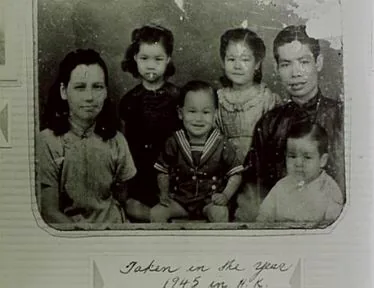
Lee as a baby with his family, a photo Commons dates to 1941.1941Photo: · Public domain · Wikimedia Commons 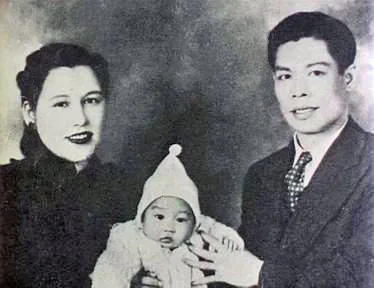
Lee as a baby with his parents, Grace Ho and Lee Hoi-chuen.1940sPhoto: · Public domain · Wikimedia Commons 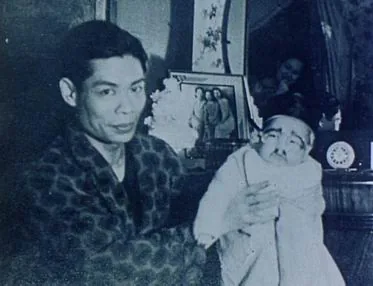
Lee as a baby with his father.1940sPhoto: · Public domain · Wikimedia Commons 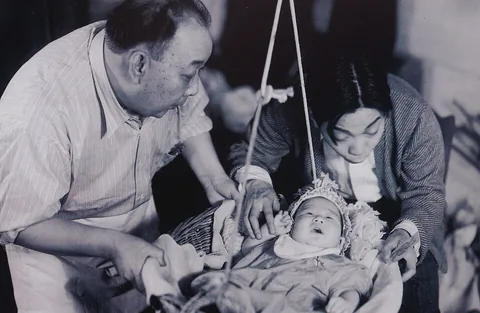
A scene from the 1941 film Golden Gate Girl, in which Lee appeared as a baby.1941Photo: · Public domain · Wikimedia Commons 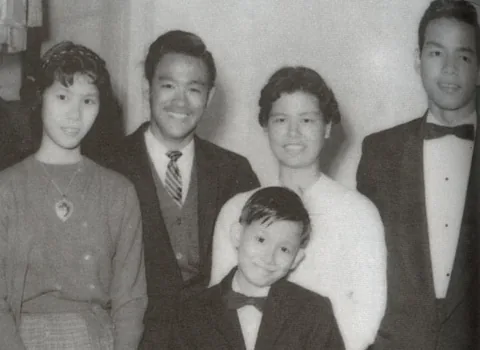
Lee as a child with his family in Hong Kong, 1945.1945Photo: · Public domain · Wikimedia Commons 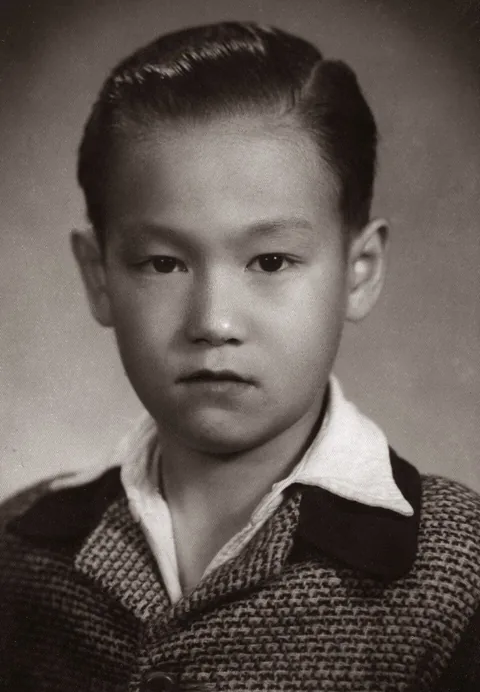
Lee as a child with his family, 1946.1946Photo: · Public domain · Wikimedia Commons 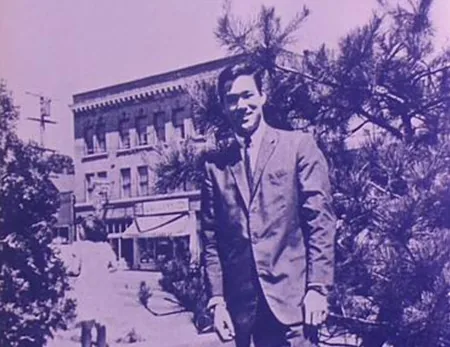
Lee in America in 1959, the year he left Hong Kong.1959Photo: · Public domain · Wikimedia Commons 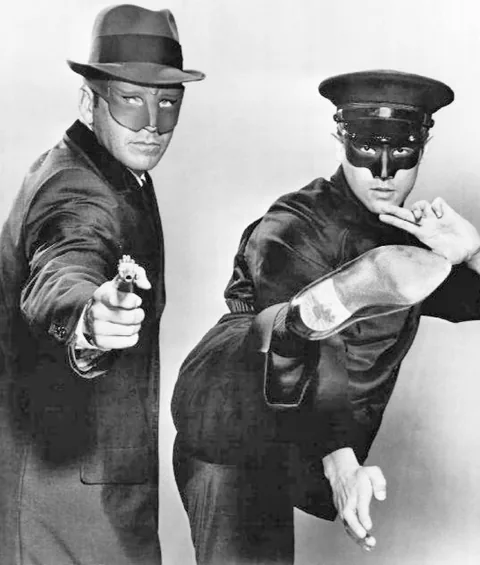
Van Williams as the Green Hornet and Lee as Kato in a publicity photo for The Green Hornet, September 1966.1966-09-08Photo: · Public domain · Wikimedia Commons 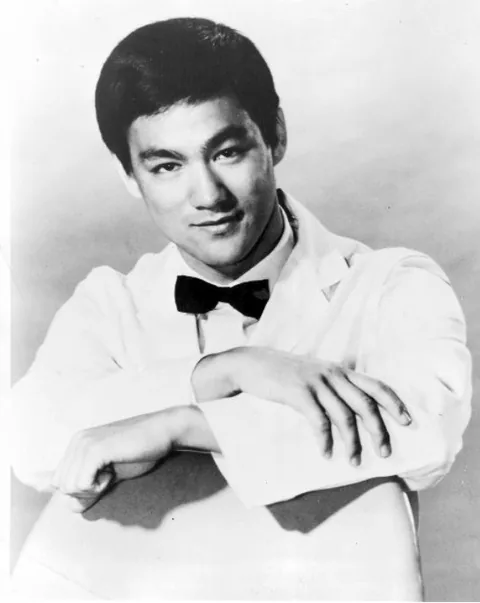
Lee as Kato in a publicity photo from The Green Hornet, August 1967.1967-08Photo: · Public domain · Wikimedia Commons 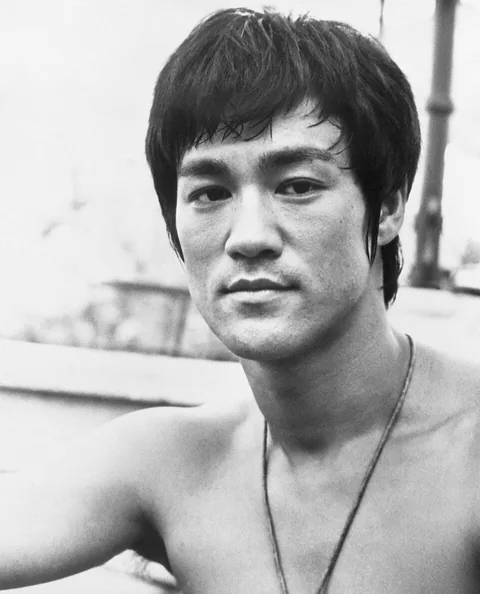
A 1971 National General Pictures publicity photo distributed for Fists of Fury.1971Photo: · Public domain · Wikimedia Commons 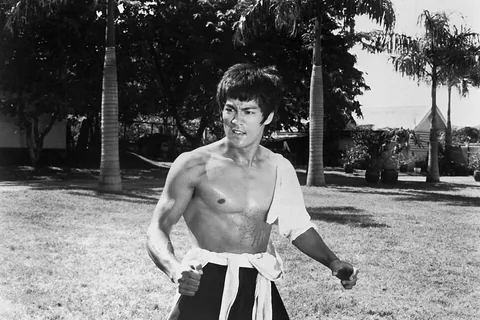
Lee as Cheng Chao-an in a 1971 publicity photo from The Big Boss.1971Photo: · Public domain · Wikimedia Commons A National General Pictures photo of Lee from the film Fists of Fury (The Big Boss), dated June 14, 1973.1973-06-14Photo: · Public domain · Wikimedia Commons 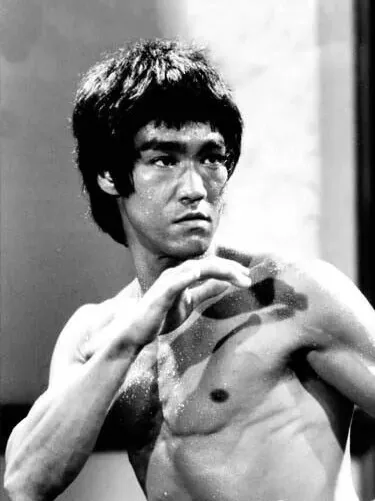
A photo of Lee from Enter the Dragon, 1973.1973Photo: · Public domain · Wikimedia Commons 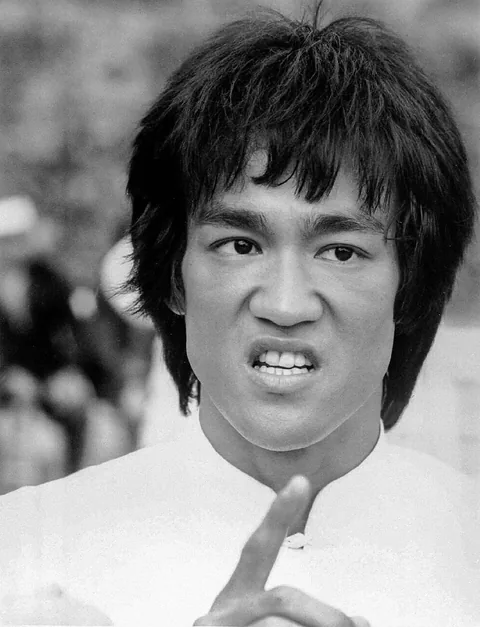
A photograph of Lee distributed by the Associated Press after his death on July 20, 1973.1973-07-20Photo: · Public domain · Wikimedia Commons 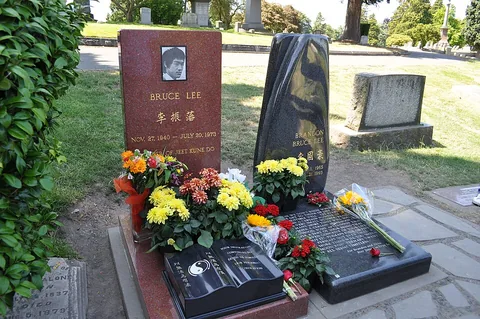
The graves of Bruce Lee and his son Brandon at Lake View Cemetery in Seattle.2010-07-19Photo: · CC BY-SA 3.0 · Wikimedia Commons 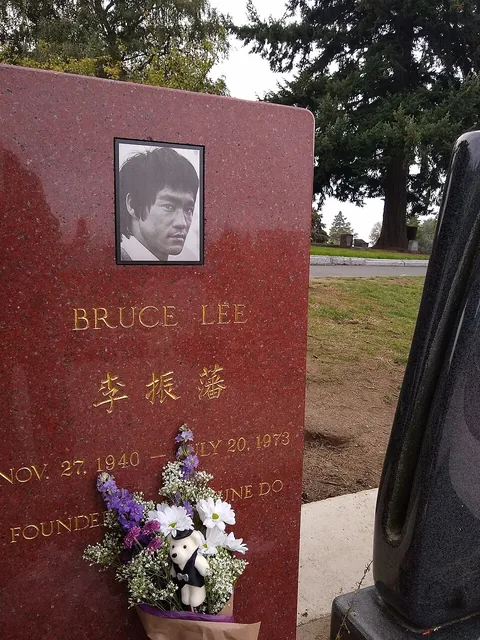
Lee's tombstone at Lake View Cemetery in Seattle.2020-10-07Photo: · CC BY 4.0 · Wikimedia Commons 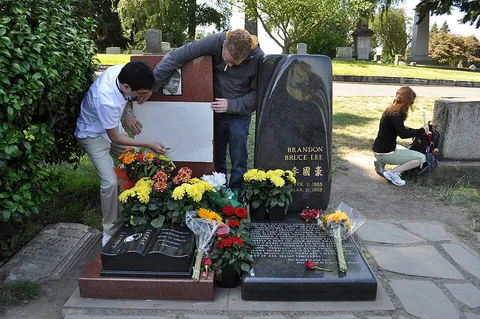
A visitor takes a rubbing of Lee's gravestone at Lake View Cemetery, Seattle.2010-07-19Photo: · CC BY-SA 3.0 · Wikimedia Commons 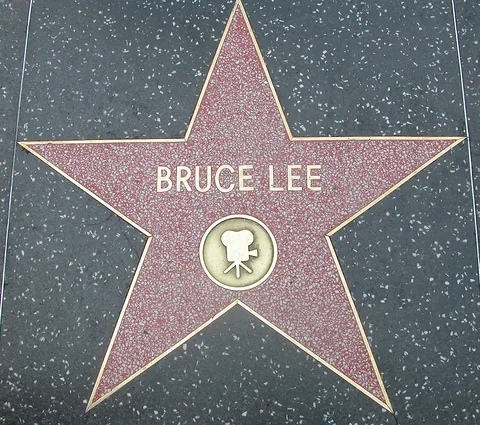
Lee's star on the Hollywood Walk of Fame in Los Angeles.2006-11-11Photo: · Public domain · Wikimedia Commons 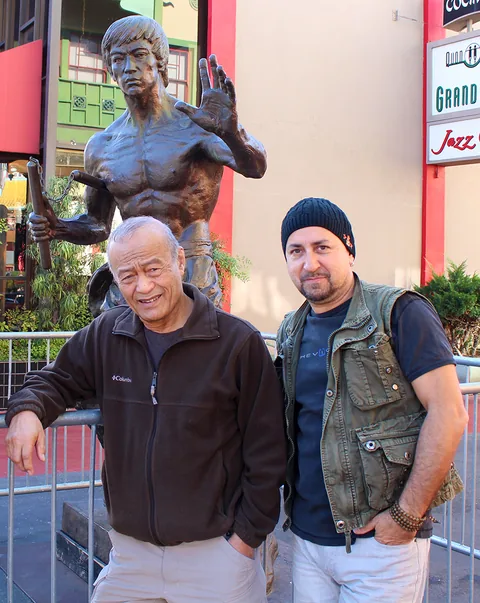
Dan Inosanto, Lee's student and assistant instructor, with Salem Assli in 2015.2015-11-28Photo: · CC BY-SA 4.0 · Wikimedia Commons


Watch and listen
- Enter the Dragon - Original Theatrical Trailer
- Bruce Lee 30 for 30: Be Water - Official Trailer
- The Big Boss | Official Trailer 4K
- Bruce Lee's First and Only TV Interview (1971), the Pierre Berton Show
- Bruce Lee Podcast 'One Family' Ep.7: Shannon Flows with her Uncle (Bruce Lee's Brother), Robert Lee
- Bruce Lee Podcast
Read
Notes
- "Bruce Lee," Wikipedia, accessed November 27, 2026 (martial artist, actor, filmmaker, and philosopher; birth and death dates). https://en.wikipedia.org/wiki/Bruce_Lee↩
- Alyssa Burrows, "Lee, Bruce (1940-1973)," HistoryLink.org Essay 3999, posted October 21, 2002 (born at Jackson Street Hospital in San Francisco's Chinatown). https://www.historylink.org/file/3999↩1↩2
- "Bruce Lee," Wikipedia, accessed November 27, 2026 (died at 32 of brain edema whose causes remain disputed). https://en.wikipedia.org/wiki/Bruce_Lee↩1↩2
- Arpit Nayak, "Bruce Lee," Encyclopaedia Britannica, last updated November 23, 2026, accessed November 27, 2026 (first global star of kung fu films). https://www.britannica.com/biography/Bruce-Lee↩
- Arpit Nayak, "Bruce Lee," Encyclopaedia Britannica, last updated November 23, 2026, accessed November 27, 2026 (forerunner to modern mixed martial arts). https://www.britannica.com/biography/Bruce-Lee↩
- "Bruce Lee," Wikipedia, accessed November 27, 2026 (born in San Francisco, raised in Hong Kong, child actor). https://en.wikipedia.org/wiki/Bruce_Lee↩
- Arpit Nayak, "Bruce Lee," Encyclopaedia Britannica, last updated November 23, 2026, accessed November 27, 2026 (father touring the U.S. with an opera troupe; Lee born in San Francisco). https://www.britannica.com/biography/Bruce-Lee↩1↩2
- Bruce Lee Enterprises, LLC, "Bruce Lee" (short and long biography), brucelee.com, accessed November 27, 2026 (at 18; trouble fighting). https://brucelee.com/bruce-lee↩1↩2
- Alyssa Burrows, "Lee, Bruce (1940-1973)," HistoryLink.org Essay 3999, posted October 21, 2002 (left Hong Kong in April 1959 with $100). https://www.historylink.org/file/3999↩1↩2
- Alyssa Burrows, "Lee, Bruce (1940-1973)," HistoryLink.org Essay 3999, posted October 21, 2002 (Ruby Chow's room and waiter job in Seattle). https://www.historylink.org/file/3999↩1↩2
- Alyssa Burrows, "Lee, Bruce (1940-1973)," HistoryLink.org Essay 3999, posted October 21, 2002 (diploma from Edison; University of Washington). https://www.historylink.org/file/3999↩1↩2↩3
- Alyssa Burrows, "Lee, Bruce (1940-1973)," HistoryLink.org Essay 3999, posted October 21, 2002 (first classes in the alley, parks, and garages). https://www.historylink.org/file/3999↩1↩2
- "Bruce Lee," Wikipedia, accessed November 27, 2026 (Jeet Kune Do originated in 1967; way of the intercepting fist). https://en.wikipedia.org/wiki/Bruce_Lee↩1↩2
- Arpit Nayak, "Bruce Lee," Encyclopaedia Britannica, last updated November 23, 2026, accessed November 27, 2026 (struggle to find roles in Hollywood; moved back to Hong Kong in 1971). https://www.britannica.com/biography/Bruce-Lee↩
- Arpit Nayak, "Bruce Lee," Encyclopaedia Britannica, last updated November 23, 2026, accessed November 27, 2026 (private lessons to Hollywood stars; Marlowe; Longstreet). https://www.britannica.com/biography/Bruce-Lee↩1↩2
- Alyssa Burrows, "Lee, Bruce (1940-1973)," HistoryLink.org Essay 3999, posted October 21, 2002 (fight choreography for A Walk in Spring Rain). https://www.historylink.org/file/3999↩1↩2
- Arpit Nayak, "Bruce Lee," Encyclopaedia Britannica, last updated November 23, 2026, accessed November 27, 2026 (two films that broke box-office records throughout Asia). https://www.britannica.com/biography/Bruce-Lee↩
- Arpit Nayak, "Bruce Lee," Encyclopaedia Britannica, last updated November 23, 2026, accessed November 27, 2026 (Enter the Dragon the first joint venture between Hong Kong and U.S. production companies). https://www.britannica.com/biography/Bruce-Lee↩
- Arpit Nayak, "Bruce Lee," Encyclopaedia Britannica, last updated November 23, 2026, accessed November 27, 2026 (died six days before the Hong Kong release of Enter the Dragon). https://www.britannica.com/biography/Bruce-Lee↩
- "Bruce Lee," Wikipedia, accessed November 27, 2026 (concluded the fight lasted too long and he had not lived up to his potential). https://en.wikipedia.org/wiki/Bruce_Lee↩1↩2↩3
- Alyssa Burrows, "Lee, Bruce (1940-1973)," HistoryLink.org Essay 3999, posted October 21, 2002 (December 1964 challenge; winded and more extreme fitness training). https://www.historylink.org/file/3999↩1↩2↩3↩4
- Alyssa Burrows, "Lee, Bruce (1940-1973)," HistoryLink.org Essay 3999, posted October 21, 2002 (back injury on August 13, 1970; recovery; notes compiled into Tao of Jeet Kune Do). https://www.historylink.org/file/3999↩1↩2↩3↩4↩5↩6↩7↩8↩9↩10
- Bruce Lee Enterprises, LLC, "Bruce Lee" (short and long biography), brucelee.com, accessed November 27, 2026 (front door and side door reasoning). https://brucelee.com/bruce-lee↩1↩2
- Bruce Lee Enterprises, LLC, "Bruce Lee" (short and long biography), brucelee.com, accessed November 27, 2026 (fourth child of Lee Hoi Chuen and Grace Ho). https://brucelee.com/bruce-lee↩
- "Bruce Lee," Wikipedia, accessed November 27, 2026 (father a Cantonese opera singer). https://en.wikipedia.org/wiki/Bruce_Lee↩
- "Bruce Lee," Wikipedia, accessed November 27, 2026 (birth in the U.S. allowed him to claim citizenship). https://en.wikipedia.org/wiki/Bruce_Lee↩
- "Bruce Lee," Wikipedia, accessed November 27, 2026 (family returned to Hong Kong at four months). https://en.wikipedia.org/wiki/Bruce_Lee↩
- "Bruce Lee," Wikipedia, accessed November 27, 2026 (Japanese occupation of Hong Kong). https://en.wikipedia.org/wiki/Bruce_Lee↩
- Arpit Nayak, "Bruce Lee," Encyclopaedia Britannica, last updated November 23, 2026, accessed November 27, 2026 (first screen appearance in Golden Gate Girl as a baby; first leading role in The Kid (1950)). https://www.britannica.com/biography/Bruce-Lee↩
- "Bruce Lee," Wikipedia, accessed November 27, 2026 (co-starred with his father in The Kid at nine). https://en.wikipedia.org/wiki/Bruce_Lee↩
- "Bruce Lee," Wikipedia, accessed November 27, 2026 (stage name Lee the Little Dragon). https://en.wikipedia.org/wiki/Bruce_Lee↩
- "Bruce Lee," Wikipedia, accessed November 27, 2026 (20 films by 18). https://en.wikipedia.org/wiki/Bruce_Lee↩
- "Bruce Lee," Wikipedia, accessed November 27, 2026 (tai chi at seven with his father). https://en.wikipedia.org/wiki/Bruce_Lee↩
- Alyssa Burrows, "Lee, Bruce (1940-1973)," HistoryLink.org Essay 3999, posted October 21, 2002 (La Salle College at 12; poor grades and fights). https://www.historylink.org/file/3999↩
- "Bruce Lee," Wikipedia, accessed November 27, 2026 (transferred to St. Francis Xavier's College in 1956). https://en.wikipedia.org/wiki/Bruce_Lee↩
- "Bruce Lee," Wikipedia, accessed November 27, 2026 (introduced to Ip Man in 1953). https://en.wikipedia.org/wiki/Bruce_Lee↩
- Bruce Lee Enterprises, LLC, "Bruce Lee" (short and long biography), brucelee.com, accessed November 27, 2026 (five years of study with Yip Man). https://brucelee.com/bruce-lee↩
- "Bruce Lee," Wikipedia, accessed November 27, 2026 (other students refused to train with him). https://en.wikipedia.org/wiki/Bruce_Lee↩
- "Bruce Lee," Wikipedia, accessed November 27, 2026 (continued training privately). https://en.wikipedia.org/wiki/Bruce_Lee↩
- "Bruce Lee," Wikipedia, accessed November 27, 2026 (1958 Hong Kong schools boxing tournament). https://en.wikipedia.org/wiki/Bruce_Lee↩
- "Bruce Lee," Wikipedia, accessed November 27, 2026 (cha-cha championship). https://en.wikipedia.org/wiki/Bruce_Lee↩
- Bruce Lee Enterprises, LLC, "Bruce Lee" (short and long biography), brucelee.com, accessed November 27, 2026 (studied dancing as assiduously as gung fu; 108 cha cha steps). https://brucelee.com/bruce-lee↩1↩2
- "Bruce Lee," Wikipedia, accessed November 27, 2026 (street fights more frequent in his late teens). https://en.wikipedia.org/wiki/Bruce_Lee↩
- Alyssa Burrows, "Lee, Bruce (1940-1973)," HistoryLink.org Essay 3999, posted October 21, 2002 (rooftop fight, police form, mother's suggestion). https://www.historylink.org/file/3999↩
- "Bruce Lee," Wikipedia, accessed November 27, 2026 (enrolled at the University of Washington in March 1961). https://en.wikipedia.org/wiki/Bruce_Lee↩
- Bruce Lee Enterprises, LLC, "Bruce Lee" (short and long biography), brucelee.com, accessed November 27, 2026 (majored in philosophy). https://brucelee.com/bruce-lee↩
- "Bruce Lee," Wikipedia, accessed November 27, 2026 (official major was drama). https://en.wikipedia.org/wiki/Bruce_Lee↩
- Arpit Nayak, "Bruce Lee," Encyclopaedia Britannica, last updated November 23, 2026, accessed November 27, 2026 (studied philosophy and drama at the University of Washington). https://www.britannica.com/biography/Bruce-Lee↩
- "Bruce Lee," Wikipedia, accessed November 27, 2026 (taught friends, starting with Jesse Glover). https://en.wikipedia.org/wiki/Bruce_Lee↩
- "Bruce Lee," Wikipedia, accessed November 27, 2026 (Taky Kimura as first assistant instructor). https://en.wikipedia.org/wiki/Bruce_Lee↩
- Alyssa Burrows, "Lee, Bruce (1940-1973)," HistoryLink.org Essay 3999, posted October 21, 2002 (Kimura left in charge of Jun Fan training in Seattle). https://www.historylink.org/file/3999↩
- Alyssa Burrows, "Lee, Bruce (1940-1973)," HistoryLink.org Essay 3999, posted October 21, 2002 (Jun Fan Gung Fu Institute at 4750 University Way, fall 1963; $22 a month). https://www.historylink.org/file/3999↩
- Alyssa Burrows, "Lee, Bruce (1940-1973)," HistoryLink.org Essay 3999, posted October 21, 2002 (Linda Emery became his student). https://www.historylink.org/file/3999↩
- Alyssa Burrows, "Lee, Bruce (1940-1973)," HistoryLink.org Essay 3999, posted October 21, 2002 (wedding on August 17, 1964). https://www.historylink.org/file/3999↩
- Alyssa Burrows, "Lee, Bruce (1940-1973)," HistoryLink.org Essay 3999, posted October 21, 2002 (Oakland branch with James Y. Lee, 1964). https://www.historylink.org/file/3999↩
- Bruce Lee Enterprises, LLC, "Bruce Lee" (short and long biography), brucelee.com, accessed November 27, 2026 (Ed Parker's invitation to the Long Beach tournament, August 1964). https://brucelee.com/bruce-lee↩
- "Bruce Lee," Wikipedia, accessed November 27, 2026 (one-inch punch at Long Beach). https://en.wikipedia.org/wiki/Bruce_Lee↩
- "Bruce Lee," Wikipedia, accessed November 27, 2026 (criticized classical styles at Long Beach). https://en.wikipedia.org/wiki/Bruce_Lee↩1↩2
- Alyssa Burrows, "Lee, Bruce (1940-1973)," HistoryLink.org Essay 3999, posted October 21, 2002 (Sebring, Dozier, screen test). https://www.historylink.org/file/3999↩
- Alyssa Burrows, "Lee, Bruce (1940-1973)," HistoryLink.org Essay 3999, posted October 21, 2002 (Brandon born February 1, 1965; father died a week later). https://www.historylink.org/file/3999↩
- Alyssa Burrows, "Lee, Bruce (1940-1973)," HistoryLink.org Essay 3999, posted October 21, 2002 (four months in Kowloon; Number-One Son scrapped). https://www.historylink.org/file/3999↩
- Alyssa Burrows, "Lee, Bruce (1940-1973)," HistoryLink.org Essay 3999, posted October 21, 2002 (March 1966 call; move to Los Angeles). https://www.historylink.org/file/3999↩
- Alyssa Burrows, "Lee, Bruce (1940-1973)," HistoryLink.org Essay 3999, posted October 21, 2002 ($313 a week). https://www.historylink.org/file/3999↩
- Alyssa Burrows, "Lee, Bruce (1940-1973)," HistoryLink.org Essay 3999, posted October 21, 2002 (most fan mail on the show). https://www.historylink.org/file/3999↩
- Alyssa Burrows, "Lee, Bruce (1940-1973)," HistoryLink.org Essay 3999, posted October 21, 2002 (self-choreographed fight scenes). https://www.historylink.org/file/3999↩
- "Bruce Lee," Wikipedia, accessed November 27, 2026 (moved too fast for the film). https://en.wikipedia.org/wiki/Bruce_Lee↩
- Alyssa Burrows, "Lee, Bruce (1940-1973)," HistoryLink.org Essay 3999, posted October 21, 2002 (too campy for most adults; canceled after 26 episodes on July 14, 1967). https://www.historylink.org/file/3999↩1↩2↩3
- "Bruce Lee," Wikipedia, accessed November 27, 2026 (one season of 26 episodes, September 1966 to March 1967). https://en.wikipedia.org/wiki/Bruce_Lee↩
- Alyssa Burrows, "Lee, Bruce (1940-1973)," HistoryLink.org Essay 3999, posted October 21, 2002 (third institute in Los Angeles's Chinatown in February 1967). https://www.historylink.org/file/3999↩
- "Bruce Lee," Wikipedia, accessed November 27, 2026 (footwork from boxing, kicks from kung fu, technique from fencing). https://en.wikipedia.org/wiki/Bruce_Lee↩1↩2↩3
- Bruce Lee Enterprises, LLC, "Bruce Lee" (short and long biography), brucelee.com, accessed November 27, 2026 (1967 to 1971 were lean years; private lessons). https://brucelee.com/bruce-lee↩1↩2
- Alyssa Burrows, "Lee, Bruce (1940-1973)," HistoryLink.org Essay 3999, posted October 21, 2002 (private students McQueen, Silliphant, Coburn). https://www.historylink.org/file/3999↩1↩2
- "Bruce Lee," Wikipedia, accessed November 27, 2026 (role in Marlowe). https://en.wikipedia.org/wiki/Bruce_Lee↩
- Alyssa Burrows, "Lee, Bruce (1940-1973)," HistoryLink.org Essay 3999, posted October 21, 2002 (Shannon born April 19, 1969). https://www.historylink.org/file/3999↩
- Alyssa Burrows, "Lee, Bruce (1940-1973)," HistoryLink.org Essay 3999, posted October 21, 2002 (library of more than 2,500 books). https://www.historylink.org/file/3999↩1↩2
- Alyssa Burrows, "Lee, Bruce (1940-1973)," HistoryLink.org Essay 3999, posted October 21, 2002 (refused stereotyped roles). https://www.historylink.org/file/3999↩
- Bruce Lee Enterprises, LLC, "Bruce Lee" (short and long biography), brucelee.com, accessed November 27, 2026 (a time to redefine goals; writing done in this period). https://brucelee.com/bruce-lee↩1↩2
- "Bruce Lee," Wikipedia, accessed November 27, 2026 (four Longstreet episodes). https://en.wikipedia.org/wiki/Bruce_Lee↩
- Alyssa Burrows, "Lee, Bruce (1940-1973)," HistoryLink.org Essay 3999, posted October 21, 2002 (fans mobbed him on arrival in Hong Kong). https://www.historylink.org/file/3999↩
- Alyssa Burrows, "Lee, Bruce (1940-1973)," HistoryLink.org Essay 3999, posted October 21, 2002 (dubbed Green Hornet reruns aired as Kato). https://www.historylink.org/file/3999↩
- Alyssa Burrows, "Lee, Bruce (1940-1973)," HistoryLink.org Essay 3999, posted October 21, 2002 (Raymond Chow's $15,000 offer for two films; July 1971 flight). https://www.historylink.org/file/3999↩
- Alyssa Burrows, "Lee, Bruce (1940-1973)," HistoryLink.org Essay 3999, posted October 21, 2002 (The Big Boss broke the Hong Kong box-office record). https://www.historylink.org/file/3999↩1↩2
- Arpit Nayak, "Bruce Lee," Encyclopaedia Britannica, last updated November 23, 2026, accessed November 27, 2026 (more than a quarter of Hong Kong's residents saw The Big Boss). https://www.britannica.com/biography/Bruce-Lee↩
- Alyssa Burrows, "Lee, Bruce (1940-1973)," HistoryLink.org Essay 3999, posted October 21, 2002 (Fist of Fury broke the box-office records of The Big Boss). https://www.historylink.org/file/3999↩1↩2
- Alyssa Burrows, "Lee, Bruce (1940-1973)," HistoryLink.org Essay 3999, posted October 21, 2002 (Concord Productions with Raymond Chow). https://www.historylink.org/file/3999↩
- "Bruce Lee," Wikipedia, accessed November 27, 2026 (writer, director, star, and choreographer of The Way of the Dragon). https://en.wikipedia.org/wiki/Bruce_Lee↩
- "Bruce Lee," Wikipedia, accessed November 27, 2026 (Norris fight characterized as one of the best). https://en.wikipedia.org/wiki/Bruce_Lee↩
- Alyssa Burrows, "Lee, Bruce (1940-1973)," HistoryLink.org Essay 3999, posted October 21, 2002 (hand in all aspects of the filming). https://www.historylink.org/file/3999↩
- Alyssa Burrows, "Lee, Bruce (1940-1973)," HistoryLink.org Essay 3999, posted October 21, 2002 (Game of Death scenes shot August to October 1972). https://www.historylink.org/file/3999↩
- "Bruce Lee," Wikipedia, accessed November 27, 2026 (Game of Death production stopped in November 1972 for Enter the Dragon). https://en.wikipedia.org/wiki/Bruce_Lee↩
- "Bruce Lee," Wikipedia, accessed November 27, 2026 (first film produced jointly by Concord, Golden Harvest, and Warner Bros.). https://en.wikipedia.org/wiki/Bruce_Lee↩1↩2
- "Bruce Lee," Wikipedia, accessed November 27, 2026 (filming dates for Enter the Dragon). https://en.wikipedia.org/wiki/Bruce_Lee↩
- Alyssa Burrows, "Lee, Bruce (1940-1973)," HistoryLink.org Essay 3999, posted October 21, 2002 (May 10, 1973 collapse and hospital treatment). https://www.historylink.org/file/3999↩1↩2
- Alyssa Burrows, "Lee, Bruce (1940-1973)," HistoryLink.org Essay 3999, posted October 21, 2002 (Los Angeles tests found nothing wrong). https://www.historylink.org/file/3999↩
- "Bruce Lee," Wikipedia, accessed November 27, 2026 (U.S. brain scan diagnosed convulsive disorder). https://en.wikipedia.org/wiki/Bruce_Lee↩
- Alyssa Burrows, "Lee, Bruce (1940-1973)," HistoryLink.org Essay 3999, posted October 21, 2002 (events of July 20, 1973). https://www.historylink.org/file/3999↩
- "Bruce Lee," Wikipedia, accessed November 27, 2026 (coroner's court verdict of death by misadventure). https://en.wikipedia.org/wiki/Bruce_Lee↩
- Alyssa Burrows, "Lee, Bruce (1940-1973)," HistoryLink.org Essay 3999, posted October 21, 2002 (autopsy conclusion on the brain swelling). https://www.historylink.org/file/3999↩
- "Bruce Lee," Wikipedia, accessed November 27, 2026 (later theories of the cause of death). https://en.wikipedia.org/wiki/Bruce_Lee↩
- "Bruce Lee," Wikipedia, accessed November 27, 2026 (2022 journal article proposing hyponatremia). https://en.wikipedia.org/wiki/Bruce_Lee↩
- Alyssa Burrows, "Lee, Bruce (1940-1973)," HistoryLink.org Essay 3999, posted October 21, 2002 (25,000 people at the Hong Kong funeral). https://www.historylink.org/file/3999↩
- Alyssa Burrows, "Lee, Bruce (1940-1973)," HistoryLink.org Essay 3999, posted October 21, 2002 (buried at Lake View Cemetery on July 30, 1973). https://www.historylink.org/file/3999↩
- Alyssa Burrows, "Lee, Bruce (1940-1973)," HistoryLink.org Essay 3999, posted October 21, 2002 (pallbearers). https://www.historylink.org/file/3999↩
- Alyssa Burrows, "Lee, Bruce (1940-1973)," HistoryLink.org Essay 3999, posted October 21, 2002 (Enter the Dragon premiere on August 24, 1973). https://www.historylink.org/file/3999↩
- "Bruce Lee," Wikipedia, accessed November 27, 2026 (1978 release with only fifteen minutes of real footage). https://en.wikipedia.org/wiki/Bruce_Lee↩
- Alyssa Burrows, "Lee, Bruce (1940-1973)," HistoryLink.org Essay 3999, posted October 21, 2002 (Brandon Lee's death on March 31, 1993). https://www.historylink.org/file/3999↩
- "Bruce Lee," Wikipedia, accessed November 27, 2026 (Time's 100 most influential people of the 20th century). https://en.wikipedia.org/wiki/Bruce_Lee↩
- "Bruce Lee," Wikipedia, accessed November 27, 2026 (Hong Kong statue unveiled November 27, 2005). https://en.wikipedia.org/wiki/Bruce_Lee↩
- Arpit Nayak, "Bruce Lee," Encyclopaedia Britannica, last updated November 23, 2026, accessed November 27, 2026 (credited with changing how Asians were presented in American films). https://www.britannica.com/biography/Bruce-Lee↩
- "Bruce Lee," Wikipedia, accessed November 27, 2026 (Inosanto recalls meditation first on his schedule). https://en.wikipedia.org/wiki/Bruce_Lee↩
- "Bruce Lee," Wikipedia, accessed November 27, 2026 (mental and spiritual preparation fundamental). https://en.wikipedia.org/wiki/Bruce_Lee↩
- "Bruce Lee," Wikipedia, accessed November 27, 2026 (changed his approach to training after the match). https://en.wikipedia.org/wiki/Bruce_Lee↩
- "Bruce Lee," Wikipedia, accessed November 27, 2026 (all elements of total fitness). https://en.wikipedia.org/wiki/Bruce_Lee↩
- "Bruce Lee," Wikipedia, accessed November 27, 2026 (bodybuilding without losing speed or flexibility). https://en.wikipedia.org/wiki/Bruce_Lee↩
- Bruce Lee Enterprises, LLC, "Bruce Lee" (short and long biography), brucelee.com, accessed November 27, 2026 (devoted to physical culture). https://brucelee.com/bruce-lee↩
- Bruce Lee Enterprises, LLC, "Bruce Lee" (short and long biography), brucelee.com, accessed November 27, 2026 (125-pound barbell, good morning exercise, without warming up). https://brucelee.com/bruce-lee↩1↩2
- "Bruce Lee," Wikipedia, accessed November 27, 2026 (took nutrition seriously; engine analogy). https://en.wikipedia.org/wiki/Bruce_Lee↩
- "Bruce Lee," Wikipedia, accessed November 27, 2026 (avoided baked goods and refined flour; vegetables, rice, fish; powdered milk). https://en.wikipedia.org/wiki/Bruce_Lee↩
- Alyssa Burrows, "Lee, Bruce (1940-1973)," HistoryLink.org Essay 3999, posted October 21, 2002 (began reading widely after the fight). https://www.historylink.org/file/3999↩1↩2
- "Bruce Lee," Wikipedia, accessed November 27, 2026 (notebooks cite Plato, Hume, Descartes, Aquinas, Lao-tzu, Chuang-tzu, Musashi, and Watts; interest in Krishnamurti). https://en.wikipedia.org/wiki/Bruce_Lee↩
- "Bruce Lee," Wikipedia, accessed November 27, 2026 (trained with LeBell; Rhee taught him the side kick). https://en.wikipedia.org/wiki/Bruce_Lee↩
- "Bruce Lee," Wikipedia, accessed November 27, 2026 (interest in the techniques of Muhammad Ali and Sugar Ray Robinson). https://en.wikipedia.org/wiki/Bruce_Lee↩
- Alyssa Burrows, "Lee, Bruce (1940-1973)," HistoryLink.org Essay 3999, posted October 21, 2002 (individualized training). https://www.historylink.org/file/3999↩
- Alyssa Burrows, "Lee, Bruce (1940-1973)," HistoryLink.org Essay 3999, posted October 21, 2002 (Oakland studio struggled because he insisted on serious students). https://www.historylink.org/file/3999↩
- "Bruce Lee," Wikipedia, accessed November 27, 2026 (the style of no style). https://en.wikipedia.org/wiki/Bruce_Lee↩
- "Bruce Lee," Wikipedia, accessed November 27, 2026 (Lee's side: about three minutes, decisive win). https://en.wikipedia.org/wiki/Bruce_Lee↩
- "Bruce Lee," Wikipedia, accessed November 27, 2026 (Wong's side: 20 to 25 minutes). https://en.wikipedia.org/wiki/Bruce_Lee↩
- "Bruce Lee," Wikipedia, accessed November 27, 2026 (1980 article: ended due to Lee's winded condition). https://en.wikipedia.org/wiki/Bruce_Lee↩
- "Bruce Lee," Wikipedia, accessed November 27, 2026 (Wong's published account and rematch invitation). https://en.wikipedia.org/wiki/Bruce_Lee↩
- "Bruce Lee," Wikipedia, accessed November 27, 2026 (traditionalists took his claims as an open challenge). https://en.wikipedia.org/wiki/Bruce_Lee↩
- "Bruce Lee," Wikipedia, accessed November 27, 2026 (Lee unhappy with the outcome). https://en.wikipedia.org/wiki/Bruce_Lee↩
- Bruce Lee Enterprises, LLC, "Bruce Lee" (short and long biography), brucelee.com, accessed November 27, 2026 (winded and discouraged after the 1964 fight). https://brucelee.com/bruce-lee↩
- Arpit Nayak, "Bruce Lee," Encyclopaedia Britannica, last updated November 23, 2026, accessed November 27, 2026 (difficulty finding acting jobs after The Green Hornet). https://www.britannica.com/biography/Bruce-Lee↩
- Alyssa Burrows, "Lee, Bruce (1940-1973)," HistoryLink.org Essay 3999, posted October 21, 2002 (The Silent Flute canceled by Warner Brothers). https://www.historylink.org/file/3999↩
- "Bruce Lee," Wikipedia, accessed November 27, 2026 (pitched a series of his own in 1971, tentatively titled The Warrior). https://en.wikipedia.org/wiki/Bruce_Lee↩
- "Bruce Lee," Wikipedia, accessed November 27, 2026 (role went to David Carradine). https://en.wikipedia.org/wiki/Bruce_Lee↩
- Alyssa Burrows, "Lee, Bruce (1940-1973)," HistoryLink.org Essay 3999, posted October 21, 2002 (executives did not think a Chinese man would be accepted; role to Carradine). https://www.historylink.org/file/3999↩
- "Bruce Lee," Wikipedia, accessed November 27, 2026 (Cadwell's account of Kung Fu). https://en.wikipedia.org/wiki/Bruce_Lee↩
- "Bruce Lee," Wikipedia, accessed November 27, 2026 (Warner Bros.' account). https://en.wikipedia.org/wiki/Bruce_Lee↩
- "Bruce Lee," Wikipedia, accessed November 27, 2026 (accent versus ethnicity). https://en.wikipedia.org/wiki/Bruce_Lee↩
- "Bruce Lee," Wikipedia, accessed November 27, 2026 (Lee's 1971 interview remarks on Warner Bros.' casting view). https://en.wikipedia.org/wiki/Bruce_Lee↩
- Bruce Lee Enterprises, LLC, "Bruce Lee" (short and long biography), brucelee.com, accessed November 27, 2026 (six months in bed). https://brucelee.com/bruce-lee↩
- Bruce Lee Enterprises, LLC, "Bruce Lee" (short and long biography), brucelee.com, accessed November 27, 2026 (zealousness led to a chronic injury). https://brucelee.com/bruce-lee↩
- Bruce Lee Enterprises, LLC, "Bruce Lee" (short and long biography), brucelee.com, accessed November 27, 2026 (own recovery program, walking). https://brucelee.com/bruce-lee↩
- Bruce Lee Enterprises, LLC, "Bruce Lee" (short and long biography), brucelee.com, accessed November 27, 2026 (Be water passage as printed on the official site; Wikiquote notes these were lines Lee wrote for Longstreet). https://brucelee.com/bruce-lee↩
- "Bruce Lee," Wikiquote, accessed November 27, 2026 (the page gives the source of each quotation) (quoted in Bruce Thomas, Bruce Lee: Fighting Spirit (1994), p. 44). https://en.wikiquote.org/wiki/Bruce_Lee↩
- "Bruce Lee," Wikiquote, accessed November 27, 2026 (the page gives the source of each quotation) (from Bruce Lee: The Lost Interview (1971)). https://en.wikiquote.org/wiki/Bruce_Lee↩
- "Bruce Lee," Wikiquote, accessed November 27, 2026 (the page gives the source of each quotation) (from Bruce Lee: The Lost Interview (1971)). https://en.wikiquote.org/wiki/Bruce_Lee↩
- "Bruce Lee," Wikiquote, accessed November 27, 2026 (the page gives the source of each quotation) (from Bruce Lee: The Lost Interview (1971)). https://en.wikiquote.org/wiki/Bruce_Lee↩
- "Bruce Lee," Wikiquote, accessed November 27, 2026 (the page gives the source of each quotation) (from a 1972 radio interview with Ted Thomas). https://en.wikiquote.org/wiki/Bruce_Lee↩
- "Bruce Lee," Wikiquote, accessed November 27, 2026 (the page gives the source of each quotation) (quoted in John R. Little, ed., The Art of Expressing the Human Body (1998), p. 23). https://en.wikiquote.org/wiki/Bruce_Lee↩
- "Bruce Lee," Wikiquote, accessed November 27, 2026 (the page gives the source of each quotation) (quoted in Jesse R. Glover, Black Belt, September 1993, p. 35). https://en.wikiquote.org/wiki/Bruce_Lee↩
- "Bruce Lee," Wikiquote, accessed November 27, 2026 (the page gives the source of each quotation) (The Tao of Jeet Kune Do (1975), p. 12). https://en.wikiquote.org/wiki/Bruce_Lee↩
- Alyssa Burrows, "Lee, Bruce (1940-1973)," HistoryLink.org Essay 3999, posted October 21, 2002 (tombstone inscription in his Los Angeles studio). https://www.historylink.org/file/3999↩
- "Bruce Lee," Wikipedia, accessed November 27, 2026 (quotation from the Pierre Berton Show interview). https://en.wikipedia.org/wiki/Bruce_Lee↩
- "Enter the Dragon (1973) Movie Script," Subs Like Script (transcript of the film's subtitles), accessed November 27, 2026 (dialogue in Enter the Dragon (1973)). https://subslikescript.com/movie/Enter_the_Dragon-70034↩
- "Enter the Dragon (1973) Movie Script," Subs Like Script (transcript of the film's subtitles), accessed November 27, 2026 (dialogue in Enter the Dragon (1973)). https://subslikescript.com/movie/Enter_the_Dragon-70034↩
- "Enter the Dragon (1973) Movie Script," Subs Like Script (transcript of the film's subtitles), accessed November 27, 2026 (dialogue in Enter the Dragon (1973)). https://subslikescript.com/movie/Enter_the_Dragon-70034↩